🌍 Worldwide Shipping • 🚚 Free EU Shipping • 🇪🇺 0% Tax for EU Customers

  • Designer Toys: The Complete Story of How Art Toys Conquered the World

    A Kid in Hong Kong and 99 Action Figures That Changed Everything

    Michael Lau was born in Hong Kong in 1970, at the peak of the city’s industrialisation, when it was exporting toys to chain stores around the world. As a child he collected every toy he could get his hands on. After graduating from art school in 1992 he made paintings, held exhibitions, kept working. Then in 1999 he did something nobody had done quite the same way before.

    He merged his creativity and passion for art, toys and action figures and created the Gardener series — 99 twelve-inch action figures juxtaposing G.I. Joe figures with street culture, shown in a solo exhibition at the Hong Kong Arts Centre.

    Ninety-nine pieces. A solo show. Street style applied to the kind of figures kids played with. Nothing about this sounded like a revolution.

    But the people who saw those figures understood immediately that something had shifted. The objects were simultaneously toys and not toys. Too expensive to play with, too deliberately designed to ignore, too specific in their references to the world outside any gallery to belong purely inside one. Collectors massed, a market sprouted, and other art toy creators — Eric So, Jason Freeny, Kidrobot, and eventually KAWS — followed.

    That was 1999. Today, Pop Mart’s valuation recently hit $40 billion, eclipsing giants like Hasbro and Mattel, with annual sales climbing to approximately $1.8 billion in 2024. The designer toy market has a dedicated presence at Sotheby’s. KAWS sells paintings at auction for millions of dollars. Medicom Toy’s Bearbrick appears in private collections alongside Warhols and Basquiats.

    Whatever Michael Lau started in Hong Kong with 99 action figures has not stayed small.

    What a Designer Toy Actually Is

    Before tracing how this market developed, it helps to be clear about what the term actually means — because it gets used loosely.

    Art toys, also called designer toys, are toys and collectibles created by artists and designers that are either self-produced or made by small, independent toy companies, typically in very limited editions. Artists use a variety of materials such as ABS plastic, vinyl, wood, metal, latex, plush, and resin. Creators often have backgrounds in graphic design, illustration, or fine art.

    The key distinction from standard toys is authorship. A mass-market toy is designed by committee to appeal to the broadest possible audience, produced in the millions, and priced to be disposable. A designer toy is made by a specific person with a specific vision, produced in limited quantities, and priced — in some cases — like the art object it is. The manufacturing process is often the same: injection-moulded vinyl, the same material as children’s toys. But the intent, the edition size, the distribution, and the cultural context are entirely different.

    The underlying ideas behind the designer toy movement have largely remained the same since they were first introduced in Asia in the mid-1990s: create a character that would be popular with kids, and twist it into something more edgy, more adult. Then curb availability by releasing limited editions — make them precious.

    That last phrase is the whole business model. Scarcity creates desire. Desire creates a secondary market. The secondary market creates documentation of value. Documentation of value attracts serious collectors. Serious collectors attract auction houses. And the whole thing feeds back on itself.

    The Origins: Hong Kong, Japan, and the Birth of Urban Vinyl

    The first art toys appeared in the 1990s in Hong Kong and Japan. The cultural conditions that produced them are specific and worth understanding.

    Hong Kong in the 1990s was a city in transition — British colonial rule ending, handover to China approaching, a generation of artists processing what their identity meant in that context. The street culture that had been absorbing influences from American hip-hop and skateboarding had developed its own distinct flavour: technically accomplished, fashion-conscious, referencing both Eastern and Western visual traditions simultaneously.

    The urban vinyl trend was initiated by artist Eric So and Michael Lau, who first created urban vinyl figures in Hong Kong in the late 1990s. The term “urban vinyl” captures something important: these weren’t figures that came from the toy industry tradition. They came from urban culture — from the streets, the music, the fashion, the graffiti — and they used vinyl as their medium because vinyl was cheap enough to produce in small quantities and durable enough to display.

    Japan was developing its own parallel tradition. Origins of designer toys can also be traced to Japan, where artists like Takashi Murakami and Yoshitomo Nara started producing vinyl figures based on their own characters and styles. These figures were influenced by Japanese subcultures of kawaii, otaku and anime, as well as by the American pop art movement of the 1960s and 1970s.

    The two strands — Hong Kong’s urban street tradition and Japan’s kawaii and otaku culture — fed each other. Artists were travelling between cities, attending toy fairs, seeing each other’s work. The internet was beginning to make collector communities global rather than local. What had been a niche activity in a few Asian cities started to become a worldwide conversation.

    The Pivotal Figures: Who Built This World

    Michael Lau — The Godfather

    Known as the Godfather of Designer Toys, Michael Lau is widely credited as the founder of the urban vinyl style within the designer toy movement. His work has had a significant effect on toy manufacturers as well as street culture including artists and musicians throughout the world.

    At his exhibition at Christie’s Hong Kong in 2018, after more than twenty years in the field, Lau made the statement that captures everything about this movement: “All art are toys, all toys are art.”

    That’s not a clever marketing phrase. It’s a genuine position about what these objects are and what they do. A toy that you never play with, that you display on a shelf or in a glass case, that appreciates in value and eventually gets sold at auction — at what point does it stop being a toy? Lau’s answer is that the question is wrong. The categories were never as separate as we thought.

    KAWS — The Bridge Between Worlds

    KAWS, born Brian Donnelly in 1974 in Jersey City, New Jersey, is a world-renowned artist whose work straddles the line between fine art and global commerce. In 1999, his career took a significant turn when he visited Japan at the invitation of Bounty Hunter, a cult toy and streetwear brand. It was during this trip that he created his first toy, the Companion, which became an instant hit in the global art toy collecting community.

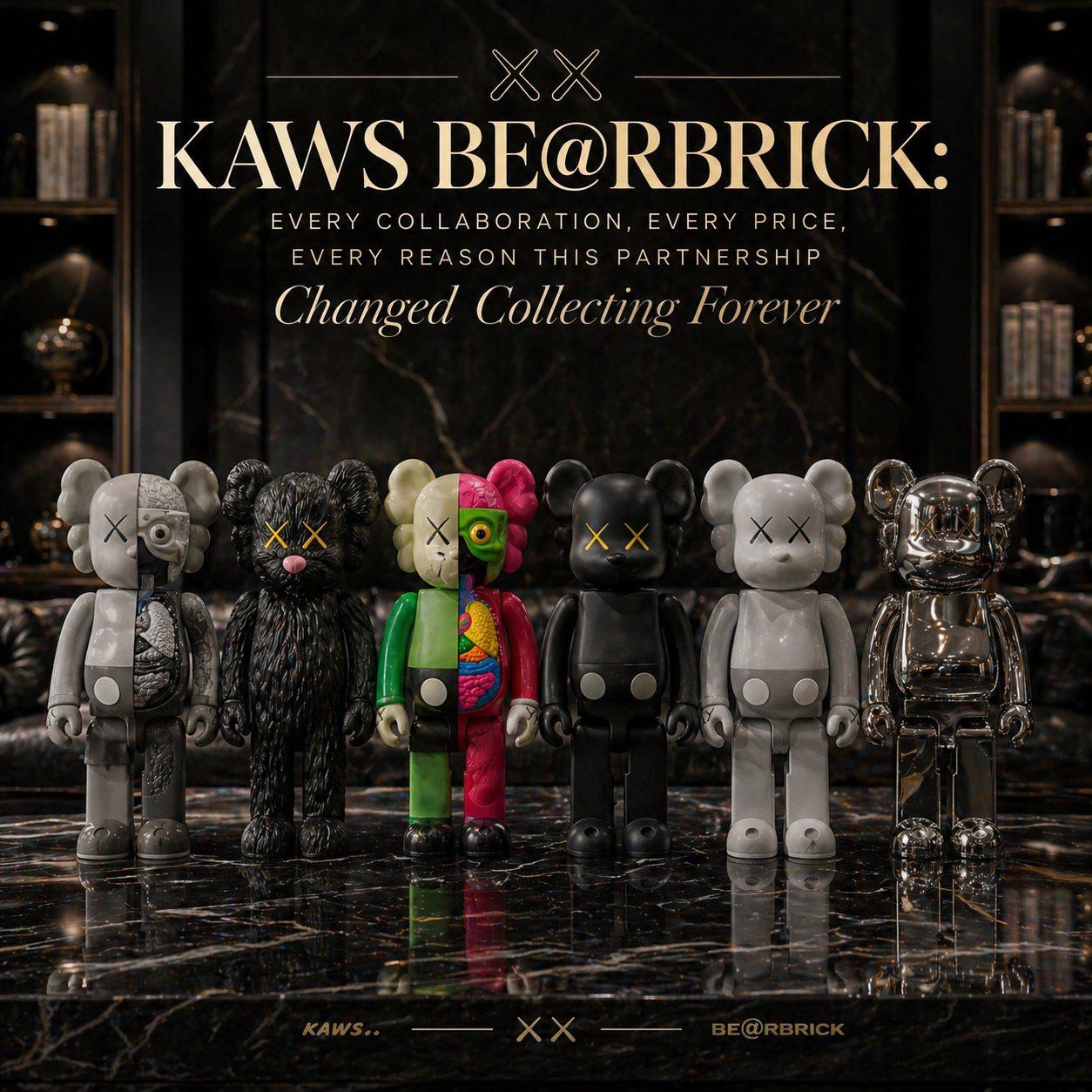
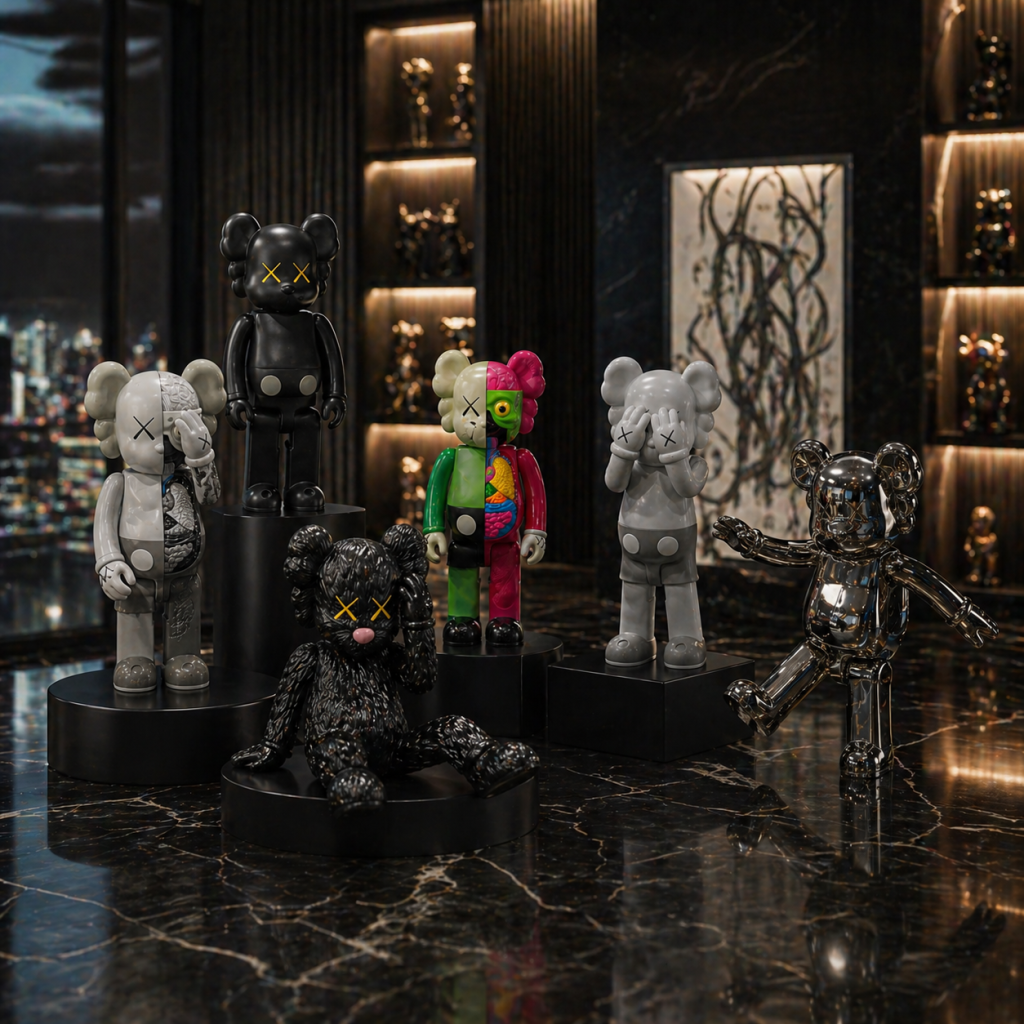
    KAWS represents the moment the designer toy crossed from collector culture into the mainstream art market. His figures — particularly the Companion, with its X-eyes and rounded silhouette — had been selling to collectors for years when Sotheby’s started paying attention. When The KAWS Album sold at Sotheby’s Hong Kong for $14.8 million in 2019, it wasn’t just a moment for KAWS. It was a signal to the entire art market that the objects produced by this tradition had arrived somewhere new.

    In May 2017, when the MoMA Design Store released a series of 11-inch vinyl Companions for $200 apiece, the flood of traffic crashed their website. The Museum of Modern Art selling designer toys. Sotheby’s handling multimillion-dollar KAWS paintings. These things would have been inconceivable when Michael Lau showed his Gardener figures in Hong Kong in 1999.

    Takashi Murakami — The Art World Crossover

    Murakami occupies a specific position in this history because he came from the fine art world rather than from street culture or toy collecting. His Superflat movement — which argued that the hierarchy between high art and popular culture was itself an artificial Western imposition — gave the designer toy movement intellectual and critical legitimacy it might not have claimed for itself.

    Takashi Murakami, a Japanese artist known for his colourful and playful designs, contributed significantly to the designer toy movement, often blending fine art with pop culture. His Bearbrick collaborations with Medicom Toy, his figures produced through his own Kaikai Kiki company, and his relationship with Louis Vuitton — which put his work on luxury bags sold globally — all demonstrated that the line between designer toy and fine art was genuinely permeable.

    Paul Budnitz and Kidrobot — The Western Translation

    Inspired by what he had seen in Tokyo and at toy conventions in Hong Kong, Paul Budnitz founded Kidrobot in 2002. The manufacturing process for vinyl toys, in which moulds degrade over time, presented an opportunity to create limited-edition collectibles — making the toys from plastic kept production costs low and price points accessible.

    Kidrobot translated the Hong Kong and Tokyo designer toy tradition into something accessible to Western collectors. The Dunny — an anthropomorphic rabbit figure used as a blank canvas for artist collaborations — and the Munny — the same concept sold unpainted for collectors to customise themselves — created a format that invited participation rather than just collection. You could own a Dunny covered in a specific artist’s design, or you could buy a blank and become the designer yourself.

    Through toy brands, artists can design the same character in different sizes that sell for different price points, from the standard 8-inch figure under $100, to a 3.5-inch mini at $10-$15, to a mystery blind box for $5-$10. This tiered pricing was crucial. It meant that the same collector community could contain someone spending $10 and someone spending $10,000, both engaging with the same artists and the same culture.

    Medicom Toy and the Bearbrick Phenomenon

    No account of designer toys is complete without Medicom Toy and the Bearbrick. Founded in Tokyo in 1996 by Tatsuhiko Akashi, Medicom Toy took the designer toy format and turned it into the most systematic and globally recognisable collectible figure format in the world.

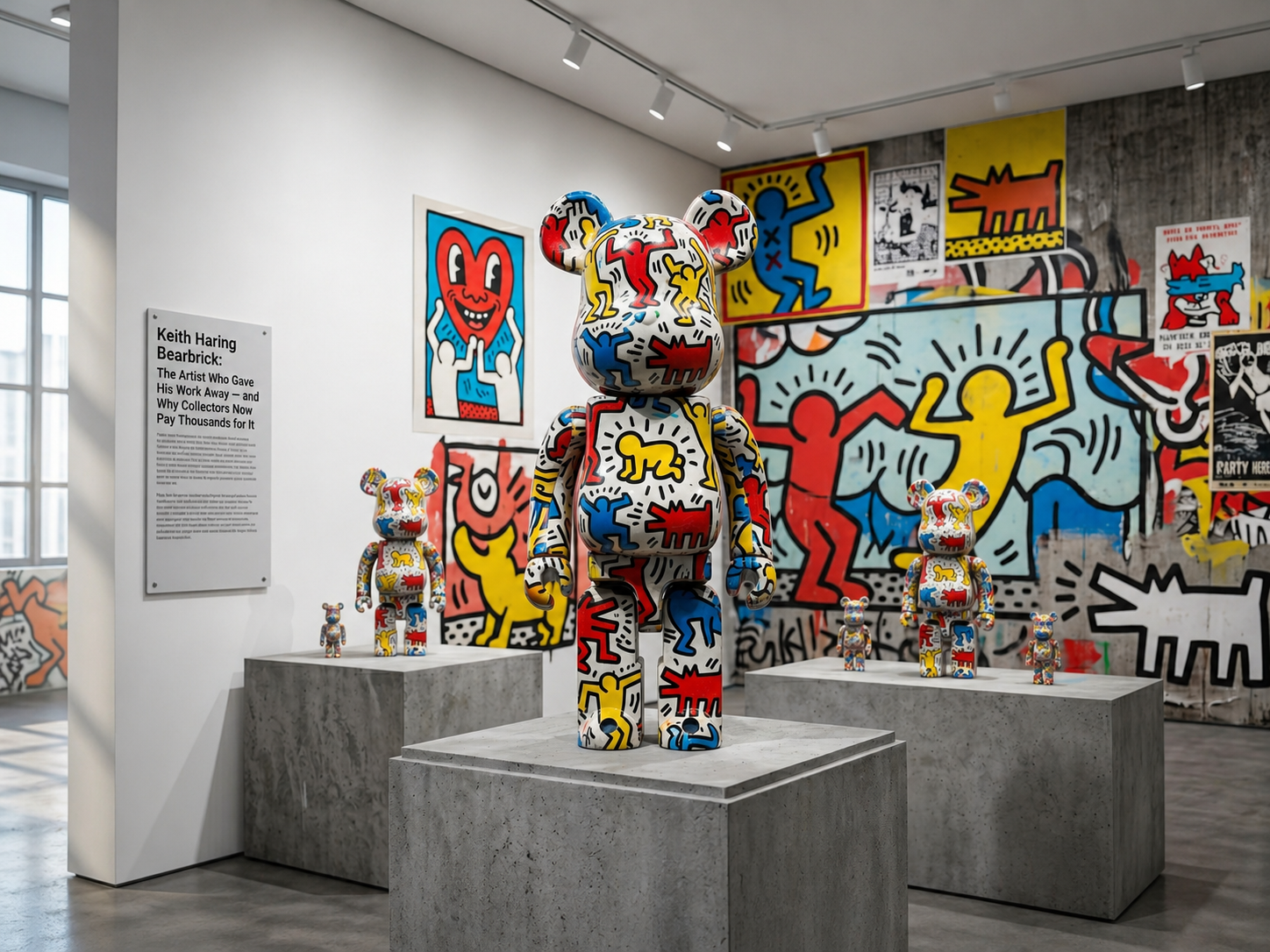
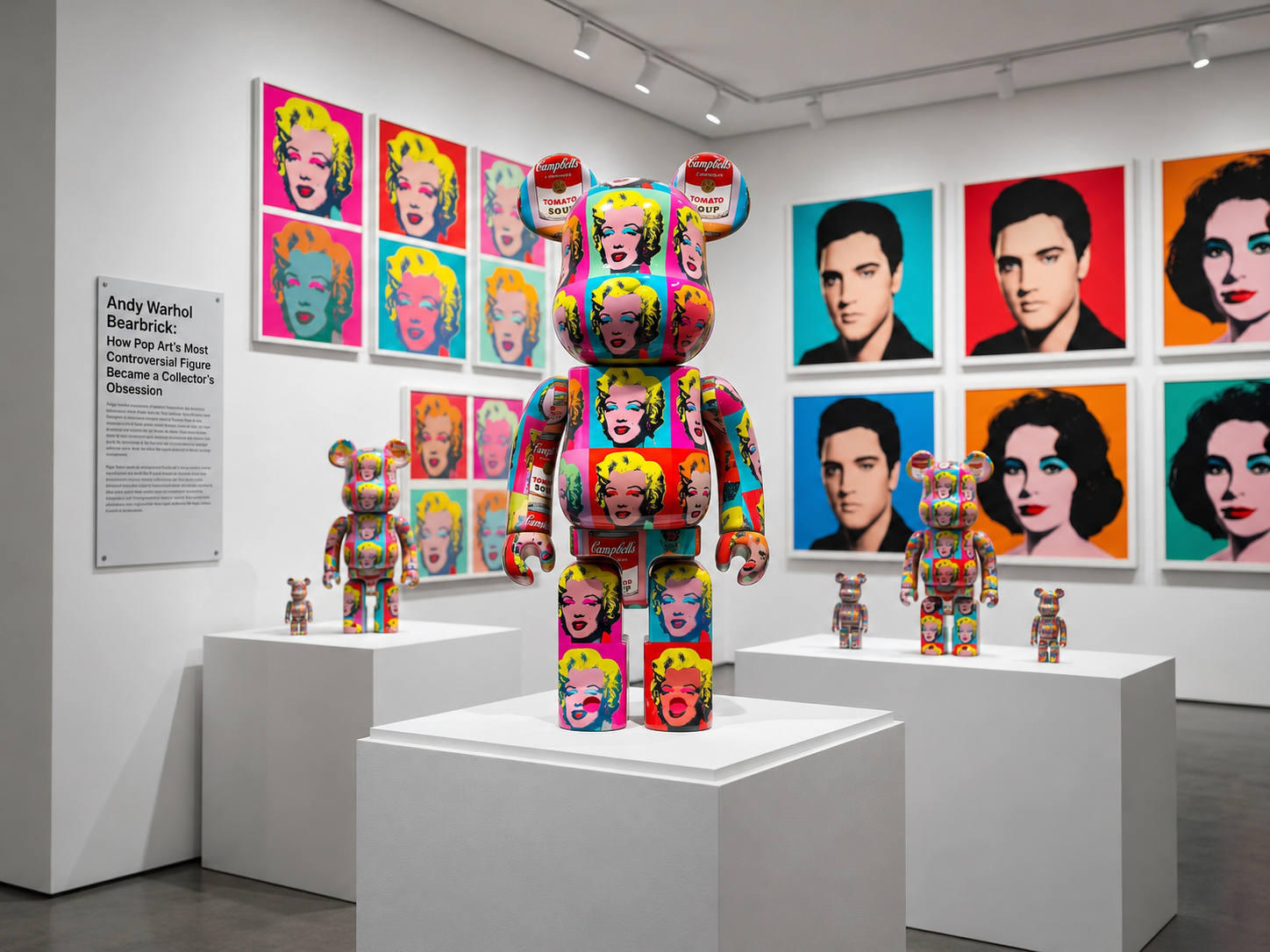
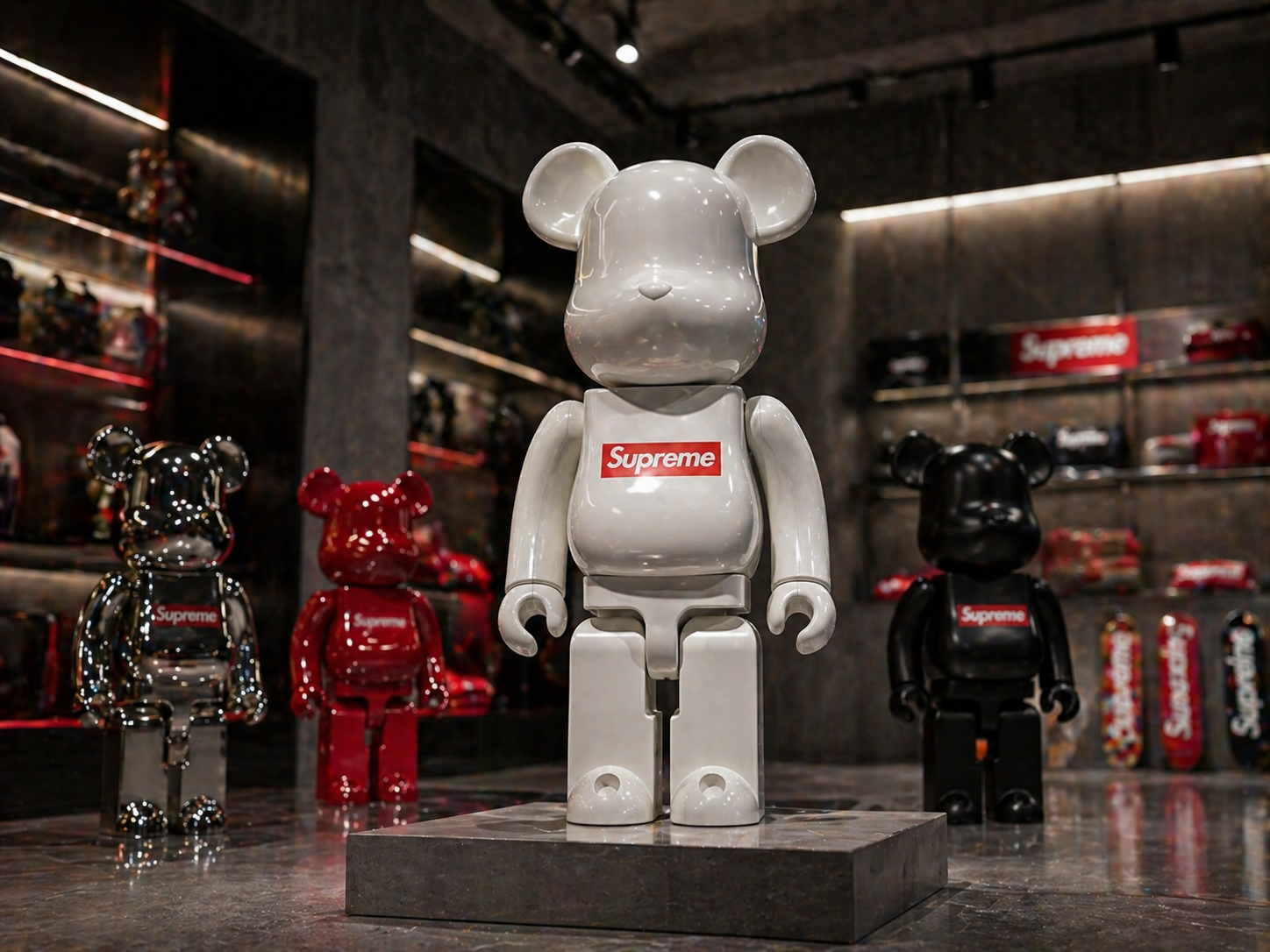
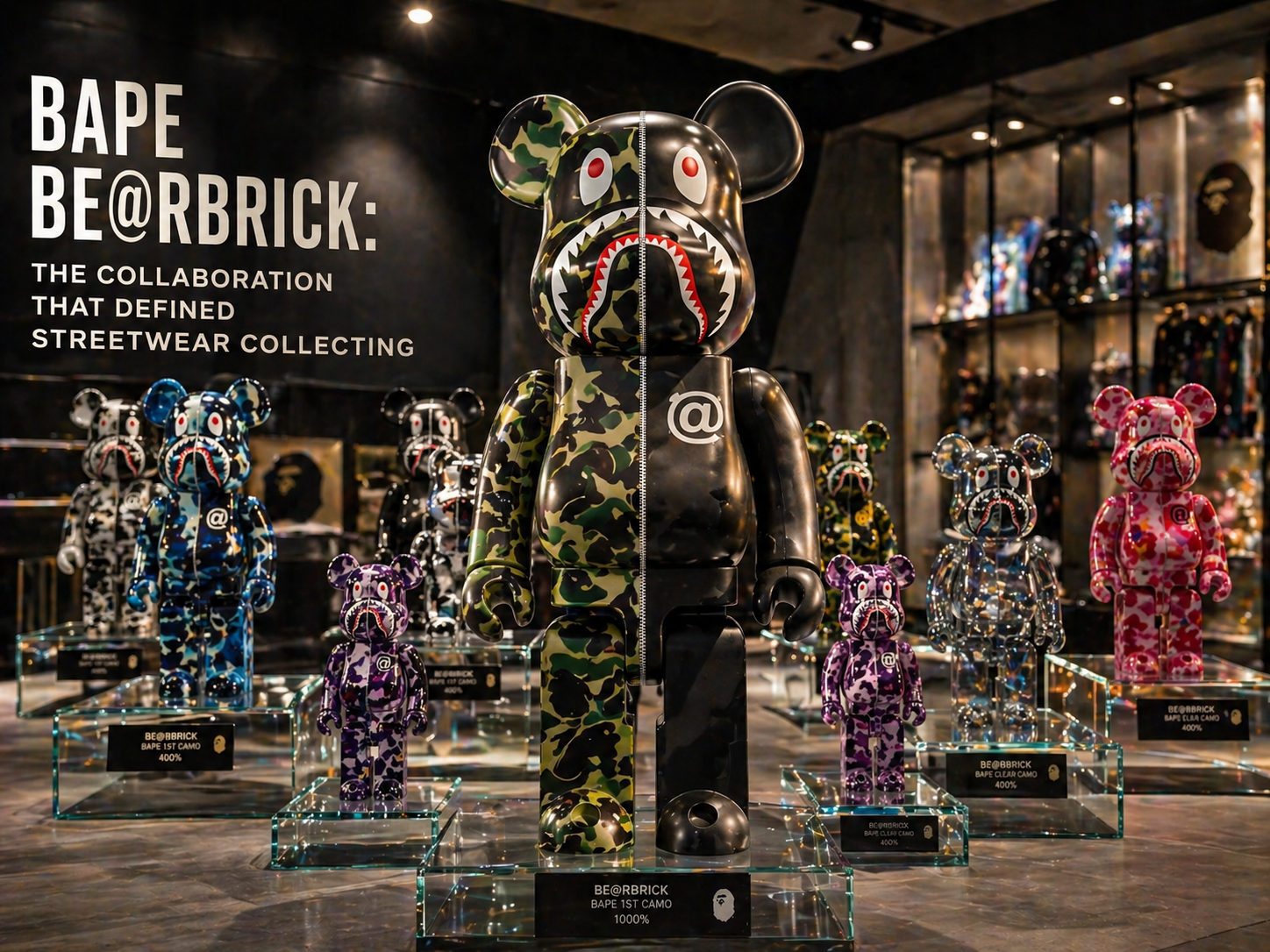
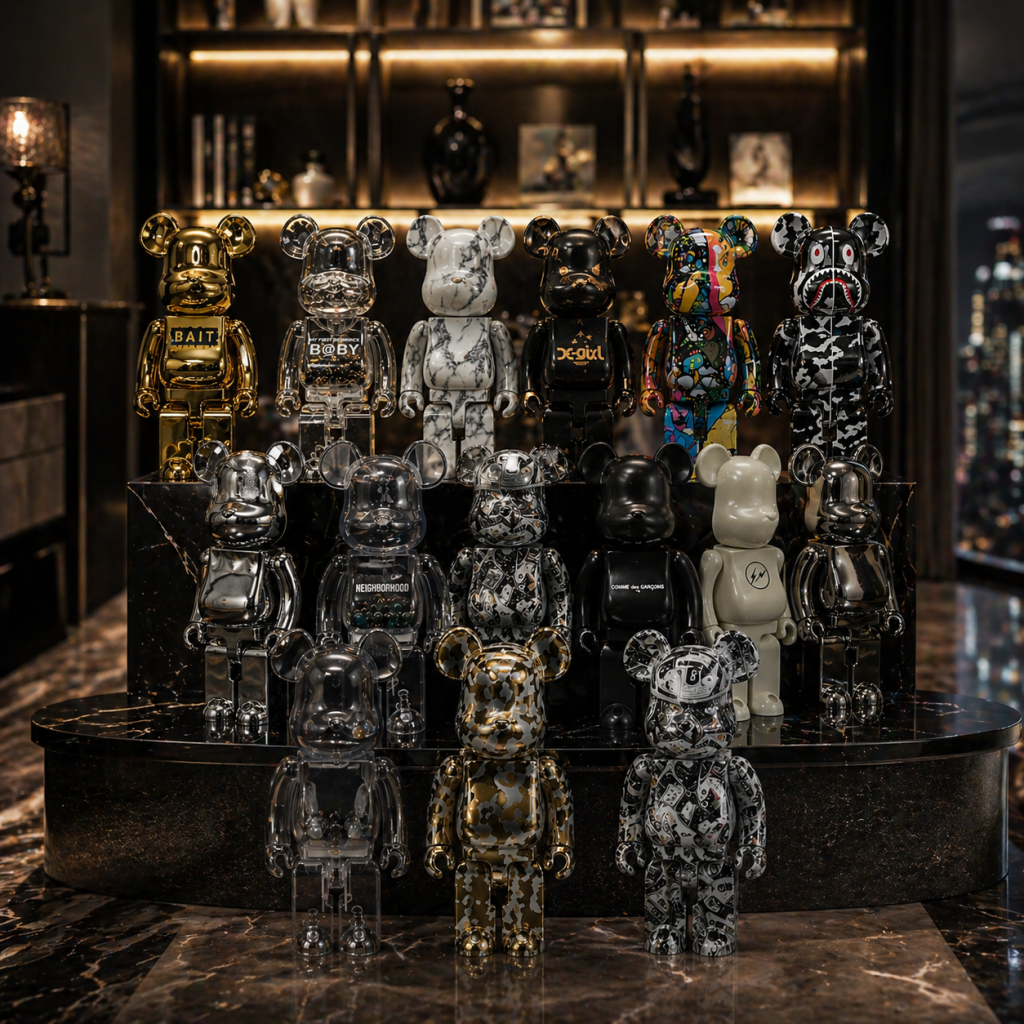
    The Bearbrick launched in 2001 as a free giveaway at a Tokyo convention. By 2026 it has become the format through which some of the most important collaborations in the designer toy world have been produced. Chanel. KAWS. Andy Warhol. Keith Haring. BAPE. Supreme. Jean-Michel Basquiat. Karl Lagerfeld designed one. Medicom Toy has collaborated with the Warhol Foundation, the Keith Haring Foundation, and the estates of Basquiat.

    What makes the Bearbrick format interesting from a designer toy perspective is how deliberately it functions as a blank canvas. The figure’s rounded, simplified form imposes constraints that force designers to work within a consistent visual language. Every KAWS Bearbrick is still recognisably a Bearbrick. Every Chanel Bearbrick is still recognisably a Bearbrick. The format persists through the collaboration rather than being overwhelmed by it.

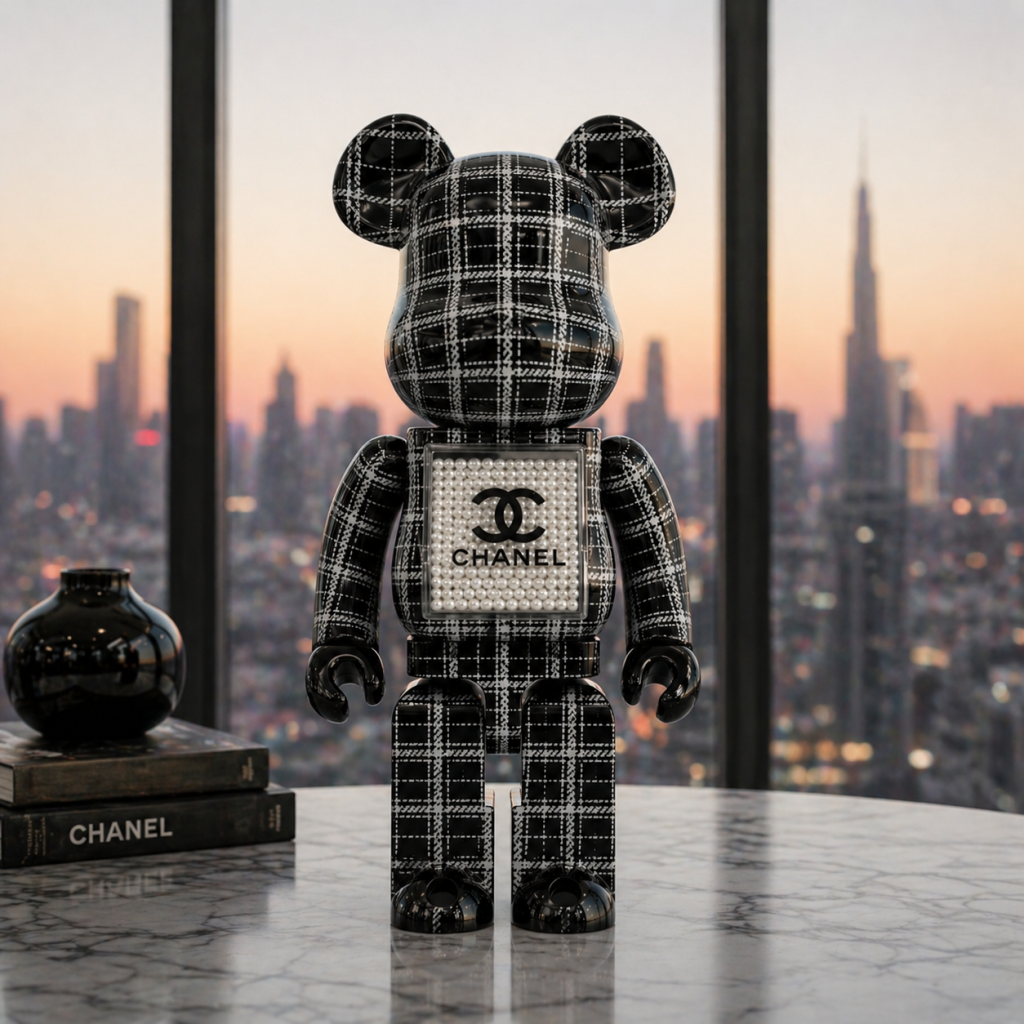
    This is why the Bearbrick has become the reference point for the whole designer toy conversation with the luxury fashion world. It was the format that Chanel chose in 2006 — the first luxury fashion house to work with Medicom Toy — and the precedent that figure set has shaped how every subsequent fashion-designer toy collaboration has been evaluated.

    Blind Boxes: The Mechanics of Desire

    One of the most powerful and most discussed mechanics in the designer toy world is the blind box — a sealed package whose contents are unknown until opened.

    Medicom Toy uses it for their Series Bearbricks, where twenty-four figures with different rarity levels are produced for each release and sold in sealed packaging. You might get a common Basic figure or a Secret figure appearing at 0.52% probability. The uncertainty is the product. Pop Mart has built an entire company around this mechanic.

    Pop Mart tapped into something simple but powerful: the thrill of surprise. The blind box format made buying toys feel like an experience, not just a transaction. That sense of discovery, paired with strong in-house IP development and a savvy retail strategy including vending machines and vibrant store displays, turned toys into lifestyle products.

    The psychology is worth examining directly because it explains a lot about why the designer toy market has grown the way it has. The blind box mechanic borrows from trading card collecting — the same thrill of not knowing whether you’ll pull the rare card — but applies it to three-dimensional objects designed by artists. The surprise is not just which card you pulled but which character, in which colourway, designed by which person you specifically wanted.

    Pop Mart’s digital membership ecosystem had over 46 million registered users as of December 2024, accounting for approximately 90% of total sales. Forty-six million people with accounts linked to a company that makes designer toys. This is not a niche hobby anymore.

    Labubu and the New Wave: 2024 and Beyond

    The designer toy world in 2024 and 2025 was dominated by one story: Labubu.

    Labubu began as an “ugly-cute” elf-like character created by artist Kasing Lung in 2015, and was first released as a collectible toy in 2019. A key catalyst for its explosion was celebrity endorsements — BLACKPINK’s Lisa showed off a Labubu bag charm on social media in April 2024, sparking a viral trend among her 100+ million followers.

    Pop Mart’s revenue doubled in 2024 to nearly $2 billion, driven largely by Labubu’s fame. In the first half of 2025, sales absolutely skyrocketed: revenue hit 13.88 billion yuan, up 204% year-on-year, while net income rose even faster — up 397%.

    The most expensive Labubu doll sold at auction was a life-sized piece that fetched over $170,000 at auction in June 2024. The same dynamic that turned KAWS figures from collector objects into auction house lots is playing out again, faster and at larger scale, with a plush toy designed by a Dutch artist living in Hong Kong and produced by a Chinese company that was founded in 2010.

    What Labubu represents in the broader designer toy story is interesting. It’s not a vinyl figure in the tradition Michael Lau established. It’s a plush toy — a different material, a different aesthetic, a different collector demographic. Kasing Lung’s character, with its mischievous expression and art toy credibility, taps into a mindset where collecting is less about nostalgia and more about aesthetics and personal identity. The “ugly-cute” aesthetic — figures that are deliberately slightly wrong, slightly unsettling, that create a tension between attractive and disturbing — is its own tradition within designer toys, one that KAWS explored with the Companion and that Labubu has brought to a global mass audience.

    The Collector Market: From Hobby to Investment

    The transition of designer toys from hobby to investment asset is one of the more significant cultural developments of the past decade. It didn’t happen suddenly. It happened through a series of moments that each shifted the perception of what these objects were.

    The Sotheby’s KAWS sale in 2019 was one. The Chanel Bearbrick trading at $62,000 on StockX is another. The $170,000 Labubu auction result is a third. Each time an object from the designer toy world reaches a price point associated with the fine art market, the category gets more serious attention from collectors who had previously ignored it.

    Designer toys are poised to function as the “new print market” for 2025: accessible, collectible, and culturally significant. For collectors, they offer the dual thrill of ownership and investment. For artists, they represent a medium through which creative expression intersects with commerce. And for galleries, they provide a dynamic avenue to engage a younger, digitally connected audience.

    The “new print market” comparison is useful. Prints occupy a specific position in the art market: they’re editions, not unique works, but they’re made by artists whose unique works sell for much more. They democratise access to specific artists without devaluing the original work. Designer toys function similarly — a KAWS Bearbrick is not a KAWS painting, but it’s made in the same tradition, references the same visual language, and appreciates in value through the same collector mechanisms.

    The difference is that prints have a long history and an established auction infrastructure. Designer toys are still developing theirs. The secondary market platforms — StockX, Grailed, specialist dealers, Sotheby’s dedicated designer toy sales — are relatively recent. The authentication infrastructure is still being built. The scholarly attention to the history and significance of these objects is just beginning.

    The Material Range: Vinyl, Resin, Plush, Wood, and Metal

    One of the things that makes the designer toy world impossible to reduce to a single description is the range of materials involved.

    The vinyl tradition — injection-moulded ABS plastic — is the foundation. It’s the material KAWS uses for his Companions, that Medicom uses for Bearbricks, that Michael Lau used for his Gardener figures. Vinyl is cheap to produce at scale, durable, takes paint and print well, and has a specific aesthetic quality — slightly hollow, slightly lightweight, that particular surface quality — that has become associated with the format.

    Resin is different. Resin toys are more labour-intensive and time-consuming than industrialised vinyl toy production. Resin casting allows artists to produce toys in small numbers. Unlike most vinyl toys, resin toys are usually sculpted, cast, and painted by a single artist. A resin toy is closer to traditional sculpture than it is to a manufactured product. The edition sizes are tiny — sometimes single figures, sometimes a handful — and the objects carry the physical traces of the artist’s hand in a way that vinyl doesn’t.

    Wood brings craft traditions into the designer toy world. Medicom Toy’s Karimoku Bearbricks — made from genuine walnut wood by an 80-year-old Japanese furniture company — trade at prices up to $22,000 because the object is genuinely handcrafted in a way that mass-produced vinyl isn’t. The wood grain runs across the bear’s surface. You pick it up and feel its weight differently.

    Metal takes this further. The Chogokin (超合金, “super alloy”) Bearbricks produced with Bandai are made from die-cast metal — the same tradition as vintage Japanese robot toys — at 200% scale. They weigh significantly more than vinyl versions. They have a different sound when you set them down. The material changes the object’s relationship to the collector completely.

    Plush is the newest frontier at scale. Labubu’s success has demonstrated that the designer toy tradition — artist-created character, limited editions, blind box distribution, secondary market appreciation — works just as well applied to stuffed toys as to vinyl figures. The material democratises the price point while maintaining the mechanics.

    DesignerCon, Art Basel, and Where the Community Gathers

    The designer toy world has its own calendar of events that parallel the art fair system.

    DesignerCon — held annually in Anaheim, California — is the largest dedicated designer toy convention in the world. Artists release exclusive figures available only at the event or in limited online quantities through the convention’s platform. The figures that appear exclusively at DesignerCon are among the most geographically restricted in the entire market, which is why they command secondary market premiums for collectors who weren’t able to attend.

    Medicom Toy’s own annual exhibition — the Medicom Toy Exhibition in Tokyo — serves the same function for the Japanese market. Exclusive Bearbrick figures appear only at this event, and the same pattern applies: release at the event, disappear, resurface on the secondary market at a premium.

    Art Basel and Frieze have increasingly hosted designer toy works alongside traditional fine art, reflecting the art world’s gradual acceptance of these objects as legitimate participants in the contemporary art conversation. KAWS has shown at Art Basel. Takashi Murakami’s work appears in both toy collector and gallery contexts without friction.

    Why Adults Collect Designer Toys: The Psychology Behind the Market

    The question that gets asked most often about designer toys — usually by people who don’t collect them — is why adults spend serious money on what are, materially, objects made of the same stuff as children’s toys.

    The answers are multiple and not always comfortable.

    Nostalgia is real. These objects often blend cartoon aesthetics with adult themes, creating something that resonates with people who grew up with toy culture and want to maintain a connection to it as adults. The designer toy market grew up with the generation that experienced the commercialisation of childhood in the 1980s and 1990s — the toy lines tied to every animated series, the collector’s editions, the figures you couldn’t find. That generation is now in its thirties and forties, with disposable income and a collector instinct that was installed when they were young.

    Cultural signalling is also real. A display of KAWS figures, rare Bearbricks, and Labubu bag charms communicates something specific about a person’s relationship to contemporary art, streetwear, and collector culture — and it communicates this to people who will recognise the references. These objects function as identity markers in the same way that a specific sneaker or a specific brand of watch does.

    Then there’s the purely aesthetic dimension. Some of these objects are genuinely beautiful, or genuinely strange, or genuinely interesting as design objects. A Medicom Toy Bearbrick covered in Keith Haring’s dancing figures, or a KAWS Dissected Companion exposing its interior, or a Karimoku wood Bearbrick with the grain running across the bear’s surface — these are objects that reward looking at. The fact that they’re toys doesn’t diminish the quality of the design.

    And finally, investment. Early KAWS pieces now fetch tens of thousands of dollars at auctions. This aspect turned collecting into not just a hobby but also a potential investment opportunity, appealing to adults who saw the financial as well as the emotional value in these toys.

    The Bearbrick as the Centre of the Designer Toy Universe

    Within the broader designer toy world, the Bearbrick occupies a specific and important position. It’s the format most collectors encounter at some point — either as an entry point or as a specific focus of collection. It’s the format that has attracted the widest range of collaborators, from luxury fashion houses to fine art estates to streetwear brands to film franchises. And it’s the format that, through its consistent release structure, has built the most documented secondary market in the designer toy world.

    The Bearbrick’s relationship to the broader designer toy world is both representative and unique. Representative because it uses all the same mechanics — limited editions, artist collaborations, blind boxes at the 100% scale, size tiers at different price points — that define the designer toy market generally. Unique because the format has maintained its visual consistency across fifty-plus Series and decades of collaborations in a way that no other format has managed.

    Collecting Bearbricks is, in one sense, collecting the history of how art, fashion, streetwear, and pop culture have intersected since 2001. Each collaboration is a document of that intersection at a specific moment. The KAWS figures from 2002 are there. The Chanel figure from 2006 is there. The Andy Warhol Foundation series is there. The Miles Morales Spider-Man from 2022 is there. Taken together, they’re a twenty-five-year archive of what the world paid attention to.

    How to Start Collecting: What Actually Matters

    The designer toy world can feel overwhelming from outside — too many formats, too many brands, too many artists, too many releases. But the collectors who find genuine satisfaction in it usually start from the same place: a specific object that interests them, purchased because they find it genuinely compelling rather than because it might appreciate.

    The Bearbrick is a reasonable starting point for most people because the format is so well-documented. The release calendar is consistent. The secondary market prices are tracked on established platforms. The authentication markers are clear. You can spend $15 on a 100% blind box or $5,000 on a 1000% limited edition, and both are legitimate entries into the same world.

    The art toy world more broadly rewards learning. Understanding why Michael Lau matters, what KAWS’s work is actually about, why the Karimoku collaboration is priced differently from the vinyl versions, what the Andy Warhol Foundation’s involvement in Medicom’s releases means for authenticity — this knowledge makes the collecting more interesting and makes it easier to avoid the category’s most common pitfall, which is paying a premium for something whose value is difficult to verify.

    Buy what you find genuinely interesting. Display it well. Keep original packaging. Document provenance. These principles apply whether you’re spending $30 or $30,000.

    Frequently Asked Questions

    What are designer toys?

    Designer toys are collectibles created by artists and designers in limited editions, using materials including vinyl, resin, wood, metal, and plush. They are distinguished from mass-market toys by authorship, limited production, and their position within art and collector culture rather than the conventional toy industry.

    Who started the designer toy movement?

    Michael Lau of Hong Kong is widely credited as the pioneer of the urban vinyl movement, with his 1999 Gardener series marking the beginning of the designer toy as a serious collector category. The movement developed simultaneously in Japan through artists including Takashi Murakami and through figures like KAWS in New York.

    What is urban vinyl?

    Urban vinyl is a term for vinyl figures designed primarily by illustrators, graffiti artists, musicians and DJs from urban areas, rooted in hip hop and youth-oriented popular culture, originating in Hong Kong and Japan in the 1990s.

    How big is the designer toy market?

    Pop Mart alone reached approximately $1.8 billion in revenue in 2024, with projections exceeding $4 billion for 2025, driven largely by Labubu’s success. The broader designer toy market, including Medicom Toy, Kidrobot, and independent artists, is significantly larger.

    What is a blind box?

    A sealed package containing one figure from a series where the specific figure inside is not revealed until the package is opened. Figures within a blind box series have different rarity probabilities, creating a collector mechanic similar to trading card packs.

    Are designer toys a good investment?

    Early KAWS pieces now fetch tens of thousands of dollars at auction, and the category has attracted increasing attention from serious collectors and institutions. As with any collector market, figures with genuine scarcity, documented provenance, and original packaging hold value better than those without. Collecting what you find genuinely interesting produces better results than collecting purely for appreciation.
  • Louis Vuitton Bearbrick: The Collaboration That Never Officially Happened — and Why Everyone Wants It Anyway

    Two Icons, One Impossible Object

    The Louis Vuitton Monogram was created in 1896 by Georges Vuitton as a tribute to his father and a shield against counterfeiters — a pattern of interlocking LV initials and stylised flowers, inspired by Neo-Gothic ornamentation and Japanese aesthetics. It was one of fashion’s earliest acts of brand defence. Georges didn’t invent it to be beautiful, exactly. He invented it to be unmistakeable.

    One hundred and thirty years later, that pattern is on handbags in Tokyo, luggage in Dubai, sneakers in Paris, and — if you look hard enough — on a 70-centimetre vinyl Bearbrick that technically shouldn’t exist.

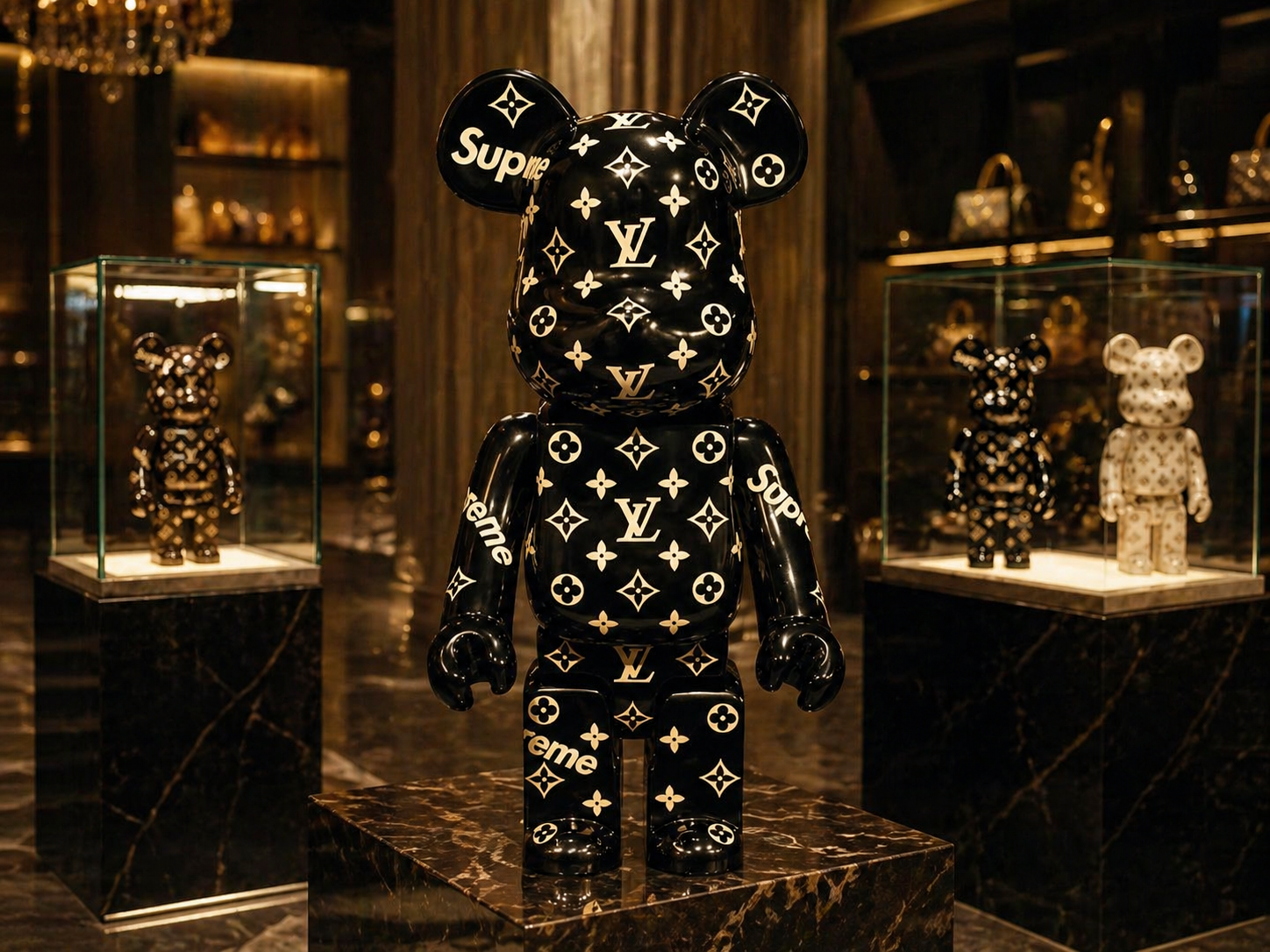
    Here’s the thing about the Louis Vuitton Bearbrick: there is no official collaboration between Louis Vuitton and Medicom Toy. No numbered limited edition, no official release event, no authenticated production run with both logos on the box. What exists instead is something more complicated and, honestly, more interesting. A gap in the market — between what luxury fashion does officially and what collector culture does anyway — filled by custom artists, unofficial pieces, and a level of demand so consistent that it shows up in search data across multiple languages and markets every single month.

    This article is about that gap. About why the Louis Vuitton Bearbrick is one of the most searched objects in the designer toy world despite not officially existing. About what the LV monogram does when it lands on a vinyl bear. About the history of two institutions — one founded in Paris in 1854, one in Tokyo in 1996 — that have never formally worked together but belong in the same conversation.

    And about what that means for collectors who want one.

    Why Louis Vuitton and Bearbrick Belong Together

    Before getting into what actually exists in the market, it’s worth sitting with the question of why this pairing feels so inevitable.

    Marc Jacobs arrived as Louis Vuitton’s first creative director in 1997 and ushered the monogram into a more provocative cultural life through artist collaborations, beginning with Stephen Sprouse’s spring 2001 graffiti bags. That move — taking a 100-year-old luxury symbol and letting a downtown New York artist draw all over it — was the moment Louis Vuitton decided that its identity was strong enough to absorb disruption. Strong enough to be played with.

    Jacobs attributed the success of these designs to their being “disrespectful and respectful at the same time.”

    That phrase could describe the Bearbrick format itself. A vinyl toy shaped like a cartoon bear, wearing Chanel’s pearls or KAWS’s X-eyes or Supreme’s red box logo — the format is simultaneously irreverent toward its source material and deeply respectful of it. The whole point is the tension between the prestigious and the playful.

    Louis Vuitton understood this tension earlier than most luxury houses. In 2003, Takashi Murakami was invited to reinterpret the Monogram Canvas, introducing the Multicolore Monogram in 33 vibrant colours. The collaboration generated sales of several hundred million dollars. A Japanese pop artist turning the brown and beige monogram into a rainbow. Disrespectful and respectful at the same time.

    Later collaborations included Richard Prince in 2008, Yayoi Kusama in 2012 and again in 2023, and Jeff Koons in 2017, who used the Masters series to add his pop spin on the LV initials.

    In 2017, Louis Vuitton partnered with Supreme — a streetwear brand — which was groundbreaking, merging the worlds of high fashion and street culture and injecting Supreme’s red and white brand identity directly into the Monogram.

    Every one of these collaborations is essentially a version of the same idea: take the most recognised luxury symbol in the world, give it to someone from outside luxury, and see what happens. Each time, the monogram survives. Each time, it becomes more culturally loaded than it was before.

    A Louis Vuitton Bearbrick is the logical endpoint of that trajectory. A Japanese designer toy company, born the same decade Jacobs arrived at LV, making the same argument about the relationship between high culture and collector culture that Murakami and Sprouse and Supreme made through canvas and clothing. The collaboration doesn’t officially exist. But the idea of it is completely coherent.

    What the LV Monogram Does on a Bearbrick

    The visual logic here is specific and worth spending a moment on.

    The LV monogram is so identifiable today that almost no one says Louis Vuitton anymore, they say LV. The pattern functions as a standalone language — you don’t need the brand name to know what you’re looking at. Put four LV monogram tiles on a surface and it communicates immediately, regardless of whether that surface is a canvas bag, a sneaker, or a vinyl toy.

    The Bearbrick’s rounded surface is particularly well-suited to all-over pattern designs. The monogram was designed for trunks and bags — three-dimensional objects with curved surfaces and edges. It wraps. It tiles. It doesn’t need a flat rectangle to work. When you see the classic brown and beige LV pattern flowing across a Bearbrick’s chest, arms, and head, it reads immediately because the monogram was built to do exactly this kind of thing — cover a surface completely and remain legible.

    The Damier check — LV’s other signature pattern, the brown and tan or grey and white grid — works on the Bearbrick for different reasons. The grid is inherently geometric, which plays off the Bearbrick’s angular joints and rounded panels in an interesting way. Where the monogram flows, the Damier sits. Two different visual arguments about what the LV universe looks like on a toy.

    The multicolour Murakami version — if it were ever to appear on a Bearbrick officially — would be the most visually dramatic. Thirty-three colours in the monogram pattern, wrapping a 70-centimetre figure. It would be immediately recognisable from across a room. This is exactly why the demand exists even in the absence of an official product.

    The Market That Formed Anyway

    Here is what actually exists when you search for a Louis Vuitton Bearbrick in 2026.

    Custom artist pieces. Several artists have built practices around creating LV-themed Bearbricks using authentic Louis Vuitton materials — vintage towels, canvas offcuts, fabric sourced from deconstructed LV products. Artists like Etai Droi have produced 1000% figures made from authentic Louis Vuitton Vintage Towels, each one described as a limited edition handcrafted object. These are not counterfeit products in the conventional sense — they’re art objects using real LV materials, closer in spirit to the kind of fabric art that sits at the intersection of fashion and collectible culture. They come with certificates from the artist, not from Medicom Toy or Louis Vuitton, and they’re priced accordingly.

    Custom-painted figures. A different category: standard Medicom Toy Bearbrick blanks painted or printed with LV-inspired patterns. These range enormously in quality, from skilled custom artists who produce objects genuinely worth collecting to cheap knock-offs using inaccurate monogram reproductions. The distinction matters both aesthetically and commercially. A well-executed custom on an authentic Medicom base is a different thing from a mass-produced copy on a generic vinyl figure.

    Unofficial fantasy releases. The Supreme x Bearbrick x Louis Vuitton concept appears regularly on Pinterest, in street art contexts, and in digital renders — three-way collaborations that exist as images rather than objects. These function as a kind of cultural speculation: what would this look like if it existed? The images circulate because people respond to them. The response is the evidence of demand.

    The secondhand authentication problem. The absence of an official product creates a specific authentication challenge. There’s no authorised source to verify against, no official documentation, no factory specifications. When someone sells a “Louis Vuitton Bearbrick” without being explicit about whether it’s a custom artist piece, an unofficial manufacture, or something else entirely, the buyer is working without the usual collector tools. This is the most significant practical issue for anyone interested in acquiring one.

    Louis Vuitton’s Real Relationship With the Collector World

    To understand why an official LV x Medicom collaboration would make complete sense — and why it hasn’t happened yet — you need to understand how Louis Vuitton has historically engaged with the collector and designer toy space.

    The Monogram has appeared on Vivienne dolls, pinball machines, popcorn boxes and pétanque sets, proving that true icons never stand still. Louis Vuitton is not a brand that avoids unusual objects. It has produced skateboard decks, chess sets, ping-pong tables, and a football for the 2022 World Cup. The idea that it would avoid a designer toy format is not supported by its behaviour.

    The Murakami Multicolore Monogram, introduced in 2003, generated sales of several hundred million dollars and redefined what luxury could look like in the 21st century. Murakami was already established in Japan’s designer toy and collectible figure world before the LV collaboration — his figures and prints were part of the same collector culture that Medicom Toy was building simultaneously in Tokyo. The conceptual distance between a Murakami x LV bag and a Murakami-aesthetic Bearbrick is smaller than most people realise.

    Virgil Abloh, who became Louis Vuitton’s Men’s artistic director in 2018, came from a world explicitly adjacent to streetwear collecting, sneaker culture, and designer toys. His Off-White brand had collaborated extensively with Nike, with Jordan Brand, with figures from the streetwear world that overlapped heavily with the Bearbrick collector community. Under Abloh, Louis Vuitton produced objects and experiences aimed at exactly the collector demographic that buys limited edition Bearbricks. His tragically early death in 2021 removed the person most likely to have formally connected these worlds.

    Nicolas Ghesquière, LV’s current Women’s creative director, has shown less interest in the streetwear and toy collector space. But the brand’s Men’s division, under various creative directions since Abloh, continues to engage with the collector culture that produces demand for a Louis Vuitton Bearbrick. The infrastructure for the collaboration exists. The demand clearly exists. The official product doesn’t yet.

    The Chanel Comparison: What an Official LV Bearbrick Would Mean

    The closest reference point is the Chanel Bearbrick — designed by Karl Lagerfeld in 2006, produced in an edition of approximately 1,000 numbered figures, and now trading on the secondary market at prices between $8,000 and $62,000 depending on condition and provenance.

    The Chanel Bearbrick became what it is because of three factors working simultaneously: genuine scarcity (only 1,000 pieces), a specific historical moment (it was the first luxury fashion house to use the Bearbrick format), and a creative authority behind it (Lagerfeld designed it himself, which means it carries his specific vision rather than a licensing team’s approximation).

    An official Louis Vuitton Bearbrick would enter a different environment — one where the Chanel figure already exists as the reference point, where the secondary market for luxury fashion Bearbricks is established, and where collector awareness of Medicom Toy’s luxury collaborations is significantly higher than it was in 2006.

    It would also benefit from Louis Vuitton’s existing relationship with artist collaborations. The brand has demonstrated, across twenty-five years of Murakami, Kusama, Koons, and Supreme, that it knows how to take its visual identity and hand it to someone else without losing what the monogram means. A Bearbrick collaboration could follow the same logic: give Medicom Toy the monogram, or give a specific artist the brief, and let the format’s logic do the rest.

    What would it be worth? The Chanel figure, at $8,000–$62,000 for an edition of 1,000, is the data point. A Louis Vuitton Bearbrick from an official collaboration, designed with the creative authority of the house behind it, in genuinely limited numbers — the collector market would price it at least comparably. Possibly more, given that Louis Vuitton has a broader global recognition than Chanel in several key markets, particularly in Asia, where the Bearbrick secondary market is most active.

    Custom Art Bearbricks and the Ethics of the Unofficial Market

    The existence of a robust unofficial market for Louis Vuitton Bearbricks raises questions worth addressing directly, because collectors navigating this space deserve clarity.

    There are three meaningfully different categories of object and the ethical and legal status of each is different.

    Artist-made objects using authentic LV materials. When an artist sources genuine Louis Vuitton fabric, canvas, or other materials — either vintage or otherwise — and uses those materials to create a custom Bearbrick, the resulting object occupies an interesting legal and artistic space. The artist is not counterfeiting LV products; they’re making something new from existing materials. The Bearbrick base, if purchased authentically from Medicom, carries its own legitimacy. The combination is an original art object. These pieces carry the artist’s own documentation and value proposition, not a false claim to being an official collaboration.

    Custom-painted Bearbricks inspired by LV aesthetics. An artist who paints a Bearbrick in a pattern inspired by the LV monogram, but doesn’t use actual LV materials or falsely claim an official collaboration, is making art. The line gets blurry if the reproduction is close enough to the actual monogram to constitute trademark infringement, but the concept of artist interpretation is well-established. These objects should be presented honestly and priced according to the artist’s skill and the object’s actual nature.

    Counterfeits presented as official collaborations. Objects sold with false claims of being an official Louis Vuitton x Medicom Toy collaboration — with fabricated documentation, fake box designs claiming both logos, or explicit misrepresentation — are a different matter entirely. These are fakes in the meaningful sense, and the consequences for buyers are both financial and legal if they attempt to resell claiming authenticity.

    The practical advice: if you’re interested in a Louis Vuitton Bearbrick, understand exactly what you’re buying. An artist custom with honest documentation is a legitimate collector object. A fake official collaboration is a problem. Know which you’re looking at before you spend.

    The Collector Psychology: Why People Want the Thing That Doesn’t Exist

    There’s something interesting in the persistent demand for an unofficial Louis Vuitton Bearbrick, and it’s worth examining rather than just noting.

    Part of it is simple: two globally recognised brands whose visual identities work together, in a format that has established itself as the meeting point of fashion, art, and collector culture. The conceptual fit is obvious. When something is obviously a good idea and hasn’t been done officially, collectors fill the gap with imagination and then with purchases.

    But there’s another layer. The Louis Vuitton monogram has always functioned as a signal — of taste, of resources, of cultural positioning. The same is true of a serious Bearbrick collection. Someone who owns a Chanel Bearbrick, a KAWS Dissected Companion, and a 1000% BAPE Shark Hoodie is communicating something specific about their relationship to fashion, art, and collector culture simultaneously. An LV Bearbrick fits that communication perfectly.

    The absence of an official product also creates a specific collector psychology: the thing you want but cannot buy officially is always more desirable than the thing you can. The gap generates desire. Every time a collector searches for a Louis Vuitton Bearbrick and doesn’t find an official product, the desire for one increases. This is not a niche phenomenon — it shows up consistently in search data across multiple markets and multiple languages.

    When the official product eventually exists — and it is a when, not an if, given the cultural logic — the demand will be enormous and the secondary market premium will be immediate.

    What to Look For If You’re Collecting Now

    Given that official LV x Medicom figures don’t exist, what does a serious collector do?

    The most intellectually honest approach is to collect artist custom pieces from documented, transparent sources. Artists who produce LV-themed Bearbricks using authentic materials, who sign their work, who provide their own certificates of authenticity, and who don’t misrepresent the objects as official collaborations — these are making legitimate collector objects that occupy a clear and honest space.

    The evaluation criteria for these pieces are different from standard Bearbrick authentication:

    Artist track record. What has this artist made before? Is there a documented history of work? Do they have a consistent practice and a collector base that has verified their pieces? An artist whose custom Bearbricks appear in documented private collections is different from an anonymous seller on a secondary marketplace.

    Material authenticity. If the piece uses actual LV materials, can those materials be verified? Vintage Louis Vuitton canvas and fabric have specific characteristics — material weight, pattern precision, hardware details — that experienced collectors can evaluate. An artist claiming to use authentic LV vintage towels in a 1000% figure should be able to demonstrate those materials convincingly.

    Honest documentation. The certificate should come from the artist, not claim to be from Medicom Toy or Louis Vuitton. It should document what the piece is, who made it, and what materials were used. This is honest documentation. A certificate falsely claiming official collaboration status is a red flag.

    Price relative to what it actually is. A custom artist piece is worth what the artist’s work is worth, plus the material value, plus any collector premium for the artist’s reputation. It is not worth what an official Medicom Toy x LV collaboration would be worth, because it isn’t that. Sellers pricing customs at official-collaboration levels are either confused about what they have or hoping buyers will be.

    The Broader Luxury Fashion Bearbrick Landscape

    The Louis Vuitton gap exists within a larger picture of how luxury fashion has engaged with the Bearbrick format.

    Chanel led, in 2006. The figure exists, it’s authenticated, it’s traded actively on major platforms. Hermès followed — one of the rarest fashion house collaborations in Bearbrick history, produced as part of a charity auction alongside other luxury brands. Fendi has appeared in the Medicom Toy catalogue. Comme des Garçons has collaborated repeatedly.

    The Medicom Toy collaboration list includes Chanel, Fendi, Supreme, Comme des Garçons, and others in the streetwear and fashion world. Louis Vuitton is conspicuously absent from that list, which makes its absence both more notable and more interesting. The other major luxury houses have crossed into Medicom Toy’s world. LV has not, officially, despite being the luxury brand most aligned — through its history of artist collaborations, its engagement with streetwear culture, and its global recognition in the markets where Bearbrick is most actively collected — with doing exactly that.

    The Fendi Bearbrick is documented. The Comme des Garçons figures are available. The Chanel 1000% sits in private collections across Europe, Asia, and the US and trades at five-figure prices. Louis Vuitton is the biggest name in luxury fashion. Its absence from the official Medicom Toy catalogue is anomaly, not inevitability.

    Frequently Asked Questions

    Is there an official Louis Vuitton Bearbrick?

    No. As of 2026, there is no official collaboration between Louis Vuitton and Medicom Toy. No official LV Bearbrick has been produced, announced, or distributed through either company’s channels. What exists are custom artist pieces, unofficial figures, and significant market demand for an official product that does not yet exist.

    What are Louis Vuitton Bearbricks that appear for sale?

    These are typically either custom artist pieces made from authentic LV materials, custom-painted figures inspired by LV aesthetics, or unofficial mass-produced items. None are official Medicom Toy x Louis Vuitton collaborations. Understanding which category a piece falls into is essential before purchasing.

    Why is there so much demand for an LV Bearbrick if it doesn’t officially exist?

    The visual and cultural fit between Louis Vuitton and the Bearbrick format is obvious — two globally recognised visual languages that work together naturally. The absence of an official product doesn’t suppress demand; if anything, it amplifies it. Collectors want the thing they can’t officially have.

    Which luxury fashion Bearbricks do officially exist?

    The Chanel Bearbrick (2006, ~1,000 numbered pieces, designed by Karl Lagerfeld) is the most significant official luxury fashion Bearbrick. Hermès, Fendi, and Comme des Garçons have also appeared in the Medicom Toy catalogue. Hermès examples are among the hardest to find.

    Would an official LV Bearbrick be valuable?

    Based on the Chanel Bearbrick precedent — currently trading at $8,000 to $62,000 for authenticated examples — an official Louis Vuitton Bearbrick from a genuine collaboration, produced in limited numbers with creative authority behind the design, would likely command comparable or higher secondary market prices given Louis Vuitton’s broader global recognition.

    How do I avoid buying a fake?

    Understand precisely what you’re purchasing. Official-looking documentation claiming a Medicom Toy x Louis Vuitton collaboration is false documentation — no such official collaboration exists. Custom artist pieces are legitimate if sold as such, with honest artist documentation rather than false official credentials. When in doubt, consult established dealers or platforms with authentication guarantees.

  • Spider-Man Bearbrick: The Web-Slinger on Vinyl, from Amazing Fantasy to the Spider-Verse

    A Teenager Nobody Wanted, and Then Everyone Did

    On June 5, 1962, a comic book called Amazing Fantasy #15 changed the world. Written by Stan Lee with art by Steve Ditko, it told the story of a kid named Peter Parker, his encounter with a radioactive spider, and the death of his uncle.

    Marvel’s publisher didn’t want it. Stan Lee was looking for a new superhero idea and the teenage demand for comic books and a character with whom they could identify led to the creation of Spider-Man. When he pitched it, the response was essentially: teenagers can’t be the lead, spiders are repellent, and nobody wants to read about a kid with personal problems. Lee put the character in a comic that was already being cancelled — which was the only reason he got permission to try at all.

    Young readers responded powerfully to Peter Parker, prompting an ongoing title and ultimately a media empire spanning video games, animated series, live-action films, and a Broadway musical.

    Six decades later, Spider-Man is arguably the most recognised superhero in the world. He’s appeared in more films than any other Marvel character, his face is on more merchandise than almost anything in popular culture, and the question of which Spider-Man is the “real” one has become a genuinely interesting argument now that Miles Morales, Spider-Gwen, Spider-Man 2099, and a dozen others have all built their own devoted followings.

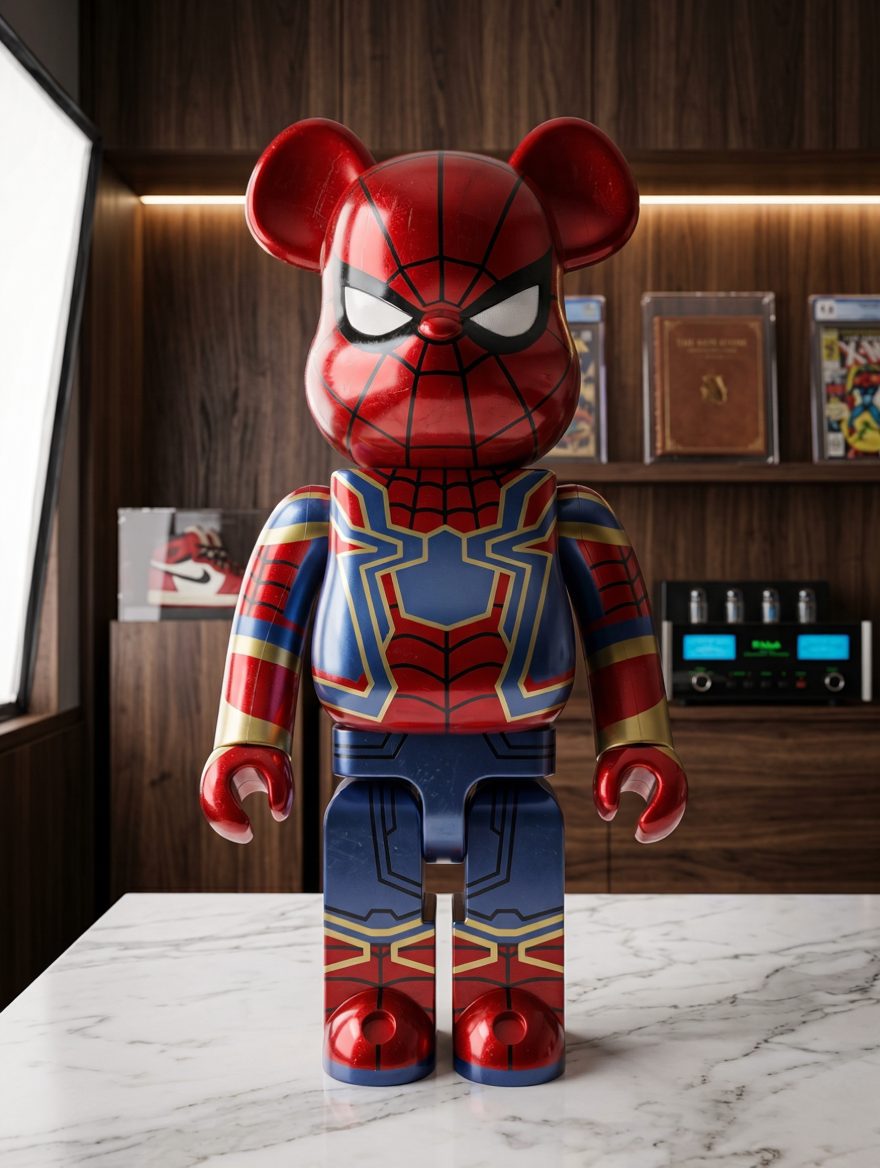
    When Medicom Toy began producing Spider-Man Bearbricks, they stepped into all of that. The web pattern on a 70-centimetre vinyl figure isn’t neutral. It carries sixty years of comics history, five film franchises, and the specific emotional memory of whoever is looking at it and remembering which Spider-Man was theirs.

    Why Spider-Man Works on a Bearbrick

    Not every character translates cleanly to the Bearbrick format. The rounded head, the rounded body, the simplified geometry — some characters lose their identity when filtered through it. Spider-Man doesn’t.

    The web pattern is the key. Ditko’s original costume design — red and blue with black webbing, white lenses set into the mask — works precisely because the pattern is the costume, not a decoration on top of it. The web lines define the surface. Put that same logic onto a Bearbrick and the webbing follows the bear’s curves without losing coherence. The white eye lenses translate naturally to the Bearbrick’s minimal face. The red and blue colourway is vivid enough at any scale.

    Then there’s the silhouette. Spider-Man doesn’t have a cape, a utility belt, or specific accessories that the figure needs to include to read as itself. The costume is the character, and the costume is printable. A Spider-Man Bearbrick in a sealed foil bag communicates what it is before you open it, which is more than most character figures can claim.

    The fact that Spider-Man has multiple distinct visual identities — Peter Parker’s classic suit, Miles Morales’s black and red, Gwen Stacy’s white and pink, the 2099 blue on black — gives Medicom Toy a range of design options that other Marvel characters don’t. Each film, each character, each iteration produces a new visual language that can be mapped onto the Bearbrick format with genuine distinctiveness. You can tell a Miles Morales Bearbrick from a Peter Parker Bearbrick immediately. That’s not always possible with superhero figures that rely on subtle differences.

    The Releases: Every Major Spider-Man Bearbrick

    Medicom Toy’s Spider-Man collaboration with Marvel has produced figures tied to specific film releases, comic book storylines, and ongoing Marvel character expansions. Here’s what the catalogue actually contains.

    The Amazing Spider-Man — 2012

    The Amazing Spider-Man 1000% Bearbrick was released in November 2012 at a price of 29,400 yen (approximately $370 USD). This was a film tie-in, corresponding to the Marc Webb–directed Amazing Spider-Man reboot with Andrew Garfield in the lead role. The figure carried the classic red and blue web pattern at 70 centimetres — the first major Spider-Man Bearbrick at the 1000% scale.

    The timing matters. 2012 was an interesting moment for Spider-Man in popular culture — Garfield’s version was attempting to reset expectations after the Sam Raimi trilogy had ended, and the character was being reimagined for a new generation. The Bearbrick landed in that context, which gives it a specific cultural timestamp for collectors who remember that moment.

    Smaller versions from the same era appeared through the Happy Kuji lottery system — the Japanese prize redemption format where you pull a card at a convenience store or toy shop and win one of a tiered set of figures. Happy Kuji Spider-Man figures covered a wide range of characters from the Marvel universe: Scarlet Spider, Venom, Carnage, Mysterio, Doctor Octopus, and classic Spider-Man all appeared as 100% figures through the Happy Kuji lottery releases.

    The Happy Kuji system is significant for European collectors because it represents a distribution channel with essentially no official Western outlet. These figures were available in Japanese convenience stores and specific lottery venues — not in comic shops, not through standard toy retailers. The European secondary market for early Happy Kuji Spider-Man Bearbricks reflects that geographic restriction.

    No Way Home — The Three Peters

    The Bearbrick x Marvel Spider-Man No Way Home Upgraded Suit 100% and 400% set was released on December 1, 2021 and retailed for $155.

    No Way Home was a different kind of Spider-Man moment. The film brought together three live-action versions of Peter Parker — Tobey Maguire, Andrew Garfield, and Tom Holland — in a multiverse storyline that functioned simultaneously as nostalgia, franchise continuation, and a genuine argument about what the character means across different generations of viewers. It was the first film in years where the emotional stakes felt genuinely earned by decades of accumulated audience investment.

    Medicom Toy’s response was to produce multiple figures tied to different versions of the character appearing in the film. The Friendly Neighborhood Spider-Man 1000% from the No Way Home lineup currently has a lowest ask of $801 on StockX, with a last sale of $575. The gap between retail and secondary market reflects the film’s cultural weight — No Way Home broke box office records in December 2021 and generated a level of collector interest that most Marvel films don’t approach.

    Multiple No Way Home variants exist in the Bearbrick catalogue: the Upgraded Suit, the Friendly Neighborhood version, and various 100% and 400% set configurations. Collectors building a complete No Way Home Bearbrick set are pursuing a focused sub-collection that documents a specific film moment in the format.

    Into the Spider-Verse — Miles Morales

    This is where the Spider-Man Bearbrick catalogue gets most interesting for collectors who care about the character’s evolution beyond Peter Parker.

    The Bearbrick x Marvel Spider-Man Into the Spider-Verse Miles Morales 100% and 400% set was released on September 1, 2022 and retailed for $120. The set featured one 2.75-inch figure and one 11-inch figure, both in Miles’s black and red suit from the 2018 film. The thing that made this version special was that it showed how much Spider-Man has evolved over the years.

    Into the Spider-Verse won the Academy Award for Best Animated Feature in 2019. That’s not a minor detail — it’s the only Marvel film to win an Academy Award in a non-technical category, and it won because it was genuinely artistically significant. The animation style was unlike anything that had been done before in mainstream animation: panels from a comic book rendered in motion, different characters drawn in different visual styles, the whole film operating as a love letter to comics as an art form while also telling a genuinely moving story.

    Miles Morales as a character had been around since 2011 in the comics — created by writer Brian Michael Bendis and artist Sara Pichelli — but the film made him a mainstream cultural figure on the level of Peter Parker. His suit design is deliberately different from the classic: black ground with red and blue rather than red and blue with black webbing. The contrast between the two suits is immediately readable. When the Miles Morales Bearbrick sits next to a classic Spider-Man Bearbrick on a shelf, the visual argument about legacy and succession is right there in the colours.

    The Into the Spider-Verse Miles Morales 100% and 400% set currently has a lowest ask of $376 on StockX, with a last sale of $318. That’s a meaningful secondary market premium on a figure that retailed at $120, reflecting sustained collector demand from audiences who love the film.

    Spider-Gwen — Ghost-Spider

    The Bearbrick x Marvel Spider-Man Into the Spider-Verse Spider-Gwen 100% and 400% set currently has a lowest ask of $190 on StockX with a last sale of $172.

    Spider-Gwen — Gwen Stacy in the dimension where she was bitten by the radioactive spider rather than Peter Parker — has her own specific design language. The white suit with pink and black accents, the hood pulled back to reveal her identity in certain panels, the ballet slipper-style feet in the original comic design. When Medicom renders that on a Bearbrick, the figure is immediately distinct from the Miles Morales and Peter Parker versions. The three figures together represent three different Spider-People from three different dimensions — which is both the plot of Into the Spider-Verse and a compelling display logic for collectors.

    Across the Spider-Verse — The 2025 Sets

    The BE@RBRICK x Spider-Man: Across the Spider-Verse collaboration was released on April 30, 2025, featuring four figures in two sets. The Spider-Man Miles Morales and Spider-Gwen 2pcs set, and the Spider-Man 2099 and Spider-Woman 2pcs set, each at approximately $25.

    Spider-Man 2099 — Miguel O’Hara — has a specific design that reads completely differently from any other version of the character. Dark blue suit with a red spider symbol, white eyes without webbing, a harder silhouette. The character’s visual language is more science fiction than superhero, which reflects his origin as a Spider-Man story set in a dystopian future.

    The Spider-Man 2099 and Spider-Woman 2pcs set is a 100% scale figure, posable at the shoulders and hips, compact enough for display almost anywhere. At the $25 price point, these are the most accessible Spider-Man Bearbricks Medicom has produced — entry-level figures for new collectors, or additions to an existing Spider-Verse display.

    Scarlet Spider and Comic Variants

    The Bearbrick x Marvel Spider-Man Scarlet Spider 100% and 400% set currently has a lowest ask of $129 on StockX.

    The Scarlet Spider — Ben Reilly, Peter Parker’s clone — has a costume so specifically of its era that it functions almost as a historical document. The blue hoodie with a red spider symbol across the chest, the torn sleeves, the webbing on the hands — this is a 1990s comics aesthetic rendered faithfully, and the collector market for it is primarily people who read those comics as children. It’s nostalgia as design brief, and it works precisely because the Bearbrick format preserves the visual details that make it recognisable.

    The Happy Kuji Extended Universe

    The Happy Kuji lottery releases deserve more attention than they typically get in Western discussions of Spider-Man Bearbricks. Venom, Carnage, Mysterio, and Doctor Octopus have all appeared as 100% Bearbrick figures through the Happy Kuji Marvel lottery system.

    These figures are important for a few reasons. First, they represent characters who won’t receive standalone 1000% releases anytime soon — the lottery format allows Medicom and Marvel to test demand for secondary characters without committing to a major production run. Second, the lottery distribution means they’re genuinely hard to find outside Japan. A Carnage 100% from a Happy Kuji Marvel lottery is not the same as a standard retail Bearbrick — it went through a specific Japanese distribution system with no Western equivalent, which creates secondary market scarcity that has nothing to do with production numbers.

    For collectors building a comprehensive Spider-Man Bearbrick collection, the Happy Kuji figures are the hardest to source and the most representative of how deep Marvel’s character roster goes when Medicom Toy has the right licensing relationship.

    The Price Landscape: What Spider-Man Bearbricks Actually Cost

    The Spider-Man Bearbrick market is more accessible than the art collaboration end of the Medicom catalogue, but it’s not cheap, and specific figures command genuine secondary market premiums.

    At the entry level: the 2025 Across the Spider-Verse pairs at around $25 retail make the format accessible to anyone. The Into the Spider-Verse 100% and 400% sets at $120 retail are recent enough to still appear at reasonable secondary market prices — the Miles Morales set around $318–$376 on StockX.

    In the middle tier: the No Way Home Upgraded Suit 100% and 400% set at $155 retail, the Spider-Gwen set at $172–$190 secondary market. These figures represent film collaborations with active collector bases on both the Bearbrick and Marvel sides.

    At the upper end: the No Way Home Friendly Neighborhood Spider-Man 1000% with a last sale of $575 and current lowest ask of $801. The 2012 Amazing Spider-Man 1000% in clean condition with original packaging — a figure nearly fifteen years old at this point — commands prices that reflect both age and scarcity. Medicom Toy has created many Spider-Man Bearbrick products, including those inspired by the original Spider-Man as well as those tied to No Way Home. The earlier releases, produced in smaller initial quantities when the global Bearbrick market was less developed, are the harder ones to find now.

    Happy Kuji lottery figures sit in their own category. Venom and Carnage 100% figures in sealed original packaging with lottery cards trade at premiums that reflect their specific distribution history. A Carnage 100% from the right Happy Kuji set is not available from any Western retailer. You are always buying from someone who either pulled it themselves or sourced it from Japan.

    Spider-Man 2099 and the Multiverse Expansion

    The introduction of Spider-Man 2099 as a Bearbrick character in the Across the Spider-Verse collection represents something interesting about where the Spider-Man franchise is heading. The multiverse concept — which the comics have used since the 1960s but which became a mainstream film concept with Into the Spider-Verse and then the MCU’s Phase 4 — means the character’s visual history is now officially multiple simultaneous things.

    Miguel O’Hara’s 2099 design was created in 1992 by Peter David and Rick Leonardi for a comic set a hundred years in the future. It was a specific, deliberate departure from everything that defined the Peter Parker aesthetic. The suit is darker, harder-edged, without the web pattern that’s been part of Spider-Man since 1962. The white eyes are larger. The figure reads as science fiction first and superhero second.

    On a Bearbrick, these differences are visible. The 2099 figure in the Across the Spider-Verse set doesn’t look like the Miles Morales figure or the Spider-Gwen figure — they share a format but not a visual language. This is exactly what collectors building a multiverse display are looking for: multiple figures with a shared identity but visually distinct enough that the differences tell a story.

    Collecting Spider-Man Bearbricks: A Practical Guide

    The Spider-Man Bearbrick catalogue is large enough that having a focus makes collecting significantly more satisfying.

    The most natural approach is film-based: a No Way Home collection, an Into the Spider-Verse collection, an Across the Spider-Verse collection. Each film has its own set of characters, its own visual language, and its own cultural moment. A complete No Way Home Bearbrick display — multiple suit variants, multiple characters from the film — tells a specific story about 2021 and what that film meant.

    The character-based approach is different: all Miles Morales Bearbricks across different releases, or all Gwen Stacy figures, or every classic Peter Parker variant from 2012 to the present. This approach treats the character as the constant and the different releases as documentation of how that character has been depicted across time.

    The comprehensive approach — everything, all characters, all sizes, all releases — is a serious project that requires patience and budget. The Happy Kuji lottery figures alone are a years-long secondary market hunt. The 2012 Amazing Spider-Man 1000% in original packaging is not easy to find. Early series 100% figures where Spider-Man appeared in the Hero category are scattered across collector markets with varying authentication.

    Authentication matters throughout. The Spider-Man licence is broad enough that the market has counterfeit products at multiple price points. For the larger figures — 400% and 1000% scale — check the Medicom Toy foot stamp and the Marvel licensing credits on the packaging. For the Happy Kuji lottery figures, the original lottery card and sealed packaging are the primary authentication markers. Figures offered significantly below known secondary market prices deserve careful scrutiny.

    Condition affects value non-linearly at the upper end. A No Way Home 1000% in pristine condition with original box is a different proposition from the same figure with paint wear and no box. The difference in price can be several hundred dollars. At the 100% and 400% scale, condition is less critical — these figures are smaller, more robust, and the secondary market is more liquid.

    The Villains: Venom, Carnage, and the Spider-Man Universe

    Any serious discussion of Spider-Man Bearbricks has to include the villains, because they’re part of the same collector story.

    Venom is one of Marvel’s most recognisable character designs — black symbiote suit, white spider symbol, wide white eyes, the exaggerated teeth. As a Bearbrick, the contrast between the white eye shape and the solid black body is visually striking, and the Happy Kuji lottery distribution means it’s consistently one of the most discussed figures in secondary market communities.

    Carnage — the red and black symbiote bonded to serial killer Cletus Kasady — has an even more distinctive visual: chaotic red tendrils against black, no clear edges, the design deliberately unstable-looking. The Bearbrick format creates interesting constraints for this design because the format is inherently ordered and rounded, while Carnage as a character is defined by formlessness and violence. The tension between format and subject is genuinely interesting on the figure.

    Mysterio — the illusionist villain with a fishbowl helmet and green cape — appeared in Happy Kuji releases tied to Spider-Man: Far From Home. The fishbowl dome translates directly onto the Bearbrick’s rounded head in a way that works immediately. Doctor Octopus, the Shocker, the Scarlet Spider’s villains — the Marvel universe is deep enough that Medicom and Marvel have a nearly inexhaustible source of characters for future releases.

    Why the Spider-Man Bearbrick Is Different From Other Marvel Figures

    Marvel has licensed its characters to Medicom Toy across a wide range — Iron Man, Thor, Captain America, Deadpool, the X-Men. Spider-Man occupies a different position in that catalogue, and it’s worth understanding why.

    Spider-Man is the only Marvel character who has appeared across every major Medicom format and at every scale, consistently, across more than a decade of production. The character’s visual range — multiple costumes, multiple characters wearing the mantle, multiple film franchises with distinct design languages — gives Medicom more design options than any other Marvel licence. And the character’s cultural reach is genuinely global in a way that some other Marvel heroes aren’t: Spider-Man is as recognisable in Tokyo as he is in New York, which matters when you’re a Japanese toy company making objects for a global collector market.

    The Into the Spider-Verse and Across the Spider-Verse films specifically accelerated this global recognition by making the multiversal concept explicit and by introducing characters — Miles Morales, Gwen Stacy, Spider-Man India — who resonate with audiences who didn’t always see themselves in the Peter Parker version. A Miles Morales Bearbrick collector is often a different person from a classic Spider-Man Bearbrick collector. The Marvel licence now covers both of them simultaneously.

    Frequently Asked Questions

    When was the first Spider-Man Bearbrick released?

    The Amazing Spider-Man 1000% Bearbrick was released in November 2012, tied to the Marc Webb–directed Amazing Spider-Man film with Andrew Garfield. Earlier 100% figures appeared through the Happy Kuji lottery system before this.

    Which Spider-Man Bearbrick is the most valuable?

    Currently, the No Way Home Friendly Neighborhood Spider-Man 1000% commands the highest secondary market price — with a lowest ask of $801 and a last sale of $575 on StockX. Rare Happy Kuji lottery figures in sealed condition can also command significant premiums.

    Is there a Miles Morales Bearbrick?

    Yes. The Miles Morales Spider-Man Into the Spider-Verse 100% and 400% set was released in September 2022 at $120 retail, featuring Miles’s black and red suit from the film. He also appears in the 2025 Across the Spider-Verse set.

    Is there a Spider-Gwen Bearbrick?

    Yes. The Spider-Gwen Into the Spider-Verse 100% and 400% set is available on the secondary market with a last sale around $172. She also appears in the 2025 Across the Spider-Verse paired set with Miles Morales.

    Where can I find the Happy Kuji Spider-Man figures?

    The Happy Kuji lottery figures — Venom, Carnage, Mysterio, Scarlet Spider, and others — were distributed through Japanese lottery retailers with no Western equivalent. The only legitimate source for European collectors is the secondary market: documented collector sales, reputable dealers with Japan sourcing, and platforms with authentication guarantees.

    What sizes do Spider-Man Bearbricks come in?

    Spider-Man Bearbricks have been produced in 100%, 400%, and 1000% sizes across various releases. The 2025 Across the Spider-Verse figures are 100% scale. Most major film tie-ins produce 100% and 400% paired sets plus a standalone 1000%.

  • 100% Bearbrick: The Complete Guide to the Smallest Figure With the Biggest Collector Culture

    Seven Centimetres. Fifty Series. A Rabbit Hole With No Bottom.

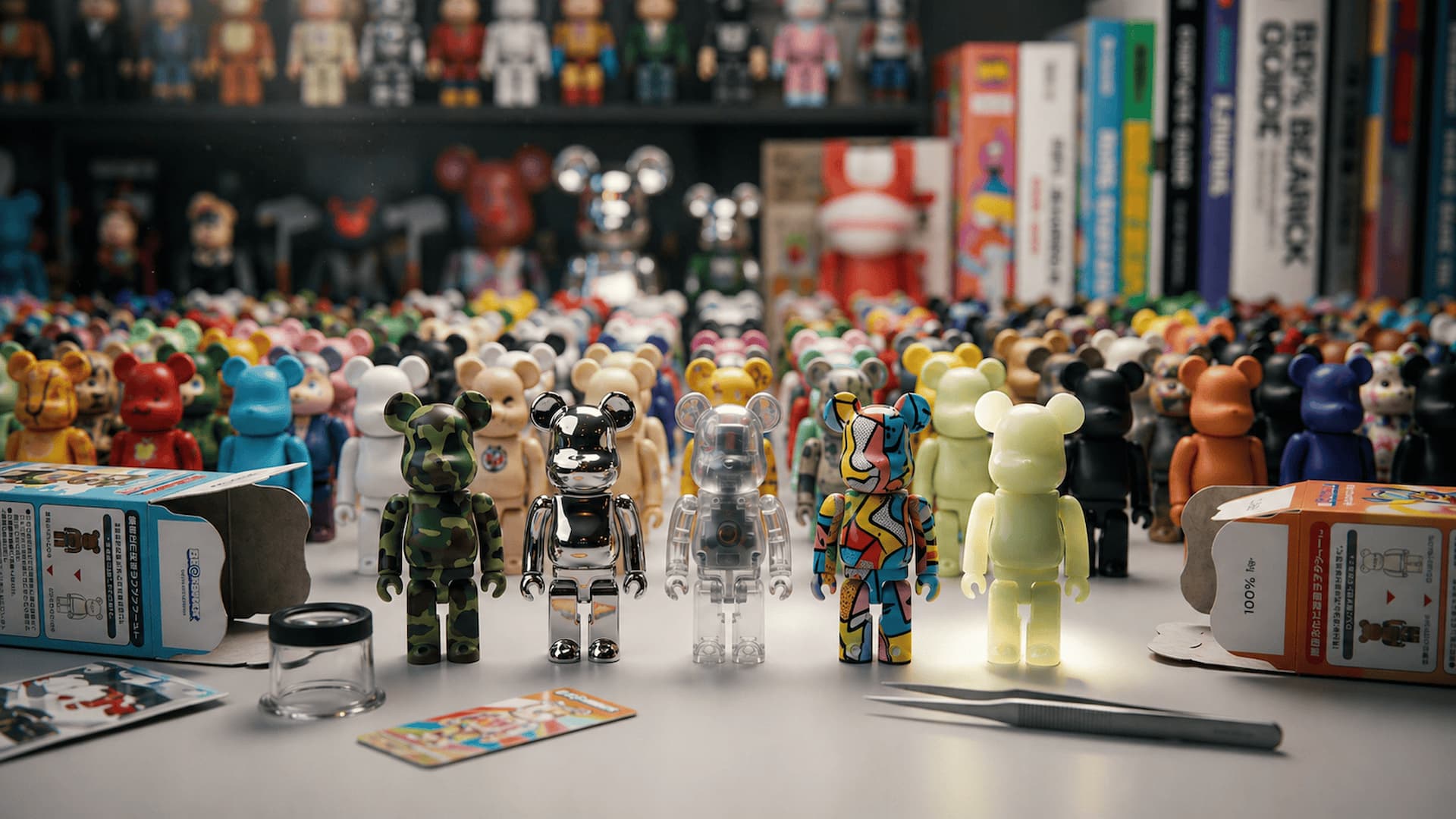
    The first Bearbrick was released on May 27, 2001, as a free gift to attendees of the World Character Convention in Tokyo. It was a simple white bear featuring the Bearbrick logo — a blue bear shape with a red @ enclosed within. It measured 70 millimetres tall. That measurement became the standard — the 100%.

    Nobody kept it. Why would you? It was a handout at a convention, a piece of branded plastic nobody expected to see again. The people who pocketed one and forgot about it are probably still finding them in old jacket pockets somewhere in Tokyo. The people who kept them in the original sleeve, in a box, in a cool dark place — those people are now sitting on something with a very different value.

    That’s the thing about the 100% Bearbrick. Seven centimetres tall, made of ABS plastic, sold in a sealed foil bag so you don’t know what you’re getting until you open it. At that size and that price point, it doesn’t demand to be taken seriously. And yet across more than fifty numbered series, two drops per year, and collaborations spanning Andy Warhol to Sonic the Hedgehog to the Hieronymus Bosch triptych from the Museo del Prado, it has built one of the most active collector communities in the designer toy world.

    This is the complete guide to the 100% Bearbrick — what the series structure actually means, how rarity works, which figures matter, and why a 7-centimetre toy has developed a secondary market with its own economics.

    What a 100% Bearbrick Actually Is

    Before anything else, let’s get the basics right, because there’s genuine confusion around the percentage system.

    The first Bearbrick measured 70 millimetres and became the 100% — the baseline. All subsequent sizes follow the same system: 400% is roughly four times the size (280mm), and 1000% is ten times (700mm).

    The 100% is the format all Bearbrick series are built around. Every Bearbrick series is released in 100% form and sold in blind boxes — each box contains one figure, and the only way to know which you’ve received is to open it. The 400% and 1000% figures exist in series format too, but more sporadically, and they’re sold openly rather than blind. The 100% blind box is the heartbeat of the Medicom Toy release calendar.

    There are two drops per year — a summer release and a winter release. Each series is consecutively numbered. As of 2025, Medicom reached Series 51. Fifty-plus series, twice a year, consistently, for over two decades. The discipline of that release calendar is part of what built the collector community — you always know when the next one is coming, even if you never quite know what will be in it.

    Each series contains 24 unique figures. Each figure comes in a sealed foil bag with an artist card providing details about the specific bear inside. The card is part of the package — it provides context for the design, often with a small backstory about the character or collaboration, written in the slightly oblique style that Medicom Toy has maintained since the beginning.

    The Category System: What You’re Actually Chasing

    This is where most new collectors get lost, and where experienced collectors find their focus. Every 100% Bearbrick series is structured around recurring categories, each with a fixed rarity percentage built into the production. Understanding the categories is the foundation of collecting seriously.

    Basic — The Letter Bears

    Basic figures are solid-colour Bearbricks with a letter from the word “BEARBRICK” on their chest. There are nine varieties in each series, one for each letter. When you line them up correctly, they spell the word out. Basic is the most common category, appearing at a rate of 14.58% in a standard case.

    The Basic bears are divisive in the collector community. Some people find them boring — a solid colour and a letter, minimal design, maximum frequency. Others build complete sets across multiple series, treating the colour progressions as a collection in themselves. The bubble gum pink from Series 45, the bold magenta from Series 50 — each Basic tells you something about what Medicom Toy was thinking about that season, even if the design is deliberately minimal.

    The backstories on the artist cards are where Basic gets interesting. Medicom writes genuinely strange micro-fiction for each Basic figure — the Series 47 off-white tote bag Basic has a story about mountaineers and pepper spray that makes no obvious sense, and that’s entirely intentional. The cards have their own following among collectors who appreciate the absurdist writing alongside the figures themselves.

    Jellybean — Translucent and Candy-Bright

    Jellybean figures are solid-colour Bearbricks moulded in translucent plastic, appearing at a rate of 11.44% per case. They’re immediately recognisable — hold one up to light and it glows slightly, the translucent material catching and filtering what comes through. The name is accurate: they look like oversized sweets, and they come in whatever colour palette Medicom has chosen for that series.

    Series 47’s Jellybean was a Konpeitou candy design — a Japanese confection in pastel shades. Series 46 used rice as its concept. Series 50 went light blue. The Jellybean is the category where Medicom can play freely with colour and material without the constraint of licensing or character design. The result is usually one of the most photogenic figures in each drop.

    Pattern — All-Over Design

    Pattern Bearbricks feature all-over printed designs ranging from classic polka dots to complex artistic patterns, with a rarity of 11.45%. The Pattern category has a significant history: early series featured designs by Charles Eames — yes, the Eames of the lounge chair — which gave the format an early connection to the design world that established its credibility beyond pure toy collecting.

    Later Pattern figures have included Kintsugi (the Japanese art of repairing pottery with gold, applied across the bear’s surface), jungle prints, snowflakes, and graphic geometric designs that could pass as independent art prints. The Pattern category is where you’ll often find the most design-forward figures in a series, made for collectors who care about surface design as much as character.

    Flag — National Colours on Bear Form

    Flag figures represent different countries’ national flags at a rarity of 9.37%. Simple concept, clean execution: the bear is painted in the colours and pattern of whichever national flag Medicom has chosen for that series. Austria for Series 47 — red and white horizontal stripes. Ukraine for Series 46 — blue and yellow, a release that carried a specific weight given when it appeared.

    Flag Bearbricks appeal to collectors who have personal connections to specific countries, which creates an interesting secondary market pattern: the rarity percentage is fixed, but the demand for any given flag is wildly variable depending on the collector base for that country. An Austrian flag Bearbrick trades differently in Vienna than it does in Tokyo.

    Horror — Genre Cinema on Vinyl

    Horror category figures are based on well-known horror films or other horror sources, appearing at 9.37% in each case. This is consistently one of the most anticipated categories among collectors who follow genre cinema. The Bearbrick format does something interesting to horror characters — the rounded, friendly silhouette creates contrast with disturbing source material that’s genuinely striking.

    Series 47’s Horror entry was M3GAN from the 2022 film of the same name — the horror android translated onto the bear’s surface, maintaining the character’s unsettling doll-like precision. Previous Horror figures have included Beetlejuice, characters from The Boys, Emily the Strange, and other genre staples. Horror collectors and Bearbrick collectors form a surprisingly large intersection.

    SF (Science Fiction) — Anime, Space, and Beyond

    The Science Fiction category covers characters and themes from popular sci-fi franchises, appearing at around 9.37-10.41% per case. The range here is deliberately broad. SF can mean Hollywood blockbuster (Star Wars Stormtrooper, widely considered a landmark Series figure), Japanese anime (Ghost in the Shell’s Motoko Kusanagi in Series 47), or video game characters (Sam Porter Bridges from Death Stranding 2 in Series 50).

    The anime collaborations are particularly significant for the Japanese market, where Bearbrick has its deepest roots. A Motoko Kusanagi Bearbrick bridges the collector communities for Ghost in the Shell and Medicom Toy in a way that appeals to both simultaneously. These tend to perform well on the secondary market because both fan bases are active.

    Cute — Kawaii Culture Meets Collector Design

    The Cute category, appearing at 13.54% — one of the higher rarity rates — covers figures capturing Japanese kawaii aesthetics. This is where Medicom Toy connects most directly to mainstream Japanese pop culture. Sonic the Hedgehog appeared in Series 46 under Cute, not SF. Series 50 included a patchwork teddy bear and a pastel-coloured Furby under the Cute theme. Monchhichi — a Japanese plush toy franchise that has been running since 1974 — made its Bearbrick debut in this category.

    Hero — Superheroes in Bear Form

    The Hero category, introduced in Series 21, covers DC Comics superheroes at a rarity of 7.29%. Batman and The Flash appeared together in Series 47, both maintaining recognisable design details within the Bearbrick’s rounded silhouette. The Hero category is one of the more recent additions to the standard series structure and has established its own collector following among DC fans who collect Bearbrick figures specifically for the character representation.

    Artist — The Category That Changes Everything

    The Artist category features designs by famous artists, adding high art to the collection. There are typically two Artist figures per series: the first at approximately 4.16% rarity and the second at 1.04% — the rarest standard category in the entire series.

    This is where the 100% Bearbrick connects directly to the art world. Artist figures have included works by Jackson Pollock, Keith Haring, Jean-Michel Basquiat, and a collaboration with the Museo del Prado featuring Hieronymus Bosch’s triptych “The Garden of Earthly Delights” in Series 46. A reproduction of a 15th-century Flemish masterpiece, rendered on a 7-centimetre vinyl bear and packed in a sealed foil bag — that’s a sentence that should be stranger than it sounds.

    Series 47’s Artist category included a figure based on the Metropolitan Museum of Art’s Auguste Renoir painting “A Young Girl with Daisies.” Series 47 also featured Jackson Pollock and the Japanese creative house LAND. The Artist category is where serious art collectors occasionally intersect with the Bearbrick world for the first time.

    Secret and Super Secret — The Chase Figures

    The Secret Bearbrick is a hidden figure not shown on the box or in any advertisements. These chase figures are the ultimate prize for Bearbrick hunters. The chance of getting a Secret figure is rated at 0.52% — the highest level of rarity in any standard series.

    This single number — 0.52% — is the engine of the entire 100% blind box secondary market. A case of 24 blind boxes statistically contains approximately one Secret figure. Buy a single box and your odds are roughly 1 in 192. The Secret is announced only after the series launches, sometimes through collector forums, sometimes through Medicom Toy’s own channels. Until someone opens one and posts it, nobody knows what’s inside.

    Series 50, the anniversary edition, included a particularly rare Commemorative Edition and a David Guetta Secret figure. The David Guetta reveal generated the kind of collector reaction that only figures with genuine cultural weight produce. Music fans who had never bought a Bearbrick started looking at secondary market pricing. Existing collectors who pulled one felt the specific satisfaction of a collector who found something genuinely valuable.

    The Rarity Economics: Why a $15 Blind Box Turns Into a $300 Secondary Market Purchase

    Understanding why 100% Bearbrick prices are what they are on the secondary market requires understanding how the production numbers and distribution work together.

    Many retailers sell Bearbricks in blind boxes at a fixed price regardless of which figure is inside. Other retailers calculate the frequency of figures and sell them at prices that vary accordingly — the Basic figure at the lowest price (most common), the second Artist figure at the highest (rarest).

    When a series sells out at retail, the secondary market takes over. Figures that were inside sealed foil bags for the same retail price now separate into dramatically different values based purely on which design was inside. A Basic from Series 51 might trade at or below retail on eBay or StockX. A second Artist from the same series might trade at 5x to 10x retail. A Secret, when authenticated, can trade at 20x retail or more depending on the design and collector interest.

    Series releases happen twice yearly, summer and winter. Between releases, the secondary market for older series stabilises around documented rarity percentages. You can calculate, given a known production run and a known rarity percentage, approximately how many of any given figure exist. That number only decreases over time as figures are damaged, lost, or absorbed into permanent collections. The Secret from Series 42 is rarer in 2026 than it was in 2019. It will be rarer still in 2030.

    For collectors who buy at retail: the system rewards patience and luck. Opening fifty blind boxes across multiple series, you’ll statistically land one Secret, about two second Artist figures, and a full range of everything else. Some collectors approach this systematically — buying full cases of 24, tracking what they pull, trading duplicates. Others buy singles, accepting the odds.

    For collectors buying on the secondary market: you’re paying for certainty. You know exactly which figure you’re getting. The premium over retail reflects the value of that certainty plus the scarcity of figures that have left the original distribution channel.

    The Most Significant 100% Bearbrick Series and Figures

    Series 12 — The Andy Warhol Banana

    One of the most historically significant 100% figures: the Andy Warhol Banana Bearbrick, featuring the banana artwork from The Velvet Underground’s 1967 debut album, appearing in Series 12’s Pattern category. It’s a figure that connects Warhol’s most recognisable pop art object, one of rock music’s most iconic album covers, and the Bearbrick format — three separate cultural references collapsed into 70 millimetres.

    Series 42 — The Warhol and Basquiat Artist Category

    Series 42 featured an Andy Warhol x Jean-Michel Basquiat 100% figure in the Artist category. The combination of two major estate collaborations in a blind box format, at a retail price accessible to any collector, made this one of the more widely discussed Series 42 releases. Finding the Warhol x Basquiat in a sealed box feels different from buying the same figure openly on the secondary market — the blind box format preserves the discovery element that some collectors value as much as the object itself.

    Series 45 — Kintsugi Pattern

    The Kintsugi Pattern Bearbrick is consistently cited by design-oriented collectors as one of the best executed Pattern figures in the series history. The concept — the Japanese art of repairing broken pottery with gold lacquer, making the repair itself the aesthetic — applied to the Bearbrick’s surface creates something that reads simultaneously as toy and art object. The gold repair lines crossing the bear’s body are visually exact. The concept is precise. It’s the kind of figure where Medicom Toy’s design intelligence is most visible.

    Series 46 — Hieronymus Bosch and the Museo del Prado

    Series 46, released in July 2023, featured a collaboration with the Museo del Prado in Madrid — Hieronymus Bosch’s triptych “The Garden of Earthly Delights” applied to a 100% Bearbrick as an Artist category figure. This is worth pausing on. The Prado is one of the world’s great art museums. Bosch painted the Garden of Earthly Delights approximately 500 years ago. Medicom Toy took that painting, licensed it with the museum, and put it on a 7-centimetre vinyl figure sold in a sealed foil bag for a few dollars. Either this is absurd or it is exactly what art in the 21st century looks like. Probably both.

    Series 47 — Ghost in the Shell and Renoir

    The Artist x Renoir figure from Series 47 — the Met collaboration putting “A Young Girl with Daisies” on a Bearbrick — and the SF category’s Motoko Kusanagi from Ghost in the Shell bracket two entirely different collector communities in the same series. Someone who bought Series 47 for the Ghost in the Shell figure might open a Renoir and not know what to do with it. Someone who bought for the Renoir might not know who Motoko Kusanagi is. The secondary market handles the redistribution.

    Series 50 — The Anniversary

    Series 50, released in July 2025, celebrated Medicom Toy’s 50th Bearbrick series with an impressive mix of pop culture, music, and nostalgia. Highlights included Young-Hee from Squid Game, Megan 2.0, HIDE by X JAPAN, Bring Me the Horizon, Monchhichi, Furby, Sam Porter Bridges from Death Stranding 2, and the David Guetta Secret figure.

    Anniversary series tend to be more ambitious in their licensing scope, and Series 50 delivered on that — the combination of horror, gaming, music, nostalgia, and anime in a single series is a summary of everything the 100% format has tried to be across its history.

    Series 51 — Iron Maiden and Chupa Chups

    Released in December 2025, Series 51 included the iconic Eddie from Iron Maiden — an absolute must-have for metal fans — and colourful Chupa Chups designs adding retro playfulness. The Eddie figure is particularly significant: Iron Maiden’s zombie mascot, rendered at 70 millimetres, maintaining the specific visual details that make Eddie immediately recognisable to decades of metal fans. The collision of heavy metal album art iconography and the Bearbrick format is the kind of unexpected combination that defines what the series does best.

    How to Collect 100% Bearbricks Without Getting Lost

    The 100% Bearbrick world is big enough that you need a strategy. Here are the approaches that actually work.

    Focus on a category. Trying to collect everything from every series is an expensive and eventually impossible project. Collectors who find genuine satisfaction tend to focus — all Horror figures across every series, or all Artist figures, or complete Basic sets in specific colour families. A focused collection has internal logic that a completist collection rarely achieves.

    Understand which figures you’re chasing before you buy blind. The secondary market means you can always buy specific figures openly once a series has been released and collectors have documented its contents. Buying blind is a gamble that’s part of the experience for many collectors. Buying what you actually want, at the secondary market premium, is a different but equally valid approach.

    Track the series structure. Knowing that Artist figures appear at 4.16% and 1.04% means knowing what secondary market pricing is likely to look like. Figures that appear at 1.04% in a case will trade at meaningful premiums. Figures at 14.58% will trade near retail. The rarity percentages are published by Medicom Toy — use them.

    Store properly. A 100% Bearbrick in original foil packaging and with its collector card is worth more than the same figure loose. The card and packaging are part of the object. If you open blind boxes, keep everything — the foil, the insert, the card — alongside the figure.

    Buy from authenticated retailers. The 100% Bearbrick market has counterfeit blind boxes, particularly for popular series. Sealed foil bags can be resealed. Authenticated retailer stock — distributors with Medicom Toy supply agreements — is the only guaranteed-original source at retail. On the secondary market, check that figures come with original cards and that the condition matches what’s represented.

    The 100% Within the Larger Bearbrick World

    The 100% figure is the entry point into the Bearbrick collector world for most people. It’s affordable enough to buy without serious deliberation, small enough to display anywhere, and varied enough across fifty-plus series that there’s always something you don’t have yet.

    But it’s also the format that reveals the most about what Medicom Toy is actually doing. The 1000% Bearbrick is a statement piece — it commands space, demands attention, signals to visitors what you know and what you value. The 100% blind box is where the collecting logic lives. The randomness, the rarity percentages, the Artist category’s art world connections, the seasonal release structure, the secondary market that emerges from all of it — this is the format that built the community.

    Collectors who want specific designs without the blind box risk can buy individual figures from retailers that calculate frequency and price accordingly, with the rarest figures at the highest prices and the Basic figures at the lowest. The market makes the rarity legible.

    What it can’t make legible is why a Hieronymus Bosch painting, a Ghost in the Shell character, Eddie from Iron Maiden, a Japanese candy reference, and a David Guetta likeness can coexist in the same 24-unit case and make sense. But they do. That’s what fifty series of consistent, obsessive curation looks like when you put them all together.

    Frequently Asked Questions

    What size is a 100% Bearbrick?

    A 100% Bearbrick measures 70 millimetres (7 centimetres / approximately 2.75 inches) tall. This is the baseline size from which all other Bearbrick percentages are calculated.

    How many figures are in each 100% Bearbrick series?

    Each series contains 24 unique figures across the standard categories. A full case of blind boxes contains 24 units — statistically one of each design, though the randomisation means duplicates are common.

    What is a Secret Bearbrick?

    A Secret Bearbrick is a hidden figure not advertised on the box or in promotional materials. It appears at a rate of 0.52% — statistically one per case of 192 units — making it the rarest figure in any standard series.

    How often are new 100% Bearbrick series released?

    Twice per year — a summer release and a winter release. Each is consecutively numbered.

    Are 100% Bearbricks a good starting point for new collectors?

    Yes. The price point is accessible, the categories help you understand what you’re chasing, and the blind box format adds the discovery element that many collectors find genuinely enjoyable. Starting with a current series in blind box form, then exploring the secondary market for specific figures from older series you want, is the standard path.

    What’s the most valuable 100% Bearbrick?

    Condition matters more than series number at this size. A Secret figure from a recent popular series in original sealed packaging with card is the upper end of 100% pricing. Artist category figures from well-documented artist collaborations (Warhol, Basquiat, Renoir at the Met) trade at meaningful premiums. First series Bearbricks — approaching twenty-five years old — command retrospective value if in clean condition.

  • Keith Haring Bearbrick: The Artist Who Gave His Work Away — and Why Collectors Now Pay Thousands for It

    Chalk, Subways, and a Decision That Changed Everything

    In 1980, Keith Haring found a highly public venue in the unused advertising panels in the New York City subway. The panels were covered in black matte paper — meant to cover empty ad spaces between campaigns — and Haring started drawing on them with white chalk. Not tags, not letters. Figures. A crawling baby with lines radiating from its body. A barking dog. Humans in motion, stacked and interlocked, dancing or falling or running from something. Every morning, commuters in the New York subway encountered new drawings they hadn’t seen before.

    Between 1980 and 1985, Haring produced hundreds of public subway drawings in rapid rhythmic lines, sometimes creating as many as forty in a single day. He was arrested multiple times for vandalism. He kept going.

    Haring described these encounters: “I was always totally amazed that the people I would meet while I was doing them were really, really concerned with what they meant. The first thing anyone asked me, no matter how old, no matter who they were, was what does it mean?”

    That question — what does it mean — is part of why Keith Haring’s work has never really left public consciousness. The images are simple enough for a child to understand and complex enough that art historians still argue about them. And when Medicom Toy eventually put those images on a Bearbrick — a format that is itself caught between toy and art object — the result made a strange kind of sense. The artist who drew on subway walls because he wanted everyone to see his work has ended up on one of the most collected objects in the designer toy world. He would probably find this funny.

    Who Keith Haring Actually Was

    Haring was born on May 4, 1958, in Reading, Pennsylvania. His father was an engineer whose hobby was cartooning, and Haring spent his childhood drawing alongside him, absorbing the cartoon aesthetics of Dr. Seuss and Walt Disney. He moved to New York in 1978, enrolled in the School of Visual Arts, and almost immediately found the city’s underground art scene more interesting than the classroom.

    He became a fixture at Club 57, where he organised shows and made connections with fellow artists like Kenny Scharf and Jean-Michel Basquiat, and experienced his identity as a gay man in an environment that celebrated queer culture. New York in the early 1980s was a specific and unrepeatable moment — punk was giving way to hip hop, the gallery system was being disrupted by graffiti, and AIDS was beginning its devastating passage through the communities Haring was part of.

    By the mid-1980s, Haring’s work increasingly addressed socio-political themes: anti-Apartheid, AIDS awareness, the crack cocaine epidemic. He wasn’t making work that commented on these things from a safe distance. He was inside them. In 1986, he painted a 300-metre mural on the Berlin Wall using red, yellow and black paint — the colours of the German flag — representing the hope for unity between East and West Germany. That same year he opened the Pop Shop in SoHo, selling T-shirts, posters and magnets with his images. The New York Times wrote, critically, that Haring “used to offer his art free on subway walls. Now he sells it for five-figure sums.”

    Haring disagreed with the framing. For him, the Pop Shop was a continuation of the same project — getting the work out, making it accessible, refusing the idea that art should only exist in galleries for people who could afford to enter. He’d been doing that in the subway since 1980. The Pop Shop was just a different distribution channel.

    Haring was diagnosed with AIDS in 1988. In 1989, he established the Keith Haring Foundation to provide funding and imagery to AIDS organisations and children’s programmes. He died on February 16, 1990, of AIDS-related complications. He was 31.

    Pop Shop opened the door for later crossovers between fine art and mass-market items by celebrated artists such as Murakami, Koons, and even Banksy. The Bearbrick collaboration, managed through the Keith Haring Foundation and licensed by Artestar New York, is the most consistent and extensive of those crossovers currently running. Twelve numbered series and counting.

    Why Haring’s Visual Language Translates So Well to Bearbrick

    Before getting into specific figures, it’s worth pausing on why this collaboration works as well as it does.

    Haring developed a visual language of simplified, anonymous figures without fixed age, race, or identity. His people are outlines — no faces, no details — defined purely by posture and motion. They run, dance, fall, embrace, bark, crawl. The meaning is carried entirely by body language and composition.

    This is almost exactly what the Bearbrick format requires. The Bearbrick is itself an outline — a bear-shaped silhouette with no face beyond a minimal moulded nose, nine articulated parts, and a smooth surface. Most of what makes a Bearbrick distinct from another Bearbrick is surface design. Haring’s work is surface design by nature. He drew on walls, panels, floors, cars, people’s bodies. Every surface was a canvas and every mark had to be legible at a distance, immediately, without explanation.

    When his figures wrap around a 70-centimetre vinyl bear, the energy translates perfectly. The dancing figures don’t need a flat rectangular canvas — they navigate the bear’s rounded surfaces as naturally as they navigated subway walls. The bold outlines, the colour blocking, the sense of figures in constant motion — all of it works at 1000% scale as clearly as it did at chalk-drawing scale. This is not true of every Bearbrick collaboration. Some artist work shrinks or distorts when it hits the rounded form. Haring’s expands.

    The Series: Every Major Keith Haring Bearbrick Release

    The Keith Haring Bearbrick collaboration has been running across multiple numbered series for years, with additional special releases, event exclusives, and crossover figures. Here’s what the catalogue actually contains.

    Series #1 — The First Numbered Release

    The foundation. The first Keith Haring Bearbrick established the template: bold figures in motion, Haring’s signature graphic vocabulary, applied across the full surface of the bear. It set the colour language that many subsequent releases would return to — black outlines on vivid grounds, the figures in mid-gesture, the sense of energy barely contained by the vinyl.

    First series figures are the hardest to find in clean condition. They predate much of the current global Bearbrick distribution infrastructure, and collector attrition over a decade has reduced the number of pristine boxed examples. When they appear on the secondary market, prices reflect both the rarity and the historical significance.

    Series #2 — The Pink Base

    The Bearbrick Keith Haring #2 1000% released in October 2018. It features a pink base with blue and black lines and squiggles, with Haring’s signature printed on the back. Retail price was $429.

    The pink ground shifts the emotional register considerably from earlier releases. Haring used colour not decoratively but functionally — different grounds change the meaning of the same figures. A pink ground pushes the dancing figures toward something more celebratory, more overtly joyful. The #2 is one of the most visually appealing figures in the series and one of the most consistently traded on the secondary market.

    Series #4 — Water Transfer Print and Monochrome

    The Keith Haring #4 design features a monochromatic design with an all-over water transfer print process — meaning no two figures are identical since each unit receives a unique pattern sequence.

    This is technically interesting. The water transfer (or hydrographic) printing process is used for complex three-dimensional objects where conventional flat printing can’t maintain consistency around curves. Because the pattern flows rather than being stamped, every figure is genuinely unique. A 100% and 400% set at Pamono recently listed at $1,364.

    Series #5 — Hydro Dipped

    The Keith Haring #5 1000% uses hydro dipping to create a pattern on the figure — the same process as #4, resulting in unique surface decoration across each individual unit. Vol.5 at retail was around $675 for the 1000% version. The hydro dip process gives these figures a slightly more complex visual texture than the painted versions — the pattern has depth because it follows the surface contours of the vinyl.

    Series #6 — Chromatic Colour Shifts

    The #6 series brought a different approach to colour — more saturated grounds, more complex figure arrangements. The 1000% version has traded between $2,000 and $4,000 on the secondary market for clean examples, reflecting the combination of limited production and collector demand for earlier series numbers.

    Series #8 — White Ground with Hearts

    The Bearbrick Keith Haring #8 1000% features an all-white Bearbrick with the iconic Keith Haring movement figure throughout the silhouette, and hearts throughout. It released in 2021 at a retail price of $450.

    The white ground with black figures is probably the most formally similar to Haring’s original subway drawings — white chalk on black paper, but inverted here. The hearts are a recurring Haring motif, appearing throughout his work from the subway drawings through to his final paintings. On a white bear at 1000% scale, surrounded by moving figures, they read as a benediction.

    The #8 is one of the more accessible Haring 1000% figures — it appeared in reasonable supply through standard distribution channels. Secondary market prices typically sit in the $500–$800 range for clean boxed examples.

    Series #9 — Dancing Dogs

    The ninth Keith Haring Bearbrick features the “Dancing Dogs” motif — colourful dogs dancing across the surface. The barking dog is one of Haring’s most recognisable symbols. His signature images from the subway included crawling babies, a barking dog, flying saucers, and figures with televisions for heads. The dog in particular recurs throughout his career — agitated, in motion, its energy ambiguous. It might be playful. It might be aggressive. That ambiguity is part of what made Haring’s imagery interesting.

    On a Bearbrick with a full-colour palette, the dancing dogs become unambiguously festive — which is its own kind of visual argument about how context changes meaning.

    Series #11 and #12 — World Wide Tour Exclusives

    A Keith Haring #12 Bearbrick was released as a World Wide Tour 3 exclusive for the Bangkok stage of the tour. Event exclusives occupy a specific position in the Bearbrick collector market. They were produced for a specific location, available for a limited time, and then gone. Collectors who weren’t at BWWT 3 in Bangkok have to find the secondary market, which means paying whatever the market has settled on since the event.

    The BWWT releases represent the most geographically restricted Keith Haring figures in the catalogue. For European collectors in particular, these figures never had any official retail pathway. Everything is secondary market.

    Special Figures: Andy Mouse, Coca-Cola, DesignerCon, Mickey Mouse

    Beyond the numbered series, the Keith Haring Bearbrick catalogue includes several figures that sit outside the standard progression.

    Andy Mouse

    Keith Haring’s “Andy Mouse” is a figure combining the iconic characters of Andy Warhol and Mickey Mouse. Haring, greatly influenced by both Warhol and Disney, created a unique depiction of Mickey Mouse with the distinct features of Andy Warhol — his glasses and hairstyle. The artwork pays homage to both artists while exploring themes of consumerism, popular culture, and the blurring of high and low art.

    The Andy Mouse Bearbrick exists in multiple colourways (blue, pink, red) in both 400% and 1000% sizes. It’s the most conceptually dense figure in the Keith Haring Bearbrick catalogue — carrying Haring’s visual language, Warhol’s likeness, Disney’s most famous character, and the Bearbrick format all simultaneously. For collectors who track the intersection of these worlds, it’s a grail piece.

    Andy Mouse combines the icons of Mickey Mouse and Andy Warhol. Haring and Warhol were friends, and Warhol approved of the character. This friendship — which included collaboration on a poster for the 1986 Montreux Jazz Festival — gives the Andy Mouse figure a documentary dimension. It’s not a licensing arrangement between two estates. It’s a record of an actual creative relationship.

    Coca-Cola Collaboration

    Medicom Toy produced a Keith Haring x Coca-Cola Bearbrick — one of those three-way collaborations where the figure carries Haring’s graphic vocabulary applied to the Coca-Cola visual identity. Red and white with the Coke branding woven into Haring’s figures. It’s the kind of release that appealed to collectors who follow both brands, expanding the potential audience beyond the standard art collector market.

    DesignerCon Exclusive

    The DesignerCon Keith Haring 100% and 400% set features Haring’s iconic figures in motion dancing across an American flag background, released on November 13, 2020. DesignerCon is the Los Angeles designer toy convention where Medicom Toy regularly releases exclusive figures available only at the event or in limited quantities through the convention’s online channel. For collectors who couldn’t attend, these figures go directly to the secondary market and carry the premium of geographic restriction.

    Sister Cities — The 1985 Connection

    Keith Haring created the colourful work “Sister Cities” in 1985 to celebrate the 25th anniversary of the sisterhood between New York and Tokyo. Haring first visited Tokyo in 1983 and returned multiple times throughout the 1980s. In this work Haring depicts the two cities dancing together under one heart. He gifted the painting to Tokyo City Hall; it later sold at Sotheby’s in New York in November 2018 for $4.5 million.

    The Sister Cities Bearbrick — released as a Special version — uses the water transfer print process, meaning no two figures have identical pattern sequences. The Tokyo connection gives it a specific resonance: a painting Haring made for the city that Medicom Toy calls home, now wrapped around Medicom’s most famous format.

    The Superalloy Metal Version

    Medicom and Bandai produced a Chogokin Superalloy Keith Haring Bearbrick — die-cast metal at 200% scale. The Keith Haring 200% Superalloy version retailed for $450 in 2021. The metal construction changes the object entirely. Haring’s bold outlines and colour blocking read differently in metal than they do on vinyl — the surface is harder, cooler, more solid. It’s the same images but it feels like a different argument about what they are.

    The Prices: What the Keith Haring Bearbrick Market Actually Looks Like

    On 1stDibs, the average selling price for Keith Haring Bearbricks in their inventory is $565, with the lowest at $370 and the highest reaching $4,200. That range reflects the breadth of the catalogue — from accessible recent releases to early series figures with genuine scarcity.

    For the standard numbered series in 100% and 400%: most sets trade between $150 and $400 on the secondary market, close to retail for recent releases, with premiums on earlier or rarer colourways. The #2 pink set, which has collector appeal beyond standard demand, consistently trades above its retail price.

    For the 1000% figures: recent releases like the #8 sit in the $500–$800 range. The #2 1000% in multi retailed at $429 in October 2018 and now trades at a significant premium. Earlier series 1000% figures — particularly the first three numbered releases — trade in the $2,000–$4,000+ range when clean examples with original packaging appear.

    For special releases and event exclusives: pricing is less predictable because supply is thin. The DesignerCon and BWWT exclusives don’t appear frequently, and when they do, the price reflects whatever a small number of sellers have decided to ask. The Andy Mouse 1000% figures trade in the $1,500–$3,000 range depending on colourway.

    What distinguishes the Keith Haring Bearbrick market from the Warhol market: the numbered series structure, with twelve-plus releases and counting, means there’s always a range of price entry points. You can start with a recent 100% and 400% set at a reasonable secondary market premium and work your way into earlier series as you understand the catalogue better. The Warhol market has a similar logic. The Haring market has more numbered series to navigate.

    Haring, the Foundation, and Why the Licensing Matters

    Every Keith Haring Bearbrick is licensed through the Keith Haring Foundation and Artestar New York. This isn’t background information — it’s part of what the object is.

    In 1989, Haring established the Keith Haring Foundation, its mandate being to provide funding and imagery to AIDS organisations and children’s programmes, and to expand the audience for Haring’s work through exhibitions, publications, and the licensing of his images.

    When the foundation licenses Haring’s images for Bearbrick production, the proceeds fund organisations that Haring specifically designated in his final year of life. Buying an officially licensed Keith Haring Bearbrick connects, through the foundation, to the AIDS and children’s organisations that Haring cared about enough to establish a legal structure for before he died.

    This isn’t a sales pitch. It’s context. The Keith Haring Foundation is selective about its licensing — they don’t say yes to everything, and they’re consistent about maintaining the integrity of Haring’s visual vocabulary. When Medicom Toy produces a new series, the designs are developed with the Foundation’s involvement. That oversight is part of why the series has maintained coherence across twelve-plus releases — the figures feel like Haring because people who knew his work are making decisions about how it appears.

    For collectors, this also means authentication is relatively straightforward. Official Keith Haring Bearbricks carry Foundation and Artestar licensing credits on their packaging and on the Medicom Toy stamp on the figure’s foot. Counterfeit Haring Bearbricks exist — the simpler graphic style makes them easier to fake than some more complex designs — but the licensing documentation on authentic pieces is specific enough to verify.

    Why Keith Haring and Bearbrick Are Both Saying the Same Thing

    Here’s the thing about the Keith Haring Bearbrick that doesn’t get discussed enough.

    Haring opened the Pop Shop in 1986 because he wanted his work accessible to people who couldn’t afford gallery prices. He decorated the interior himself, made the products affordable, and took the criticism from the art world that came with it. He considered the shop to be an extension of his work, and received strong support from friends, fans and mentors including Andy Warhol.

    Pop Shop opened the door for later experiments and crossovers to mass-scale or low-cost retail items from the hands or minds of celebrated fine artists. The Bearbrick collaboration is the direct heir to that impulse — a format that takes an artist’s work and produces it as an object that can be owned by someone who isn’t buying a painting.

    The irony, of course, is that some Keith Haring Bearbricks now trade for thousands of dollars. The democratising logic of the Pop Shop has, through scarcity and time, produced a collector market with its own hierarchy and premium pricing. This is not Haring’s fault. It’s what happens when limited editions age. But it’s worth sitting with the tension: the artist who literally gave his work away in public spaces has become the subject of a collector market that the subway riders of 1980 could never have accessed.

    Maybe that’s just what happens to all art eventually. Haring would probably make a drawing about it.

    How to Collect Keith Haring Bearbricks Without Making Expensive Mistakes

    The Keith Haring Bearbrick catalogue is long enough that a focus helps. Some collectors pursue the complete numbered series — every volume in 100%, 400%, and 1000% — which is a significant project given the early series numbers and their scarcity. Others focus specifically on 1000% figures across selected series. Others build around specific artworks or colour palettes — all the white-ground figures, or all the water transfer versions.

    Authentication basics. Check the Medicom Toy foot stamp — present on all authentic figures. Check the Foundation and Artestar licensing credits on the packaging. Haring’s graphic style is simple enough that crude fakes are common; look for print sharpness on the figure’s surface — authentic prints are consistent and clean-edged. The water transfer series (volumes #4 and #5) are harder to fake convincingly because the process produces organic variation that’s difficult to replicate through conventional printing.

    Original packaging is not optional at the upper price levels. An early series 1000% Keith Haring Bearbrick without its original box is worth considerably less than the same figure complete. The box isn’t decoration — it’s part of the documented object.

    Buy earlier series from sources with track records. The secondary market for the #1 and #2 releases has enough history that prices are predictable. Sellers asking substantially below the established range for clean examples should be approached with caution.

    The numbered series structure is your guide. Earlier is harder to find, which is why the prices are higher. Later releases are more accessible. If you’re starting out, the #8 or #9 figures in 1000% are reasonable entry points — well-made, clearly documented, and available without extreme secondary market premiums.

    Frequently Asked Questions

    How many Keith Haring Bearbrick series exist?

    At least twelve numbered series as of 2026, plus special releases including the Andy Mouse figures, the Coca-Cola collaboration, the Sister Cities Special, the DesignerCon exclusive, the Mickey Mouse version, and the Superalloy metal figure. The series continues to expand.

    Which Keith Haring Bearbrick is the rarest?

    Early numbered series — particularly #1, #2, and #3 in the 1000% format — are the hardest to find in clean, boxed condition. The World Wide Tour event exclusives (#12 for Bangkok, others for different stops) are also genuinely scarce outside their release markets.

    Are Keith Haring Bearbricks official?

    Yes. All official releases are licensed through the Keith Haring Foundation and Artestar New York, and carry their licensing credits on packaging and foot stamp. Proceeds from licensing go to Foundation-supported AIDS and children’s organisations.

    What is the Andy Mouse Bearbrick?

    A figure featuring Keith Haring’s “Andy Mouse” character — a fusion of Mickey Mouse and Andy Warhol that Haring created as a tribute to his friend and mentor. Available in multiple colourways in 400% and 1000% sizes. One of the most conceptually layered figures in the catalogue.

    What are the water transfer Keith Haring Bearbricks?

    The #4 and #5 series use a hydro-dipping (water transfer) process that means no two figures have identical surface patterns. The design flows around the three-dimensional surface organically, producing genuinely unique variations within each edition.

    Are Keith Haring Bearbricks a good investment?

    Early numbered series figures have shown consistent appreciation. The broader catalogue trades close to retail, with moderate secondary market premiums on most recent releases. The Foundation’s active licensing means new series will continue to appear, which keeps the earlier series historically positioned rather than simply scarce.

  • Andy Warhol Bearbrick: How Pop Art’s Most Controversial Figure Became a Collector’s Obsession

    The Man Who Said Art Should Look Like the Thing Itself

    Andy Warhol was born in Pittsburgh in 1928 and died in New York in February 1987. Between those two dates he managed to rewrite what art was allowed to be — not through manifestos or theory, but through soup cans, silkscreen prints, Marilyn Monroe’s face repeated fifty times on a single canvas, and a studio full of people he called Superstars. He also said things like “If you want to know all about Andy Warhol, just look at the surface of my paintings and films and me, and there I am. There’s nothing behind it.”

    He was probably lying about that last part. But it’s a good line.

    In 1962, Warhol received sudden notoriety when he exhibited paintings of Campbell’s soup cans, Coca-Cola bottles, and wooden replicas of Brillo soap pad boxes. The art world didn’t know whether to be offended or impressed, so it was both. A gallery in Los Angeles displayed the soup can paintings on narrow ledges like supermarket shelves. Some visitors thought it was a joke. Others thought it was the most honest thing anyone had done with a paintbrush since the Abstract Expressionists stopped trying to put their feelings onto canvas and just made a mess.

    What Warhol understood — better than almost anyone of his generation — was that the thing you were looking at and the way it made you feel were connected in a way no one had formally explored. A Campbell’s soup can wasn’t neutral. It was loaded with memory, familiarity, domestic comfort. Put it on a canvas in a gallery and it became strange. Strange enough to be interesting. Strange enough to make people argue.

    That same logic — the familiar made strange by context — is exactly why the Andy Warhol Bearbrick works as well as it does. A vinyl toy shaped like a bear isn’t neutral either. Put Warhol’s Marilyn on it, or his Brillo box, or his Elvis, and something happens. You’re looking at an icon of Pop Art on an icon of collectible culture, and neither one is quite what it was alone.

    Why Warhol and Medicom Toy Were Always Going to Find Each Other

    Medicom Toy launched Bearbrick in 2001 — fourteen years after Warhol’s death. The Andy Warhol Foundation for the Visual Arts, which manages his estate and licenses his work, has been one of the most active art foundations in the licensing space since the mid-1990s. They’ve put Warhol’s images on everything from Absolut vodka bottles to Uniqlo T-shirts, and they’re careful about it. They don’t say yes to everything.

    They said yes to Medicom Toy. And the collaboration has been running ever since, producing one of the deepest and most varied bodies of work in the Bearbrick catalogue. What started as individual releases around specific Warhol artworks has expanded into multiple ongoing series, Basquiat crossovers, Rolling Stones figures, and specialty releases through World Wide Tour events.

    The alignment makes sense on a formal level. Warhol mass-produced purposely banal images using photographic silkscreen prints, and began printing endless variations of portraits of celebrities in garish colours. That’s basically the Bearbrick model applied to fine art. Both Warhol and Medicom Toy are in the business of taking a specific image — a face, a logo, a pattern — and repeating it across a surface until it stops being wallpaper and starts being something you look at. The medium is different, the scale is different, but the logic is identical.

    There’s also something genuinely interesting about putting Warhol’s work on a three-dimensional object. His paintings and prints are flat by design — silkscreen on canvas, surface all the way through. When Medicom wraps his Marilyn around a 70-centimetre vinyl bear, the image has to navigate curves, joints, edges. The familiar becomes unfamiliar again. Warhol would have appreciated that.

    The Artworks: What Each Series Actually Shows

    The Andy Warhol Bearbrick catalogue is extensive — more releases than most casual collectors realise. Here’s what the major figures actually are and where the images come from.

    Marilyn Monroe — Series #1 and #2

    Warhol created his first Marilyn silkscreen just weeks after Monroe’s death in August 1962. The Marilyn Diptych consists of fifty images — twenty-five in vivid colour on the left, twenty-five fading to black and white on the right — all taken from a single 1953 publicity photograph for the film Niagara.

    Warhol continued returning to Monroe throughout his life, each time capturing a different angle of her cultural memory. The 1967 Marilyn portfolio — ten screen prints, each in a different colourway, each an edition of 250 — became one of the defining documents of Pop Art.

    Medicom’s Marilyn Monroe Bearbrick series draws directly from this body of work. The first Marilyn Monroe Bearbrick 1000% applies Warhol’s 1962 artwork Twenty-Five Colored Marilyns to the figure, with a vibrant blue, pink and yellow coating and Warhol’s signature on the rear. The Marilyn Monroe #2 1000%, released in spring/summer 2021 at a retail price of $585, features Monroe in pastel yellow and blue against a vibrant pink background — a different colourway, a different emotional temperature.

    The Shot Marilyns version references Warhol’s 1964 works, featuring Monroe’s headshots from the light blue piece printed across the body of the figures. It released as a 100% and 400% set at $138.

    On the secondary market: the Marilyn Monroe #2 1000% trades with a current lowest ask around $344 on StockX. The original Marilyn Monroe 100% and 400% set sits at around $274. These figures are accessible relative to some other Bearbrick art collaborations — Warhol’s popularity keeps demand high, but the Andy Warhol Foundation’s willingness to license means supply hasn’t been constrained to the degree it is for, say, Chanel or KAWS.

    Elvis Presley

    Elvis was one of Warhol’s recurring subjects throughout the 1960s. The image he used — Elvis in a gunslinger pose, derived from a publicity photo for the 1960 western Flaming Star — appeared in multiple paintings, some double-exposed, some in silver monochrome. Warhol turned Elvis into a ghost before anyone else thought to.

    In 2021, the Andy Warhol estate collaborated with Medicom Toy for the Elvis Presley Bearbrick — the 100% and 400% set showcasing the repeating Elvis art across both figures, retailing at $150. The 1000% version — 70 centimetres of the gunslinger repeated across the bear’s surface — currently trades at around $349 on StockX.

    The Elvis figures occupy an interesting position in the catalogue. Elvis as a subject matter appeals to a slightly different collector base than Marilyn — more American nostalgia, more rock and roll, less fashion-world crossover. The secondary market for the Elvis Bearbrick is quieter than for the Marilyn figures, which makes clean examples easier to find at reasonable prices.

    Brillo Boxes

    The Bearbrick Andy Warhol “Brillo” 1000% figure is inspired by the artist’s 1964 work Brillo Soap Pad Boxes — a piece that prompted audiences to think about mass consumption and art as a consumer product.

    This is the figure that makes most sense theoretically and is also the one most likely to confuse people at first glance. It’s a bear covered in soap pad box branding. The red and white Brillo logo tiles across the surface. No celebrity face, no colour. Just packaging.

    Warhol began printing endless variations of his silkscreen images, and the Brillo boxes were among his most pointed provocations — wooden replicas of actual supermarket shipping boxes, indistinguishable from the real thing, displayed in a gallery. The question they raised — what makes this art and not just a box? — still hasn’t been fully answered.

    On a Bearbrick, the Brillo branding takes on an additional layer. Now you have a consumer object (the Bearbrick) covered in the image of another consumer object (the Brillo box) that was itself an artwork critiquing consumer objects. It’s either very funny or very clever. Probably both. The Brillo 1000% retailed at $650 and currently trades at around the same price on the secondary market — one of the few Warhol Bearbricks that has held almost exactly at retail. The 100% and 400% set retailed at $130.

    Double Mona Lisa

    From 1928 to 1987, Warhol made a series of silkscreen prints inspired by Leonardo da Vinci’s Mona Lisa. His Double Mona Lisa — two identical Mona Lisas side by side, one in colour and one almost ghosted — is one of his more understated works. It says something about reproduction, about the relationship between original and copy, about what happens when you repeat an already-iconic image until the iconicity becomes the subject.

    The Double Mona Lisa 1000% Bearbrick, in white and black, currently lists around $300 on StockX for the 100% and 400% set. It’s the quietest of the Warhol Bearbricks visually — less saturated, less immediate than the Marilyn or Elvis figures — which makes it appealing to collectors building a more minimal display.

    Rolling Stones (Sticky Fingers)

    This is the outlier in the Warhol Bearbrick catalogue, and it’s genuinely interesting.

    The Bearbrick Andy Warhol x Rolling Stones (Sticky Fingers) 1000% currently lists at $688 on StockX, with a last sale of $450. The retail price was $650. The figure references Warhol’s 1971 Sticky Fingers album cover — the close-up of jeans with a working zip — which remains one of the most discussed album covers in rock history, partly because of the image itself and partly because the working zip was Warhol’s addition.

    The Sticky Fingers Bearbrick appeals to three collector communities: Warhol collectors, Bearbrick collectors, and Rolling Stones fans. That third group is large and tends to buy things. The figure is visually unexpected — the jeans texture and the denim detail across the bear’s surface is unusual in the catalogue — and the Rolling Stones connection gives it a music culture dimension that most Medicom art collaborations don’t have.

    Muhammad Ali

    The Muhammad Ali Bearbrick — in 100% and 400% — appears in Sotheby’s as part of their Warhol collaboration set, listed alongside the Basquiat and Keith Haring figures. Warhol photographed Ali in 1977, producing prints that placed the boxer’s intensity against his signature high-key colour palette. Ali was already a cultural force by then — three-time heavyweight champion, conversion to Islam, Vietnam draft refusal — and Warhol treated him the way he treated every celebrity: as both icon and surface.

    The Ali Bearbrick is less common than the Marilyn and Elvis versions. It trades at a premium relative to its retail price, partly because the subject matter has a devoted collector base that doesn’t necessarily overlap with the usual Bearbrick market.

    The Last Supper

    Listed quietly on secondary market platforms, the Andy Warhol Last Supper Bearbrick — referencing his 1986 silkscreen series based on Leonardo da Vinci’s fresco — is one of the more unusual entries in the catalogue. Warhol made over 100 works based on the Last Supper in the final years of his life, and it was the subject of his last major exhibition before his death. The series is read differently depending on who’s looking: as religious commentary, as meditation on mortality, as Warhol’s most personal project.

    On a Bearbrick, the image is arresting in a way that’s hard to describe. The Last Supper as a composition was designed to be horizontal — fifteen figures across a long table — and wrapping that image around the rounded surfaces of a vinyl figure does something strange to it. Figures appear on joints, the perspective collapses, the familiar becomes fractured.

    The Basquiat Crossover — A Collaboration Within a Collaboration

    The most discussed figures in the Andy Warhol Bearbrick catalogue are probably not the solo Warhol releases. They’re the Warhol x Basquiat figures — and they deserve their own section because the story behind them is as interesting as the objects themselves.

    Andy Warhol and Jean-Michel Basquiat began their collaboration in the 1980s. Keith Haring, who was friends with both, described it as: “Each one inspired the other to out-do the next. The collaborations were seemingly effortless. It was a physical conversation happening in paint instead of words.”

    The relationship was unusual. Warhol was in his fifties, famous, a fixture of New York society. Basquiat was in his twenties, from Brooklyn, operating at the edge of the graffiti and neo-expressionist scene that Warhol had been watching with interest. They were introduced by the art dealer Bruno Bischofberger in 1982 and began painting together almost immediately. Basquiat would sometimes arrive at Warhol’s Factory, pick up a canvas, work on it, leave it. Warhol would work on it next. Back and forth.

    Medicom Toy has produced multiple collaborative Bearbricks paying homage to both artists. The third iteration features a golden yellow base with Basquiat’s neo-expressionist imagery and Warhol’s pop art style — abstract symbols, block letter words, coral, burgundy, cerulean blue, black and white. Warhol’s signature appears on the rear alongside Basquiat’s name with his signature crown.

    As of 2026 there are at least four numbered Warhol x Basquiat Bearbrick sets. The first three in 100% and 400% formats, plus a 1000% version of the initial release. On the secondary market: the Warhol x Basquiat #4 1000% currently asks $442 with a last sale of $292; the #2 1000% asks $351 with a last sale of $323; the #1 1000% asks $367.

    The Warhol x Basquiat figures occupy a specific collector space. Both artists’ estates are active licensors — the Basquiat catalogue has appeared across many collaborations in recent years — but the combination of the two, on a single figure, with the historical context of their actual working relationship behind it, creates an object with more cultural density than most Bearbrick releases carry.

    The Chogokin Metal Version — When Medicom Takes It Further

    Medicom Toy and Bandai produced a Chogokin Warhol x Basquiat Bearbrick — a die-cast metal version in the 200% size. Chogokin (超合金, meaning “super alloy”) is Bandai’s line of die-cast metal figures, with a history going back to 1974. Combining that tradition with Warhol’s imagery and the Bearbrick format produces an object that occupies an odd space between toy, collectible, and sculpture.

    The metal construction changes the experience of the object entirely. Standard Bearbricks are light, slightly hollow-feeling, clearly plastic. A Chogokin Bearbrick has genuine weight. It sits differently on a shelf. You pick it up and it’s a different thing. The Warhol imagery printed on metal reads with a different quality than it does on vinyl — slightly cooler, less warm, more like a photograph than a painting.

    What the Warhol Bearbrick Catalogue Does That Others Don’t

    One thing worth noting about the Andy Warhol Bearbrick collection is its scope. Most artist collaborations in the Medicom catalogue have a handful of releases. KAWS has several. Keith Haring has eight series. The Warhol catalogue has Marilyn (multiple series and colourways), Elvis, Brillo, Double Mona Lisa, Last Supper, Muhammad Ali, Rolling Stones, the ongoing Basquiat crossovers, Chogokin metal versions, World Wide Tour exclusive releases, and periodic new additions.

    This breadth is unusual. It reflects how the Andy Warhol Foundation operates — as an active, commercially engaged estate that sees licensing as part of Warhol’s legacy rather than a threat to it — and it creates a situation where collectors can build an entire collection within a single artist collaboration rather than having to range across the whole Bearbrick catalogue.

    There’s also something appropriate about the depth. Warhol’s entire career was built on series — not one soup can but 32, not one Marilyn but fifty, not one celebrity portrait but an ongoing production. The multiple Bearbrick series mirror that logic. You don’t just own a Warhol Bearbrick. You own a piece of an ongoing body of work that keeps expanding.

    Prices: What the Market Actually Looks Like

    The Andy Warhol Bearbrick market sits at a different level from some of the art collaborations in the Medicom catalogue. It’s not KAWS territory, and it’s nowhere near the Chanel Bearbrick market. It’s a collector market that’s accessible to people who take Bearbricks seriously but haven’t committed to five-figure figures.

    The 100% and 400% sets across most Warhol releases retail in the $130–$200 range. On the secondary market, most sets trade between $100 and $450 depending on specific figure and colourway. Several — including the Brillo set and some Elvis editions — actually trade below retail on StockX, which makes them accessible entry points for new collectors.

    The 1000% figures are where the market gets more serious. The Brillo 1000% retailed at $650. The Marilyn Monroe #2 1000% retailed at $585. The Elvis Presley 1000% currently lists at $349 as lowest ask. Most Warhol 1000% figures sit in the $300–$700 range on the secondary market, with the Rolling Stones (Sticky Fingers) at the higher end.

    The Warhol x Basquiat 1000% figures command more — the combination of two major artists’ work, plus the historical story behind their collaboration, pushes these above the solo Warhol releases.

    Special release and World Wide Tour versions — exclusive to specific events or locations — sit at premiums that reflect their restricted distribution. The BWWT 3 “Special” 100% and 400% set in multi colourway currently asks around $442 on StockX.

    What’s notable about the Warhol market overall is its stability. Most figures trade close to retail, with moderate secondary market premiums, rather than the dramatic swings you see with KAWS or the extreme scarcity pricing of Chanel. This makes the Warhol Bearbrick a relatively rational collector market — prices are discoverable, availability is manageable, and the range of releases means you can find entry points at many price levels.

    Who Collects Andy Warhol Bearbricks — and Why

    The Andy Warhol Bearbrick sits at an unusual intersection. Art collectors who follow Warhol’s estate work will recognise these figures as legitimate licensed objects from a major institution — the Andy Warhol Foundation is not a casual licensor, and their involvement carries weight. Pop culture collectors who grew up with Marilyn Monroe and Elvis Presley as cultural touchstones will respond to the specific images without necessarily knowing the deep Bearbrick history. And serious Medicom collectors include the Warhol series as essential entries in any comprehensive art collaboration collection.

    The Basquiat crossover extends this further. The Warhol x Basquiat figures attract collectors who follow Basquiat’s estate separately — a growing market, particularly in the US and Europe — and bring them into contact with the Bearbrick world through a figure they already have reasons to want.

    None of these communities have stopped growing. Warhol’s auction record still moves. Basquiat’s estate licensing has expanded. The secondary market for Pop Art accessible pieces — things with genuine art world credentials that don’t require museum-level budgets — has deepened significantly since 2018.

    Collecting Tips for the Warhol Bearbrick

    The Andy Warhol Bearbrick market is broad enough that having a focus helps. Some collectors pursue only the 1000% figures — the large-format versions that work as display anchors. Others build complete sets across all sizes for specific artworks (Marilyn #1 in 100%, 400%, and 1000%). Others focus on the Warhol x Basquiat figures as a sub-collection with its own historical logic.

    Whatever direction you take, a few things apply across the board. Original packaging matters — the Warhol Foundation’s licensing means boxes have specific printing quality that can be compared against documented authentic examples. The Medicom Toy stamp on the underside of the foot is standard authentication. For 1000% figures, check the surface printing quality — Warhol’s designs involve a lot of repetition across the surface, and on authentic figures this is consistent and sharp. Fakes tend to show pixelation or colour bleeding at the edges of repeated images.

    The Warhol Bearbrick market has fakes, mostly concentrated at the higher-priced end. A Brillo 1000% or a Marilyn Monroe #1 1000% is worth faking. A standard 100% set at $100 retail price isn’t. Buy from sources with authentication processes at the 1000% level.

    Frequently Asked Questions

    How many Andy Warhol Bearbrick series exist?

    The catalogue is extensive — multiple solo series (Marilyn #1 and #2, Elvis, Brillo, Double Mona Lisa, Last Supper, Muhammad Ali, Rolling Stones), ongoing Warhol x Basquiat collaborations (at least four numbered series plus 1000% versions), special event releases, and Chogokin metal versions. It’s one of the deepest single-artist collaborations in Medicom’s output.

    Which Andy Warhol Bearbrick is the most valuable?

    The Warhol x Basquiat 1000% figures currently command the highest secondary market prices, followed by the Rolling Stones (Sticky Fingers) 1000%. Most solo Warhol figures trade in a moderate range relative to other Bearbrick art collaborations.

    Are Andy Warhol Bearbricks made with the Foundation’s approval?

    Yes. All official Andy Warhol Bearbricks are licensed through the Andy Warhol Foundation for the Visual Arts, which actively manages his estate and maintains rigorous licensing standards.

    What artwork is on the Brillo Bearbrick?

    The Brillo Bearbrick is inspired by Warhol’s 1964 Brillo Soap Pad Boxes — wooden replicas of supermarket shipping boxes displayed as gallery artworks, designed to force questions about mass consumption and what constitutes art.

    Is the Andy Warhol Bearbrick a good entry point for collectors new to Medicom Toy?

    Yes. The Andy Warhol series offers 100% and 400% sets at accessible retail prices ($130–$200), a range of subjects to suit different tastes, and a secondary market where several figures actually trade at or below retail. It’s a broader and more affordable range than many comparable Bearbrick art collaborations.

  • Supreme Bearbrick: The Red Box Logo Bear That Streetwear Collectors Can’t Ignore

    A Store That Started With Skaters and Brown Paper on the Windows

    Peter Bici skated all the way from Queens to downtown Manhattan in 1994 looking for the new Supreme store. He kept going the wrong direction on Lafayette Street, which at the time was mostly empty antique shops, until finally he spotted a sign and walked in. “This is a state-of-the-art, modern skateboard shop,” he said. “This is sick.”

    Nobody had any idea.

    James Jebbia opened that first Supreme store in a former office space on Lafayette Street in April 1994. The layout was designed specifically to accommodate skateboarders — clothing racks around the perimeter of the room, central space left open so people could ride in. The first employees were skaters and actors from the downtown New York scene. The music played loud. The vibe was deliberately exclusive in the way that only truly underground things are exclusive — not performatively, just genuinely not built for everyone.

    Jebbia was inspired by Barbara Kruger’s artwork when designing the red box logo — the white Futura Heavy Oblique font in a red rectangle that would become one of the most recognised marks in fashion history. Kruger herself later commented critically on Supreme’s approach to intellectual property, which is its own story. But the logo stuck, and it spread — on stickers first, then on everything else.

    Supreme’s first artist collaboration was with Rammellzee in 1994, the year the brand opened. It produced hand-painted trucker hats and backpacks. That set the template thirty years ahead of time: find someone interesting, make something in small quantities, let it go. The list of artists who’ve worked with Supreme since — Damien Hirst, KAWS, Takashi Murakami, Richard Prince, Daniel Johnston — reads like a very specific curation of the people who moved between art, street, and music without belonging entirely to any of them.

    The Bearbrick collaboration fits that template exactly.

    Why Supreme and Medicom Toy Make Sense Together

    Medicom Toy and Supreme have collaborated going back to the early 2000s. One of the earliest joint releases was a Supreme x Kermit Kubrick — the Kubrick being Medicom’s predecessor format to Bearbrick — that had New Yorkers lining up outside Supreme’s SoHo store. Both formats sold out. The queue for a toy outside a skate shop on Lafayette Street was unusual enough that people noticed. That release showed Medicom and Supreme’s communities were more overlapping than anyone had formally acknowledged.

    When you think about it, the alignment is obvious. Supreme runs on scarcity, unannounced drops, and a collector mentality that transfers directly from clothing to objects. Medicom Toy operates the same way. Supreme Bearbrick releases are never announced in advance. They drop without warning, sell out immediately, and then disappear into the secondary market. This is exactly how Supreme drops clothing. The same person who refreshes supremecommunity.com at 11am on a Thursday looking for a new box logo tee is the same person checking for Bearbrick stock updates.

    There’s also the question of what the red box logo does to the Bearbrick format. The Bearbrick is — by design — a blank canvas. Its surface is smooth, rounded, and neutral. When you put Supreme’s red box logo on that surface, the result is immediately recognisable to two separate collector communities simultaneously. Bearbrick collectors see a sought-after Medicom collaboration. Supreme collectors see the logo they’ve been chasing since they first saw it on a sticker in downtown New York. The object works for both without needing to compromise for either.

    The Releases: What Supreme and Medicom Have Made Together

    The first Supreme Bearbrick was released in 2006. That’s five years into the Bearbrick format’s existence, which makes Supreme an early collaborator by any measure. The original figure carried the box logo prominently and sold through Supreme’s own channels in limited quantities.

    What followed was a pattern of sporadic releases across multiple years, each with slightly different design treatments but always anchored to the box logo as the primary visual element.

    The Box Logo Figures

    The standard Supreme Bearbrick is built around one thing: the red box with white text. It sounds simple. On the rounded surface of a 1000% Bearbrick at 70 centimetres tall, it reads differently than it does on a T-shirt. The scale changes the object. What’s a graphic on clothing becomes almost architectural on a large vinyl figure.

    The most in-demand Supreme Bearbrick designs include the Box Logo figures, the Motion Logo versions where Supreme text appears on the arms or head, and early KAWS-influenced designs featuring skull motifs. The Box Logo releases have appeared in multiple colourways across different years. Red on white is the classic. Other colourways have appeared as seasonal or event-specific variants.

    The Motion Logo Versions

    Some Supreme Bearbrick releases have featured the logo applied in motion — a repeating pattern across the surface of the figure, or text running around the body rather than confined to a single chest placement. These are visually more complex than the standard box logo figures and have generally held higher secondary market premiums, partly because the design is more labour-intensive and partly because they were produced in smaller numbers.

    The KAWS Connection

    KAWS has collaborated with Supreme on multiple projects. The crossover between KAWS, Supreme, and Medicom Toy creates a Venn diagram that serious collectors navigate carefully. Figures that carry KAWS design elements within the Supreme Bearbrick context are among the most sought-after in the catalogue. They appeal to three communities at once — KAWS collectors, Supreme collectors, and Bearbrick collectors — and that triple demand is reflected in secondary market prices.

    The Undercover Triple Collaboration

    Medicom Toy produced a Supreme x Undercover x Medicom Toy collaboration — the GILAPPLE — which sits as one of the more interesting three-way releases in either brand’s history. Jun Takahashi’s Undercover has its own long relationship with Medicom, and Supreme and Undercover have crossed paths repeatedly in the Japanese streetwear world. When all three come together, the result appeals to collectors who follow any combination of the three brands.

    The Crow Kubrick (2021)

    In Fall 2021, Supreme released a Crow-themed Kubrick — Medicom’s older format, distinct from Bearbrick — as part of their FW21 collection. This matters because it shows Supreme’s relationship with Medicom Toy is not limited to the Bearbrick format. They’ve worked across Medicom’s entire output, which gives the collaboration a depth that single-format partnerships don’t have. For collectors who track Supreme objects rather than specifically Bearbricks, the Kubrick releases are part of the same story.

    How Supreme Drops Work — and Why It Matters for Bearbricks

    To understand why Supreme Bearbricks are hard to get, you need to understand how Supreme actually releases products.

    Supreme’s limited-edition releases often sell out within minutes of going live online. This is not an accident or a production failure. It’s the entire point. Supreme manages its supply deliberately below demand, which is the same logic Nigo used at BAPE in 1998 when he pulled the brand from 40 stores and concentrated it in one. The shortage creates the desire.

    There is never an advance schedule for Supreme Bearbrick releases. New figures appear without announcement, drop without warning, and disappear quickly. Past release patterns suggest figures tend to appear in spring and December, but nothing is guaranteed.

    For collectors outside Japan and the US, this creates a specific problem. Supreme’s store network — with locations in Manhattan, Los Angeles, London, Paris, Tokyo (three stores), Nagoya, Osaka, Fukuoka, Berlin, Milan, Chicago, Seoul, and Shanghai — is significant, but it doesn’t include most of Europe. A Supreme Bearbrick drop at the London store or via the EU online channel is often the only legitimate retail access point for European collectors. Miss it, and the secondary market is the only option.

    The secondary market pricing reflects this access friction. Someone in Berlin or Amsterdam who wants a Supreme Bearbrick they missed at retail is competing with resellers who bought specifically to sell, with collectors in Japan who had easier access, and with other European collectors in the same position. The premium over retail is partly supply scarcity and partly geographic scarcity stacked on top of each other.

    The Prices: What Supreme Bearbricks Actually Trade For

    Supreme Bearbrick retail prices have ranged from around $59 for a 100% figure up to roughly $250 for a 1000% size. On the secondary market, prices can easily surpass $1,000 and reach five figures for extremely rare pieces. Resellers typically apply a 2x to 10x markup over retail depending on the specific figure and its scarcity.

    This range is wide, and intentionally so, because the Supreme Bearbrick market is not monolithic. Here’s how the tiers actually break down:

    Standard 100% and 400% box logo figures from recent years trade at modest secondary market premiums — typically $100 to $400 above retail depending on colourway. These are findable. They’re not cheap, but they’re accessible to collectors who are paying attention.

    1000% box logo figures are where the market gets serious. These don’t appear as frequently as the smaller sizes, and when they do, secondary market pricing often sits between $600 and $2,000 for standard releases. The large format amplifies the design in a way the smaller figures don’t, which creates a collector premium beyond the simple scarcity argument.

    Early releases — pre-2010 — command a retrospective premium that reflects both scarcity and historical significance. The first Supreme Bearbrick from 2006 is not particularly abundant on the secondary market, and when clean examples appear, prices reflect two decades of collector attrition.

    Triple collaboration releases and limited event exclusives sit at the top of the market. These were produced in genuinely small numbers, often through specific channels rather than general Supreme drops, and the combined brand premium of Supreme plus a third party pushes prices significantly above standard releases.

    The price ceiling is harder to define than it is for some other Bearbrick collaborations, partly because Supreme Bearbrick authentication is slightly more complex than it sounds. Supreme has been heavily counterfeited globally, and the combination of Supreme branding and Medicom Toy construction gives fakers two distinct logos to get right. More on this below.

    Supreme vs. Other Streetwear Bearbricks: How It Fits

    The collector market for streetwear Bearbricks essentially has three major players: BAPE, Supreme, and to a lesser degree, Stüssy and Fragment Design.

    BAPE has the longer and more formalised relationship with Medicom. BAPE Bearbricks come in multiple sizes annually, they have a documented anniversary series structure, and the BAPE community’s familiarity with Japanese streetwear culture means access and authentication are slightly better understood. The BAPE x Readymade 1000%, which reached $121,000 on the secondary market, is the outlier that proves what happens when extreme craft meets extreme scarcity.

    Supreme’s releases are less frequent and less structured. There’s no annual anniversary format, no scheduled drop calendar, no size progression that collectors can plan around. This irregularity keeps demand permanently elevated because collectors never know when the next figure will appear. It’s the same dynamic Supreme uses with their weekly drops — the uncertainty is the product.

    Fragment Design’s Bearbricks are quieter but significant for collectors who follow Hiroshi Fujiwara’s work. Comme des Garçons has appeared in the Medicom catalogue. Undercover’s releases carry their own collector community.

    Among all of them, Supreme occupies the most charged position in terms of cultural recognition. Put a Supreme box logo on anything and it communicates something immediately to a global audience. That’s not true of most other streetwear brands. It creates a Bearbrick that works as a communication object — you can put it on a shelf and it tells visitors something about who you are and what you know.

    The Barbara Kruger Angle — and Why It’s More Interesting Than It Sounds

    Here’s something worth knowing if you’re going to talk seriously about Supreme’s visual identity.

    James Jebbia was inspired by a book on Barbara Kruger’s artwork when designing Supreme’s red box logo. Kruger is an American conceptual artist known for her text-based works — bold white text on red backgrounds, often making statements about power, desire, and consumer culture.

    The irony is not subtle. Kruger’s work explicitly critiques the machinery of consumer desire. Supreme took her visual language and built a consumer brand around it that generates more desire than almost any other clothing company in history. Kruger noticed. She commented on it publicly, describing the Supreme community in terms that weren’t flattering.

    But here’s what makes it interesting for Bearbrick collectors specifically: when a Supreme Bearbrick sits on your shelf, you’re looking at an object that carries this entire argument inside it. It’s a Japanese vinyl toy wearing the logo of a New York skate brand that stole its visual language from a conceptual artist who was critiquing consumer culture. The layers are genuinely there if you want them.

    Most people don’t want them. They just like the way the red box looks against the bear’s rounded white chest. That’s fine too.

    Authenticity: The Specific Risks with Supreme Bearbricks

    Supreme is one of the most counterfeited brands in the world. Medicom Toy is also heavily counterfeited. A figure that combines both brand identities requires authentication at two levels simultaneously.

    The Medicom Toy base figure should show consistent vinyl quality — matte finish, smooth joints, clean moulding without seam issues or rough edges. The Medicom Toy stamp on the underside should be clear and properly formatted. Counterfeit Bearbricks often get the general form right while getting the surface quality wrong — the plastic feels slightly cheaper, the finish is slightly off.

    The Supreme branding needs to be correct in typeface, colour, and proportions. The Futura Heavy Oblique font in the box logo has very specific weight and spacing. On authentic figures, the print is sharp-edged and consistent. On fakes, the red is often slightly wrong — too orange, too dark, or with uneven printing that shows at the edges of the lettering.

    The packaging is documentation. Original Supreme Bearbrick boxes have specific construction and printing quality. Supreme packaging is generally well-made — they care about the presentation of objects — and reproductions tend to have slightly softer printing, lighter card stock, or misaligned elements.

    Buy from established sources. Supreme’s own channels (where you can access them) are the only guaranteed-authentic retail point. On the secondary market, StockX’s authentication process, established dealers with track records, and private collector sales with documented provenance are your options. Be cautious about figures offered significantly below the known secondary market range — the discount is usually there for a reason.

    Who Collects Supreme Bearbricks

    The Supreme Bearbrick collector sits at an intersection that’s worth understanding. This person is probably not primarily a Bearbrick collector in the way that someone who owns a KAWS Dissected Companion and a Chanel 1000% is a Bearbrick collector. They’re more likely primarily a Supreme collector — someone who buys weekly drops, who knows their Supreme history, who has box logo tees they’ve never worn.

    For that person, a Supreme Bearbrick is an extension of their existing collection into a different format. It’s the same brand, the same visual language, the same drop culture — just as a 70-centimetre vinyl figure instead of a T-shirt. It sits on a shelf next to Supreme accessories and other Supreme objects and reads as part of a coherent collection.

    The overlap with serious Bearbrick collectors is real but smaller. Someone who tracks Medicom’s entire output will include Supreme figures in their collection the way they include BAPE and Undercover — as part of the streetwear collaboration category within a broader collection. For them, the Supreme Bearbrick is interesting but not necessarily the priority.

    The sweet spot is the collector who follows both. Who knows Supreme’s drop calendar and also knows Medicom Toy’s release history. Who understands why the 2006 first release matters and also why the triple collaborations command different prices. These collectors are not common, but they exist, and they drive the upper end of the Supreme Bearbrick secondary market.

    Display and Practical Considerations

    A Supreme Bearbrick 1000% is 70 centimetres tall. It needs real floor or shelf space, and the red box logo reads well from a distance — this is one of the figures where display placement actually matters. Put it somewhere it can be seen clearly, because the design is too specific to work as a vague shape in the background.

    Keep it out of direct sunlight. The red pigment in Supreme’s box logo can fade over time under UV exposure, and the white vinyl base can yellow. Neither process is fast, but both are irreversible. Collectors who want to maintain the figure’s value long-term keep it in a stable environment away from windows.

    Store in original packaging when not displaying, for maximum protection. The box is not just packaging — it’s part of the object’s documented provenance. A Supreme Bearbrick without its original box is worth less than the same figure complete. This is true across essentially all Bearbrick releases, but it matters more with Supreme figures because authentication on the secondary market relies partly on the packaging’s consistency.

    Frequently Asked Questions

    When was the first Supreme Bearbrick released?

    The first Supreme Bearbrick was released in 2006, making Supreme one of the earlier streetwear collaborators in Medicom Toy’s catalogue.

    Are Supreme Bearbricks still being made?

    Yes. Supreme and Medicom Toy continue to produce figures sporadically. There’s no regular schedule. Releases appear without advance notice through Supreme’s own channels.

    Where can I buy a Supreme Bearbrick?

    At retail: directly from Supreme stores or supremenewyork.com during a drop. On the secondary market: StockX, established dealers, and private collector sales with documented provenance.

    How much does a Supreme Bearbrick cost?

    Retail prices range from roughly $59 for a 100% figure to $250 for a 1000%. Secondary market prices typically run 2x to 10x retail, with rare pieces reaching five figures.

    How do I know if a Supreme Bearbrick is real?

    Check the vinyl quality and surface finish on the Medicom base figure, the font weight and colour accuracy on the Supreme logo, and the construction and printing quality of the original packaging. Buy from sources with documented authentication processes.

    Are Supreme Bearbricks a good investment?

    Early releases and triple collaborations have shown meaningful appreciation. Standard recent releases hold value reasonably well but don’t show dramatic gains. As with any collector market, buying figures you genuinely want to own is safer than buying purely for appreciation.
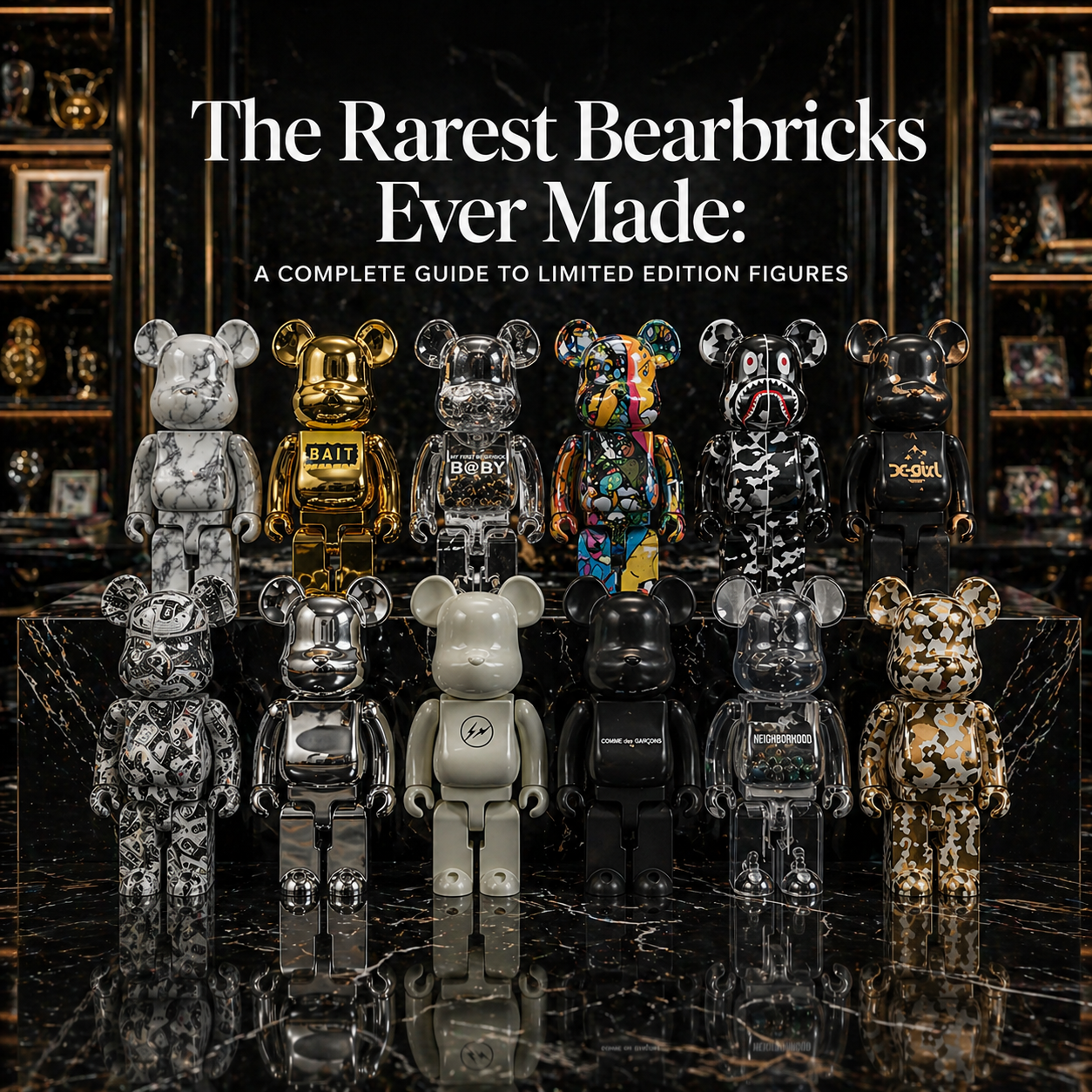
  • BAPE Bearbrick: The Collaboration That Defined Streetwear Collecting

    Two Japanese Institutions That Were Always Going to Find Each Other

    A Bathing Ape was founded by Tomoaki Nagao — known to everyone as Nigo — in 1993, in the backstreets of Harajuku, Tokyo. The store was called NOWHERE. The name came from a Beatles song. Nigo produced about 50 T-shirts a week in the early days, sold half of them, and gave the rest away to people who mattered in Tokyo’s creative scene. This was not a marketing strategy at first. It was a budget constraint. But the scarcity it created — accidental, then deliberate — became BAPE’s entire identity. Sideshow

    Medicom Toy launched Bearbrick in 2001, eight years after BAPE opened its doors. Same city, similar logic: make things in small numbers, work with people who have their own audience, let the object carry the collaboration’s energy. Nigo understood this instinctively. He’d been doing it with T-shirts since 1993.

    The first BAPE Bearbrick came out in the early 2000s. It made sense immediately. Both brands were Japanese, both were running on scarcity and cultural credibility, and both had communities that collected obsessively. The only question was what they’d do together — and they’ve been answering that question ever since.

    This is the full story of the BAPE Bearbrick collaboration: the figures, the history, the prices, and what makes this particular partnership different from every other Bearbrick release.

    Who Built BAPE and Why It Matters to This Story

    You can’t really understand what a BAPE Bearbrick is without knowing what BAPE is — not the brand in the abstract, but the specific thing Nigo built in Harajuku and what made it unusual.

    Nigo was born Tomoaki Nagao in 1970. He studied at Bunka Fashion College and worked as an editor and stylist for Popeye magazine before opening NOWHERE with Jun Takahashi of Undercover in 1993. He was not from a fashion family. His parents were indifferent to what he was doing. What he had was taste, and a network — specifically, access to Hiroshi Fujiwara, the person most credited with bringing hip-hop culture to Japan, who became his mentor and gave the store early credibility.

    The BAPE name came from a graphic designer named SK8THING, who suggested the concept after a five-hour marathon of Planet of the Apes films. The name references a Japanese idiom about bathing in lukewarm water — an ironic jab at the overindulged young people who would become BAPE’s core customers. There’s something deliberately self-aware about that. Nigo was building a brand that charged high prices and produced low quantities, and he named it after the people who would pay those prices.

    By 1998, BAPE was selling through 40 stores across Japan. Nigo pulled it from all of them and concentrated everything back into one location in Shibuya. Sales stayed roughly the same. That decision — one store, controlled access, deliberate friction — became the formula that Supreme and every other scarcity-driven streetwear brand would follow for the next twenty years.

    Nigo met KAWS in 1996 and became an early supporter of his work. In 2005, he commissioned him a painting — which became the KAWS Album, eventually sold at Sotheby’s Hong Kong for $14.8 million in 2019. Nigo understood early that the interesting collision was between streetwear, art, and collectible culture. The BAPE Bearbrick is a direct expression of that understanding.

    In 2011, Nigo sold BAPE to Hong Kong fashion conglomerate I.T Group, staying on as creative director until 2013 before leaving entirely. He went on to build Human Made, then became artistic director at Kenzo. BAPE continued without him. The Bearbrick collaboration continued too — it’s been running consistently since 2009 regardless of who’s running the brand.

    The BAPE Bearbrick: What Makes It Instantly Recognisable

    There’s a specific visual language to BAPE Bearbricks that you’d recognise in a lineup of fifty figures. It’s not complicated — it’s BAPE’s own language, applied to the Bearbrick format with enough specificity that the bear clearly belongs to both parties simultaneously.

    The dominant element is camo. BAPE’s 1st Camo pattern — the one with the Ape Head hidden inside the camouflage — has appeared across essentially every BAPE Bearbrick release in some form. It works on the format because the Bearbrick’s smooth, rounded surface is close to a blank canvas, and the camo pattern reads clearly against it. You don’t need to see the BAPE logo to know what you’re looking at.

    The second signature element is the Shark Hoodie. In clothing form, BAPE’s shark hoodie is the piece the brand is most associated with globally — the one where the zipper pulls up over the face to reveal teeth printed on the hood. In Bearbrick form, Medicom and BAPE have done something genuinely clever with this: the 400% and 1000% figures can wear a miniature functional version of the hoodie, sewn from fabric with the same camo details as the clothing version. The 1000% variant often comes with felt eyes and teeth to complete the effect.

    This is different from most character Bearbricks, where the “costume” is painted directly onto the vinyl. A BAPE Shark Hoodie Bearbrick is wearing actual fabric. That’s a manufacturing choice that costs more and takes longer, and it’s why certain BAPE Bearbricks sit at a different price point from standard releases.

    The third signature is Baby Milo — BAPE’s cartoon monkey character, used across their more playful releases. Baby Milo Bearbricks tend to be smaller (100% and 400%) and skew toward the lifestyle side of the market rather than the serious collector end. They’re more approachable entry points into the BAPE Bearbrick catalogue.

    The Releases: A Timeline of BAPE × Medicom Toy

    Early 2000s — The First Wave

    BAPE and Medicom Toy have been collaborating on Bearbricks since 2009 as an annual anniversary item. Before that, earlier releases existed but were less formalised. The very early BAPE Bearbricks from the 2003-2005 period — including the Play Camo versions — are now genuinely difficult to source. A 2003 BAPE Play Camo 400% in good condition with original packaging commands serious secondary market interest, not because it was produced in tiny numbers, but because two decades of handling, storage variation, and collector turnover have winnowed the supply of clean examples.

    These early figures established the visual template that every subsequent release would build on: the 1st Camo pattern, the Ape Head, the specific BAPE colourways. They’re reference points more than just collectibles.

    The Anniversary Series (2009 Onwards)

    Starting in 2009, BAPE formalised its Bearbrick collaboration as an annual anniversary release. Each year, they produce figures tied to the brand’s founding year — 28 colourways for the 28th anniversary, for example. These releases are structured as series, with multiple waves throughout the year, and they cover 100% and 400% sizes in the standard anniversary format.

    The anniversary series is where casual BAPE fans enter the Bearbrick world. The figures are produced in larger quantities than the flagship shark hoodie versions, retail at accessible price points, and represent clean, wearable BAPE design applied to the bear format. They’re not the rarest BAPE Bearbricks — but they’re the most consistent.

    The Shark Hoodie Versions — Core of the Collection

    These are the figures serious collectors focus on. In 2016, BAPE released a full collection of 1st Camo Shark Hoodie Bearbricks in 100%, 400%, and 1000% sizes, in red, black, and blue colourways. The drop hit BAPE stores, Project 1/6, Medicom Store Skytree Soramachi, and Medicom’s online store simultaneously.

    The Shark Hoodie 1000% is the figure that sits at the centre of the BAPE Bearbrick market. At 70 centimetres tall, wearing a fabric shark hoodie with functioning zipper and camo detailing, it’s a display piece that communicates BAPE’s identity clearly even to people who don’t know the brand well. The shark face hood pulled up over the Bearbrick’s head reads as a costume — which is essentially what it is.

    Multiple colourways have been released across different years. Grey, navy, red, black — each with slightly different camo pattern applications and hoodie detailing. Collectors who focus on BAPE Bearbricks often pursue specific colourways rather than just one of everything.

    The Mastermind Japan Triple Collaboration (2021 and 2024)

    In 2021 and again in 2024, BAPE collaborated with both Medicom Toy and Mastermind Japan on a triple collaboration 1000% Bearbrick. The figure carries Mastermind’s skull and crossbones alongside BAPE’s shark motif, applied to BAPE’s 1st Camo pattern in a special edition that combines the visual identity of all three parties.

    This is a figure that appeals to collectors across three communities simultaneously: BAPE collectors, Mastermind Japan collectors, and Bearbrick collectors. The overlap between those three groups is not enormous, which is part of what makes the figures interesting. You’re not buying something with universal recognition — you’re buying something specific to a particular intersection of taste.

    The 2024 version also appeared in Chogokin form — a die-cast alloy version produced in collaboration with Bandai, available in green and yellow colourways. The alloy construction means no visible screws or joints, just a clean weighted form in metal rather than vinyl. This is not something Medicom Toy does often. The material is completely different from standard Bearbrick production, and the result is an object that feels more like sculpture than toy.

    The BAPE Flyer Pattern / Legacy Camo Shark (2025)

    In 2025, BAPE and Medicom released the “Legacy Camo Shark” collection — a full set of 100%, 400%, and 1000% figures using BAPE’s Flyer Pattern as the main design. The 400% and 1000% versions come with a special Shark Hoodie, with the 1000% including felt eyes and teeth.

    The Flyer Pattern is inspired by the visual of a wall covered in promotional flyers — applied across the entire surface of the bear, with the shark hoodie switching to the standard camo pattern on part of the hood. This is a 2025 release, which means it’s recent enough that secondary market prices haven’t fully settled yet. For collectors looking to enter the BAPE Bearbrick market at the high end without paying premium retrospective prices, the Legacy Camo Shark 1000% is the most logical current entry point.

    Baby Milo Figures

    Scattered through the BAPE Bearbrick history are Baby Milo releases — the brand’s cartoon monkey applied to the 100% and 400% format. These are lighter in tone than the shark hoodie and camo releases, aimed at a broader audience, and retail at more accessible prices. The early Baby Milo figures from the Pepsi NEX collaboration (produced with Medicom and Pepsi as a promotional item) are small and often appear in blind box format, which makes them collectible in a different way from the flagship figures.

    Baby Milo figures are a good place to start if you’re new to BAPE Bearbricks and want to understand the aesthetic before committing to a 1000% shark hoodie version.

    The Readymade Collaboration: The Most Extreme BAPE Bearbrick Ever Made

    This one deserves its own section because it’s a different category from everything else.

    In 2018, Medicom Toy produced a triple collaboration with BAPE and Readymade — the brand founded by Japanese designer Yuta Hosokawa, known for working with deconstructed military materials. The result was a 1000% Bearbrick dressed in a real, functional BAPE shark hoodie made from Readymade’s signature vintage military fabric. Functioning zipper. Real ribbed hems. Chenille patches. A tiny working pocket.

    It retailed for around $2,700. On the secondary market, StockX has seen it reach $121,000.

    The gap between those two numbers — roughly 4,400% — is one of the most dramatic resale premiums ever recorded for a Bearbrick. The reasons are specific: the triple collaboration was produced in genuinely small numbers; the Readymade involvement gave it appeal beyond the standard BAPE and Bearbrick collector bases; and the physical craftsmanship of the hoodie is legitimately unusual for a toy. This figure is not primarily a Bearbrick — it’s a wearable garment on a Bearbrick chassis, and the garment was made by a serious designer with a serious material commitment.

    Most collectors who know the BAPE Bearbrick market rank the Readymade collaboration as the single most significant figure in the catalogue. Finding one with verified provenance and original packaging is not easy. When they appear, the prices reflect that.

    Prices: What the BAPE Bearbrick Market Actually Looks Like

    The BAPE Bearbrick market is tiered, and the tiers are distinct.

    At the entry level — recent anniversary series figures in 100% and 400% — prices run from $30 to $250 on the secondary market depending on colourway and condition. These are accessible. They’re not particularly scarce. They represent the aesthetic clearly and work as shelf pieces.

    For standard shark hoodie figures in 400% from the 2016-2021 releases, secondary market prices generally sit between $200 and $600 depending on colourway. The rarer colourways (certain grey or special edition runs) push higher.

    The shark hoodie 1000% versions are the core market. Clean examples from the 2016-2021 period trade between $600 and $2,000 depending on colourway, condition, and whether the original box is present. The Mastermind Japan triple collaboration versions sit at the higher end of this range or above it, given the three-way brand premium.

    The Readymade collaboration is its own category. $10,000 minimum for a clean authenticated example; considerably more for exceptional provenance.

    The Chogokin metal versions from 2024 are too recent for secondary market prices to have settled clearly, but initial secondary listings suggest a 200-300% premium over retail.

    Early 2000s figures — the original Play Camo, Baby Milo Pepsi releases — sit in the $200-$500 range for clean examples in original packaging, which isn’t actually that expensive given their age. The BAPE collector base has grown significantly since those figures were produced, and the market hasn’t fully caught up with the historical significance of the earliest pieces.

    BAPE Bearbrick vs. Other Major Collaborations

    Where does BAPE sit in the broader Bearbrick collector hierarchy?

    It’s not KAWS. The KAWS Bearbrick market is deeper, older, and more connected to the fine art world — figures like the Dissected Companion have a decade of auction house records behind them and collectors from completely separate communities competing for the same pieces. A rare KAWS 1000% Dissected will typically command more than any standard BAPE shark hoodie.

    It’s not Chanel. The Chanel Bearbrick has 1,000 numbered pieces in existence total, a Karl Lagerfeld story attached to it, and a fashion collector community with different spending patterns from the streetwear world. The price floor on a Chanel Bearbrick is higher than almost any BAPE Bearbrick except the Readymade.

    But BAPE has something neither of those collaborations has: an ongoing relationship with Medicom Toy that produces new figures regularly. KAWS and Chanel are largely historical — you’re buying the past. BAPE and Medicom are actively making new things, which means the market refreshes, new collector entry points appear, and the catalogue keeps growing.

    The BAPE Bearbrick also has a specific cultural context that the art collaborations don’t: it exists inside the streetwear world. Buyers are often people who also own BAPE clothing, who follow Bearbrick drops the same way they follow sneaker releases, who understand the BAPE camo as a cultural reference rather than just a design. That specificity makes the collector community cohesive and invested.

    How to Collect BAPE Bearbricks Without Making Expensive Mistakes

    The BAPE Bearbrick market has fakes. Not crude ones — the prices justify quality counterfeiting at the shark hoodie and Readymade end of the market. Here’s what separates authentic from fake.

    The fabric on shark hoodie versions is the first test. Authentic BAPE Bearbrick hoodies use specific materials with consistent stitching quality, proper zipper movement, and camo patterns that align correctly at the seams. Cheap reproductions get the general look right but the stitching density wrong.

    The vinyl quality on the figure itself matters. BAPE and Medicom’s authentic figures have a specific surface finish — matte where it should be matte, with clean paint application on the camo pattern. Fakes often show paint bleed at pattern edges or a slightly off finish on the vinyl surface.

    The packaging is documentation, not decoration. BAPE Bearbrick boxes have specific construction — material weight, printing quality, the way the Medicom and BAPE logos are reproduced. An authentic figure in a reproduction box is worth considerably less than the same figure in an original box. A reproduction box next to a reproduction figure is a problem.

    For the Readymade collaboration specifically: provenance documentation is essential. At these prices, you need to know where the figure came from and be able to verify it. Established dealers, auction houses with authentication processes, or direct purchase from original owners with documentation are the only safe options.

    Buy from people with track records. The BAPE community — on Reddit, on Discord, on platforms like StockX — is well-connected and has seen enough fakes to know what to look for. New sellers with no history and prices that seem low for what they’re offering are sellers to avoid.

    Display and Care

    A 1000% BAPE Bearbrick in a shark hoodie needs space and consideration. The vinyl responds to temperature variation and direct sunlight the same way all Bearbricks do — gradual yellowing, potential paint fading, stress on the joint areas if the figure is moved repeatedly. The fabric hoodie adds complexity: it accumulates dust, and on rare figures, even dust is a problem because cleaning requires care.

    Most serious collectors keep shark hoodie figures in their original boxes when not displayed, and display smaller sizes out of box. The box isn’t just packaging — it’s part of the object, and the secondary market reflects this clearly. A 1000% Readymade collaboration without its original box is worth significantly less than the same figure with everything intact.

    If you’re going to display out of box: stable temperature, no direct light, a surface that won’t scratch the base. These figures are not fragile in normal handling, but they’re also not toys in the everyday sense. Treat them like the objects they are.

    Frequently Asked Questions

    When did the BAPE Bearbrick collaboration start?

    The formal annual anniversary collaboration with Medicom Toy started in 2009, though earlier BAPE Bearbrick figures were produced in the early 2000s. The relationship has been continuous since.

    What is the rarest BAPE Bearbrick?

    The 2018 BAPE x Readymade 1000% is the rarest and most valuable, with secondary market prices reaching $121,000. Among standard shark hoodie figures, early colourways from the 2016 release and the Mastermind Japan triple collaboration versions are the hardest to find in clean condition.

    What sizes do BAPE Bearbricks come in?

    100% (7cm), 400% (28cm), and 1000% (70cm) are the main sizes. Some BAPE Bearbrick releases also include 70% novelty figures bundled with clothing purchases. The Chogokin metal versions also exist in 1000% scale.

    How do I know if a BAPE Bearbrick is authentic?

    Check fabric quality on shark hoodie versions, paint application on the camo pattern, vinyl surface finish, and original packaging. Buy from sellers with documented track records and, for high-value pieces, ask for provenance documentation.

    Are BAPE Bearbricks a good investment?

    The Readymade collaboration has appreciated dramatically. Standard shark hoodie releases have held value and shown moderate appreciation. Anniversary series figures are accessible and liquid but don’t show significant appreciation. As with any collector market: buy what you find genuinely interesting, not what you hope will appreciate.

    What’s the difference between a BAPE Bearbrick and a regular Bearbrick?

    Beyond the design, the main difference on shark hoodie and higher-end releases is the fabric hoodie — an actual sewn garment rather than painted-on design. This makes certain BAPE Bearbricks more technically complex to produce than standard vinyl figures.

  • Batman Bearbrick: Every Version, Every Detail, and Why Gotham’s Dark Knight Became a Collector’s Obsession

    A Character Built for the Dark — And for Display Cases

    Batman has been reimagined more times than almost any other fictional character. He’s been a campy TV star in the 1960s, a gothic anti-hero in Tim Burton’s hands, a tactical realist in Nolan’s trilogy, and a rage-fuelled loner in everything that came after. Every decade, someone takes the bat symbol and does something different with it.

    What Medicom Toy did in 2003 was different in a specific way. They didn’t just slap a Batman logo on a bear-shaped vinyl figure. They looked at what the character actually is — the silhouette, the suit, the unsmiling presence — and figured out how to make that work within the Bearbrick format. The result was the first Batman Bearbrick, and it sold well enough to start something that’s now been running for over twenty years.

    This is the complete guide to Batman Bearbricks: every major version, what makes each one distinct, how the collector market has developed, and what you need to know before buying one.

    Why Batman Works as a Bearbrick

    Most character Bearbricks face the same challenge: the format is round, friendly, and cartoon-like, and the character being applied to it has its own visual language. Sometimes the two things fight each other. Sometimes they work.

    Batman works for a few reasons. The costume is iconic at the silhouette level — pointed ears, cape, chest symbol, utility belt — and those elements translate well onto the Bearbrick’s rounded form. The dark colourway, usually grey, black, or dark blue, makes the figure feel less like a toy than many other Bearbricks do. And Batman as a character has no face visible under the mask, which means the blank Bearbrick face doesn’t create the uncanny valley problem it creates with human characters. The mask is the face. The figure reads as Batman immediately.

    The Joker figures in the same lineup benefit from the opposite logic: maximum colour and detail against the Bearbrick’s neutral geometry. Purple suit, green hair, the specific wide-mouth grin from the animated series. The contrast between the figure’s rounded shape and the Joker’s inherently angular character design creates something genuinely interesting.

    Both characters — Batman and the Joker together — represent the fullest version of what the Bearbrick format can do with a superhero property. You’re not just buying a toy. You’re buying a design exercise in how far two completely different aesthetic systems can be pushed toward each other.

    Batman and Joker Bearbrick figures from Batman The Animated Series — Medicom Toy 400% collectible set display

    The Versions: What Medicom Toy Has Released

    Medicom Toy has produced Batman Bearbricks across multiple series, versions, and source materials since 2003. Not every release is equally significant, and the collector market treats them very differently.

    The Original Batman (2003)

    The first Batman Bearbrick came out in 2003, just two years after Medicom launched the format. It was one of the earliest brand character collaborations the company had done, and its success helped establish that DC Comics properties could work in this space. The figure drew from the classic Batman costume — grey and blue suit, pointed ears, yellow belt — and sold through specialty retailers in Japan and the US.

    Condition and original packaging matter a lot for this one. It predates the period when Medicom’s distribution in Europe was well-established, which means fewer examples reached European collector markets at the time. Authenticated examples with original boxes are not common.

    Batman: The Dark Knight Returns Version

    Based on Frank Miller and Klaus Janson’s 1986 graphic novel, which remains the defining version of Batman for an entire generation of readers. The Dark Knight Returns reinvented the character as a fifty-something vigilante coming out of retirement, darker and more brutal than anything the mainstream Batman comics had shown before. The Joker in that story is equally disturbing — and Medicom’s Joker Bearbrick based on the Dark Knight Returns artwork is one of the stranger figures in the DC lineup. It was limited to 2,000 pieces outside Asia when it released, making it relatively scarce in European markets from the start.

    The artwork evokes Miller and Janson’s specific line work — angular, heavy, nothing like the cleaner animation style versions — which makes it visually unlike anything else in the Batman Bearbrick range.

    Batman: The Animated Series Version

    Released in multiple formats including 100%, 400%, and 1000% scales. The Animated Series — which ran from 1992 to 1995 — is widely considered the best Batman adaptation ever made, animation or otherwise. It was darker and more complex than a cartoon for kids had any right to be, and its design language, heavily influenced by 1940s film noir, has never quite been replicated.

    Medicom’s Animated Series Batman captures that aesthetic. The colour palette is specific to the show: darker blues, muted greys, the kind of palette that looks like a shadow is always falling across it. The 1000% version stands 70 centimetres tall and works as a statement piece for anyone who grew up watching the show and now has the wall space for something that size.

    The Joker from the same series is the version most people think of when they picture the Joker at all. Green hair, orange vest, bright purple suit, blue hands, thin black shoes. The figure is almost cheerful-looking, which makes it unsettling in the way the character always was. Both Batman and Joker from this series were released around the same period, and they work together as a paired display — which is how many collectors approach them.

    Batman: Hush Version (2022)

    The most accessible and most currently available major Batman Bearbrick release. Batman: Hush is a 2002-2003 comic storyline written by Jeph Loeb with artwork by Jim Lee — the artwork that defined what a lot of collectors think a Batman comic should look like. Lee’s style is detailed, muscular, and cinematic. His Batman has weight and physicality that many other artists don’t convey.

    The Hush Bearbrick version captures that. The figure has sharp white eyes, a grey and blue suit, the yellow utility belt, and a general feeling of presence that other Batman figures don’t quite match. It released in January 2022 at a retail price of $560 for the 1000% version, and in May 2022 as a 100% and 400% set for $125.

    A black version also exists — the Hush Black Version, which drops all the colour and renders the figure in a near-monochrome palette. It’s more severe than the standard version and appeals to collectors who want something that works with a minimal, dark aesthetic.

    Medicom also released a Superman from the same Hush storyline — because the Hush arc involves Batman’s entire rogues gallery and several allies — at a retail price of $555 for the 1000% version.

    The Batman (2022 Film Version)

    Tied to Matt Reeves’ 2022 film, which gave Robert Pattinson the role and stripped the character back to something almost procedural. The film’s Batman is less invulnerable and more obsessive — a detective first, a fighter second, someone who looks like he hasn’t slept in months. The costume is specifically different from any previous version: darker, more improvised-looking, less superhero and more something someone actually built in a basement.

    Medicom’s The Batman figure captures that specific design. It was distributed through Sideshow Collectibles in the US market, which meant Western collectors could access it relatively easily. The 100% and 400% set came in at $160 retail; the 1000% solo figure was $446.

    Batman: Knightmare Version (2017)

    Based on the brief Knightmare sequence in Batman v Superman: Dawn of Justice, which shows a possible dystopian future where Superman has turned. Batman in this version wears a trenchcoat and goggles over his standard suit — it’s a brief scene but a visually distinctive one. The 400% version released in 2017. It’s a figure that appeals specifically to collectors who track Bearbricks by DC property rather than just the classic Batman character, because the Knightmare design is genuinely unusual.

    Batman and Joker: The Case for Collecting Both

    Several Medicom releases have treated Batman and Joker as a paired set rather than separate figures, which makes sense given the characters. The most notable is the Batman & Joker Set that released as a 100% pair in 2009 — a rare and early example of Medicom packaging the hero and villain together as a deliberate pairing.

    More recently, Tom and Jerry entered this dynamic in an unlikely way. Medicom released a figure where Tom is dressed as Batman and Jerry is dressed as the Joker, a 100% and 400% set at $165 retail. It’s a collision of three different cultural properties — Warner Bros animation, DC Comics, and the Bearbrick format — that either appeals to you immediately or doesn’t at all. For collectors who follow Medicom Toy’s stranger output, it’s exactly the kind of unexpected release that makes this market interesting.

    The Joker from Batman: The Animated Series deserves attention on its own. The figure is genuinely well-designed. Medicom got the specific colour palette right — the purple suit with orange vest and green hair is a specific combination that’s easy to get wrong — and the figure has the right proportions to look like the character rather than a generic approximation. It’s sold separately from the Batman figure in most releases, which means building the pair requires deliberate effort. That effort is part of the appeal for collectors building a full Gotham display.

    What These Figures Cost on the Secondary Market

    Batman Bearbricks occupy a specific price band in the Medicom Toy secondary market. They’re not at the extreme end — you’re not looking at KAWS Dissected Companion prices or Chanel Bearbrick territory — but they’re not cheap either, and the rarer versions are genuinely hard to find.

    For the Hush Version, which is the most recent major release: the 1000% version retails at around $560 and has held its value on the secondary market without large premiums. It’s available enough that you don’t pay a significant mark-up for it. The 100% and 400% set is similarly accessible.

    For the Animated Series versions — Batman and Joker — secondary market prices run from around $300 to $900 depending on size and condition. These aren’t the most expensive figures Medicom has ever made, but they’re also not reissued regularly, so clean examples with original packaging are worth holding.

    For early releases — the 2003 original, the Dark Knight Returns Joker — prices reflect genuine scarcity. These figures predate Medicom’s current global distribution infrastructure, fewer examples were produced for Western markets, and the secondary market has absorbed a lot of them into collections where they stay. When they surface, expect to pay a meaningful premium.

    The Knightmare Version and other film-tied releases sit somewhere in the middle — produced in enough quantity to be findable, but not so abundant that secondary market prices are low.

    One consistent pattern: Batman Bearbricks with original boxes and in pristine condition hold their value better than figures that have been displayed out of box for years. The vinyl doesn’t yellow quickly, but the painted details on the costume can show wear over time, and the box is part of what a collector is buying.

    Collecting Batman Bearbricks: How to Build a Meaningful Display

    There are a few different ways to approach Batman Bearbricks as a collection, and they lead to very different results.

    The character collection approach means buying every version of Batman across different Medicom releases — Animated Series, Hush, Dark Knight Returns, The Batman film — and displaying them together. This reads as a visual history of how the character has been interpreted across different eras of DC media, which is more interesting than it sounds. The design differences between the 2022 Hush version and the 2003 original, for example, reflect twenty years of how Batman has been drawn and filmed.

    The Gotham display approach means building a collection that includes both heroes and villains. Batman and Joker as a primary pair, perhaps with other DC characters Medicom has released over the years. This requires more research and more patience, because not every character from the DC lineup has received equal treatment from Medicom. The Batman and Joker figures are the most developed; other characters exist but in fewer versions.

    The size-focused approach means picking a version you love and collecting it across all available sizes. The Animated Series Batman in 100%, 400%, and 1000% displayed together creates a visual scale progression that works well in larger spaces. The 1000% figure at 70 centimetres dominates a room in a way the smaller versions don’t.

    Whichever approach you take: buy authenticated figures from sources with documented provenance. Batman is one of the most collected character properties in the world, and the market for Medicom figures with his image has attracted counterfeit production at the lower price points. The tells are usually in the paintwork — slightly off-colour utility belt, imprecise bat symbol proportions, vinyl quality that doesn’t feel right — but they’re not always obvious without comparison to a documented authentic piece.

    Who Actually Buys These

    The Batman Bearbrick collector is often a different person from the collector buying KAWS or Chanel figures. There’s less overlap with the fine art world and more with the comics and superhero culture community — people who grew up reading Batman: Hush when it first came out in 2002, who watched the Animated Series as children and still know the Joker’s voice in their heads, who followed the Nolan films closely enough to recognise the specific Knightmare costume design.

    That’s not to say serious Bearbrick collectors ignore Batman figures. Many collection-builders include them precisely because the character versions sit alongside artist collaborations in a way that provides contrast. A shelf with KAWS Dissected Companion, Chanel Bearbrick, and Batman Animated Series 1000% tells a more complete story about what the format has done over twenty years than any single category alone.

    The price point also matters. Batman Bearbricks — the Hush version in particular — are accessible enough that they work as a starting point for someone new to Medicom Toy collecting who wants to buy something significant without the four-figure commitment that KAWS or Chanel require. The character is familiar. The figure is well-made. The format is approachable.

    Frequently Asked Questions

    When did the first Batman Bearbrick come out?

    Medicom Toy released the first Batman Bearbrick in 2003, two years after the format launched, making it one of the earliest major character collaborations in Bearbrick history.

    What’s the most sought-after Batman Bearbrick?

    Among current collectors, the Batman and Joker figures from the Animated Series are the most consistently referenced, followed by the Hush version for its Jim Lee artwork. Early releases from 2003 and the Dark Knight Returns Joker are harder to find and command higher premiums on the secondary market.

    How much does a Batman Bearbrick 1000% cost?

    The Hush Version 1000% retailed at $560. Secondary market prices for most 1000% Batman figures run between $400 and $900 depending on version and condition. Rarer early releases can go higher.

    Are there Joker Bearbricks too?

    Yes. Medicom has released Joker figures as part of the Batman: The Animated Series lineup, as a Dark Knight Returns version, and in paired sets with Batman. The Animated Series Joker is the most visually distinctive and most sought-after.

    What’s the difference between the Hush Black Version and the standard Hush Version?

    The standard Hush Version uses the classic Batman colour palette — grey and blue suit with yellow utility belt and white eyes. The Black Version removes most of the colour, rendering the figure in near-monochrome. Both are based on Jim Lee’s artwork from the 2002-2003 comic arc.

    Is the Batman Bearbrick a good first figure for new collectors?

    The Hush Version 1000% is a reasonable entry point — it’s well-made, clearly documented, available at retail price without significant secondary market premium, and unmistakably Batman. For collectors new to Medicom Toy, it’s a lower-risk starting point than rarer artist collaborations.

  • KAWS Bearbrick: Every Collaboration, Every Price, Every Reason This Partnership Changed Collecting Forever

    Before the Bear, There Was a Kid with a Skeleton Key

    Brian Donnelly grew up in Jersey City, New Jersey, in a house where his parents were, by his own description, completely indifferent to his graffiti. His father was a stockbroker. His mother was a homemaker. Neither of them particularly cared that their son had started painting his tag — four letters, K-A-W-S, chosen because he liked the shapes — on a rooftop he could see from his high school classroom.

    That indifference probably helped. KAWS kept going.

    By the early 1990s, he’d moved to New York, graduated from the School of Visual Arts with a BFA in illustration, and picked up a day job at Disney doing background animation for 101 Dalmatians, Daria, and Doug. The day job paid. The nights were for something else. A fellow graffiti artist gave him a skeleton key that opened bus shelter panels and phone booths. He’d break in, paint over the advertisement inside, put everything back, and disappear. Fashion ads — DKNY, Calvin Klein — became something weirder and more interesting. His Companion figure started appearing in places where it wasn’t supposed to be.

    People noticed. Then people started removing the panels just to keep them.

    In 1999, he produced his first vinyl toy through Japanese clothing brand Bounty Hunter. It sold. He followed it with more. By the time Medicom Toy came looking for a collaboration in 2001 — the year they launched Bearbrick at the World Character Convention in Tokyo — KAWS was already building something with a collector market behind it. The first KAWS Bearbrick came out in 2002.

    What happened over the next two decades is one of the stranger and more interesting stories in the history of collectible culture.

    What Makes a KAWS Bearbrick Different

    There’s a specific look to every KAWS figure, and it doesn’t change much regardless of what it’s applied to.

    The Companion is his main character — a figure that started as a riff on Mickey Mouse but became something entirely its own. Rounded ears. A clown-like silhouette. And the eyes: crossed-out Xs where pupils should be, which KAWS has used since his earliest street work. On the Bearbrick format, those Xs sit above the standard bear face, and the result is something that simultaneously reads as playful and slightly off. The figure is happy in the way that a person smiling while clearly exhausted is happy. You’re not entirely sure what you’re looking at.

    That ambiguity is intentional. KAWS has talked about wanting his work to function for people who know the references and people who don’t. A kid can look at a KAWS Companion and see a funny cartoon character. A collector sees twenty years of street art, vinyl toys, museum shows, and auction records. Both readings are valid, and the figure doesn’t foreclose either.

    The Dissected Companion takes this further. Split down the middle, it shows what would notionally be inside the bear — organs, structure, the interior of something that was always presented as solid and complete. It’s a genuinely strange design, and it stuck. The Dissected series is probably the most sought-after across the KAWS Bearbrick catalogue.

    The Collaborations: Year by Year

    2002 — The First KAWS Bearbrick

    Medicom reached out to KAWS just one year after launching the format. The result was the first KAWS Companion Bearbrick — the Xs over the eyes, the rounded ears, the silhouette that would become one of the most recognisable in the designer toy world. It released in 100% and 400% sizes. At the time, it sold to a small community that understood what they were getting. Most of the people who most want one today had no idea it existed.

    2003 — The Chomper

    The second collaboration, and the one Sotheby’s has described as the figure that set the stage for the high-end Bearbrick market. Released in an edition of only 500, the Chomper came as a set — a 100% and 400% in the same box, in a vivid blue colourway. It’s a specific, unusual piece in the KAWS catalogue because the design leans into something almost aggressive, the mouth wide open in a way the Companion rarely shows. Clean examples with original boxes are hard to find. When they appear, prices are in the several-thousand-dollar range.

    2005 — Karimoku Wood BBWT

    A version of the KAWS Bearbrick produced in collaboration with Karimoku — the same Japanese furniture company that would later produce their own standalone wood Bearbricks at $22,000 a piece. The BBWT is made from natural wood rather than vinyl, which changes the object entirely. It’s heavier, warmer to the touch, and visually quieter than the painted vinyl versions. Artsy lists it among KAWS’s most sought-after figures. It’s the kind of piece that appeals to collectors who don’t usually buy designer toys, which extends the demand base significantly.

    2008–2010 — The Dissected Companion Series

    This is probably where serious KAWS Bearbrick collecting starts for most people. The Dissected Companion series across these years produced figures in multiple colourways — grey, black, brown — in 100%, 400%, and 1000% sizes. The 1000% Dissected is 70 centimetres of painted vinyl that somehow manages to look both like a toy and a medical specimen simultaneously. Grey versions trade consistently above $8,000. Rare colourways push significantly higher. The design is distinctive enough that it appears in mainstream contemporary art references, which is not something most designer toys can claim.

    2012 — OriginalFake 6th Anniversary

    OriginalFake was KAWS’s own retail brand, operating from a store in Aoyama, Tokyo, from 2006 until it closed in 2013. The 6th Anniversary Bearbrick was released exclusively through Ambush, a single retailer in Singapore. The figure carries KAWS’s signature monogram pattern on fabric that unzips to reveal the bare vinyl beneath. Edition size was small. Geographic distribution was essentially nonexistent for most of the global collector market. It now trades around $8,000, and the fact that it was exclusively available in Singapore — in a single store — on a specific date means most people who wanted it simply couldn’t get it.

    The BBWW Tour figure from the same year also commands consistent secondary market interest, released to coincide with KAWS’s “Seeing/Watching” exhibition tour.

    2013–2020 — Ongoing Companion Releases

    Throughout this period, KAWS and Medicom continued releasing Companion Bearbricks in different colourways and configurations. Not every release became a grail — some are relatively straightforward to source on the secondary market at modest premiums. The ones that appreciate most consistently are those with very small edition sizes, specific geographic exclusives, or unusual materials. Standard 1000% Companions from this era typically trade in the $3,000–$8,000 range depending on colourway and condition.

    2019 — The KAWS Album Connection

    April 2019 was a specific moment in KAWS’s market history. His painting The KAWS Album — a riff on the Sgt. Pepper’s Lonely Hearts Club Band cover, with Simpsons characters in place of the original figures, all with Xs for eyes — sold at Sotheby’s Hong Kong for $14.8 million. The room was full of people in hoodies. The auction house sold roughly $28 million of KAWS work in a single session.

    That sale pushed awareness of KAWS into a completely different register. People who hadn’t been paying attention to the designer toy market started paying attention. Secondary market prices on older Bearbrick releases moved upward over the following months. The Dissected Companion series, already valuable, became noticeably harder to source.

    2020s — Continued Releases

    New KAWS Bearbrick releases continue to appear. The format hasn’t changed, but the context has. Each new release now enters a market where the historical record is documented, where auction results are public, and where the collector community is international and well-funded. Retail prices for new releases are higher than they were in 2002. Secondary market premiums are still significant.

    KAWS Bearbrick Companion 400% and 1000% figures collection display — rare limited edition Medicom Toy releases 2002 to 2020

    The Prices: What They’ve Actually Sold For

    Here’s the part most people come for first, so let’s be direct about it.

    Standard 100% and 400% KAWS Bearbricks — figures from recent releases in colourways that aren’t particularly rare — trade from around $600 to $2,000 on the secondary market, depending on colourway and edition. These are not especially hard to source.

    1000% Companion figures from the 2008–2020 period — the larger, more display-focused releases — generally trade between $3,000 and $12,000, with premium colourways and mint condition examples pushing toward the higher end.

    Dissected Companion 1000% in grey or black — consistently above $8,000, with some examples significantly higher. These are the figures most frequently referenced in editorial coverage and most likely to appear at established auction houses.

    The Chomper (2003, 500-edition set) — trades in the $5,000–$15,000 range for authenticated examples with original packaging. Genuinely hard to find.

    OriginalFake 6th Anniversary — around $8,000 for clean examples.

    Rare colourways and extremely small editions — these don’t have fixed market prices because they don’t trade frequently enough. When they appear, they’re typically offered through specialist dealers or in private collector sales, and pricing reflects whatever the specific parties involved agree to.

    For context: the $14.8 million KAWS Album sale in 2019 is the top of the KAWS market, not the Bearbrick market. But the auction record affected Bearbrick prices because it shifted the general perception of KAWS as a collectible artist. Figures that had been trading at one level moved to another, and they didn’t move back.

    Why This Collaboration Keeps Working

    Twenty-plus years is a long time for any creative partnership. Most brand collaborations have a shelf life measured in releases. The KAWS x Medicom Toy relationship has produced figures every few years across two decades, and the new releases still generate genuine collector interest rather than the fatigued shrug that greets many long-running collaborations.

    Part of the reason is that KAWS’s own market has continued to develop rather than plateau. His work is in the permanent collections of the High Museum of Art in Atlanta and the Modern Art Museum of Fort Worth. His public installations have appeared in Hong Kong Harbour, in parks across Europe, and in the Brooklyn Museum’s main exhibition space. The KAWS Album sale at Sotheby’s put him in a different category than most artists who started in designer toys.

    Every time KAWS’s fine art profile rises, it reflects back onto the Bearbricks. The figures aren’t just collectibles — they’re the most accessible physical objects produced by an artist with a documented auction track record in the tens of millions. That’s a specific and unusual position for a toy to occupy.

    The other reason is that the KAWS Companion design genuinely works in the Bearbrick format. Some artist collaborations feel like a licensing deal — the artist’s imagery applied to the surface of a bear, nothing more considered than that. The KAWS Companion, with its own ears, its own eyes, its own silhouette, creates something more complicated. The Bearbrick and the Companion are two distinct design languages that happen to share a space, and the tension between them is more interesting than either would be alone.

    KAWS Bearbrick vs. Other KAWS Figures

    KAWS produces vinyl figures that aren’t Bearbricks — the standalone Companions, the BFF, the SHARE figure that appeared in his Skarstedt London show. These are in some ways more purely KAWS than the Bearbricks, because they don’t carry the Medicom format as a constraint.

    But the Bearbricks have their own logic. They’re part of a wider collector ecosystem. Owning a KAWS Bearbrick connects you to the Medicom Toy universe — to the Chanel Bearbricks, the BAPE releases, the Andy Warhol series — in a way that standalone KAWS figures don’t. For collectors who are building across multiple categories rather than focusing exclusively on KAWS, the Bearbrick format is often the more sensible entry point.

    For collectors who are exclusively KAWS-focused, the Bearbricks represent some of the most affordable and most historically significant pieces in his output. The 2002 and 2003 releases predate almost everything in his current market. They were produced when the collector community was small and prices were modest. The people who bought them then were buying because they found the work interesting, not because of auction records.

    That’s generally a decent sign in any collector market.

    How to Collect KAWS Bearbricks Without Getting It Wrong

    The KAWS Bearbrick market has fakes. Not crude fakes — convincing ones, because the prices justify the effort. Here’s what to actually check.

    The packaging. Authentic KAWS Bearbricks come in a clear plastic box with specific printing — font, layout, placement. Reproductions often get the general appearance right while getting the details slightly wrong. Compare against documented authentic examples from Sotheby’s, 1stDibs, or similar platforms before buying anything significant.

    The X-eyes. The crossed X motif on authentic figures is precise and consistent. On fakes, the proportions are often slightly off — too large, too small, not centred in quite the right way. Print quality matters here. The Xs on cheap knock-offs often look printed rather than applied.

    The underside stamp. Authentic figures are stamped on the underside with production information. The stamp should be clean, legible, and consistent with other documented authentic pieces from the same release.

    Provenance. Where did the figure come from? Who owned it before? Is there documentation? For older and rarer releases — the 2003 Chomper, the 2005 wood version, anything from the early Dissected series — provenance documentation matters enormously. A seller who can’t explain where the figure came from is a seller to approach very carefully.

    Buy from people with track records. The Bearbrick market runs on reputation. Established dealers, auction houses with authentication processes, platforms with money-back guarantees for inauthenticity — these are where the risk is lowest. The cheapest listing for a rare KAWS Bearbrick is almost never the right listing.

    Display, Storage, and the Practical Side

    A 1000% KAWS Bearbrick is 70 centimetres tall and made of painted vinyl. It needs space, stable temperature, and protection from direct sunlight, which yellows vinyl and fades paint over time. Most serious collectors keep their figures out of direct light and in spaces where temperature doesn’t fluctuate much.

    Whether to keep figures in box is a personal choice that affects resale value. Out of box, displayed, the figure is more present in a room and more subject to environmental effects. In box, it retains the original packaging that the secondary market values. Many collectors who own multiple sizes display the 400% and keep the 1000% boxed, which splits the difference.

    The 100% and 400% figures are simpler. They go on shelves, in cases, alongside other pieces. They’re less demanding physically, and the collecting logic around them is straightforward — you want specific colourways, specific releases, specific series. Building a comprehensive KAWS Bearbrick collection across all sizes and releases is a project that would take years and significant resources. Most collectors focus on a narrower range and go deep within it.

    Browse Our Authenticated Collectibles

    KAWS Bearbricks appear in our collection when we can source authenticated examples with documented provenance. If you’re looking for a specific release or want to discuss what’s currently available, you’ll find our verified collectible figures in the shop. Every piece we list has been sourced and checked before it reaches the site — and if we can’t verify it properly, we don’t sell it.

    Other limited edition Bearbricks worth exploring: our limited edition Bearbrick guide covers the thirteen rarest figures in the format’s history, including prices and authentication advice.

  • The Rarest Bearbricks Ever Made: A Complete Guide to Limited Edition Figures

    How a Bear-Shaped Toy Became One of the Most Competitive Collector Markets in the World

    In May 2001, Tatsuhiko Akashi — founder of Medicom Toy — had a problem. He’d been asked to produce a handout gift for attendees of the World Character Convention in Tokyo, a celebration of the teddy bear’s 100th anniversary. The numbers were too big, the timeline too tight. So he modified an existing design, kept the body simple, rounded the head into something bear-like, and produced thousands of them.

    Nobody expected what happened next.

    That first Bearbrick — 70 millimetres of moulded plastic, given away free at the door — would eventually spawn a collector market where individual figures sell for six figures at Sotheby’s and Christie’s. Where a single collaboration with the right artist can turn a $300 retail price into a $50,000 auction result inside a decade. Where people queue for hours, crash websites, and fly to specific cities just to be in the room when a new limited edition drops.

    This is a guide to the figures that defined that market. The rarest Bearbricks ever produced, what they sold for, and what makes them worth understanding whether you collect or just want to know what the fuss is actually about.

    Why Limited Edition Bearbricks Are Different

    Before getting into specific figures, it’s worth understanding what separates a standard Bearbrick from a genuinely rare one. Because Medicom Toy produces hundreds of releases every year, and most of them are not particularly hard to find.

    The figures that command serious money share a few consistent characteristics. First, the collaboration partner matters enormously — an artist or brand with their own established collector base brings two audiences to one object. Second, production numbers need to be genuinely low, not “limited” in the marketing sense but actually constrained. Third, there’s usually a story: a specific event, a charitable purpose, a one-time context that makes reissue unlikely or impossible. Fourth, condition and provenance. Original box, certificate, documented purchase history — these aren’t optional extras at this level of the market, they’re table stakes.

    The figures below tick most or all of those boxes. Some are almost impossible to source. Others appear occasionally on the secondary market. All of them have sold at prices that would have seemed absurd when Medicom first gave them away at a convention.

    The 13 Rarest Limited Edition Bearbricks

    1. Yue Minjun “Qiu Tu” — 1000%

    Auction record: $157,000

    This is the most expensive Bearbrick ever sold. Chinese contemporary artist Yue Minjun is known for his self-portraits — wide-open mouth, frozen laugh, a recurring image that reads differently depending on who’s looking. Medicom produced a single 1000% Bearbrick in his “Qiu Tu” style. One piece, no edition, no reissue. It sold at auction for $157,000 and holds the record.

    This figure sits at the absolute edge of what Bearbrick has produced. It’s not a collectible in the usual sense — it’s a one-of-one artwork that happens to take the form of a bear.

    2. Coco Chanel — 1000%

    Secondary market: $8,000–$62,000+ depending on condition

    Designed by Karl Lagerfeld in 2006 as the first luxury fashion house collaboration in Bearbrick history. Around 1,000 numbered pieces were produced, originally displayed in Chanel boutique windows before being released through a Hong Kong charity event supporting the Blood Cancer Foundation. The figure wears Coco Chanel’s signature look — black tweed, white pearls, camellia at the ear, dark glasses.

    Prices climbed significantly after Lagerfeld’s death in 2019. One example sold on StockX for $62,003 in 2023. The figure is a grail piece for collectors across both the fashion and designer toy worlds simultaneously, which is exactly why demand hasn’t softened.

    3. BAPE x Readymade — 1000%

    Secondary market: $18,500–$121,000

    Released in 2018, this collaboration between A Bathing Ape, Readymade, and Medicom Toy produced what many consider the most technically interesting Bearbrick ever made. The figure comes dressed in a real, functional BAPE hoodie — sewn from Readymade designer Yuta Hosokawa’s signature vintage military fabric, with a working zipper, ribbed hems, chenille patches, and a tiny pocket. It retailed for around $2,700. Current market pricing on StockX has reached $121,000 for the right example.

    The gap between retail and resale here — roughly 4,000% — is one of the most dramatic in the history of the format.

    4. KAWS Dissected Companion — 1000%

    Secondary market: $8,000–$50,000+

    KAWS — Brian Donnelly — has collaborated with Medicom Toy more times than any other artist. His first Bearbrick came out in 2003 and helped establish the template for what a high-value artist collaboration could look like. But the Dissected Companion series, launched in 2010, is the one collectors keep coming back to.

    The design exposes what’s notionally inside the bear — internal organs rendered in KAWS’s particular graphic vocabulary, the figure split between its exterior surface and a cross-section of its interior. It’s genuinely strange and genuinely arresting, and that tension between cute and unsettling is exactly what KAWS has built his career on. The 1000% versions trade between $8,000 and $50,000 depending on colourway and condition.

    5. Karimoku Horizon Wood — 1000%

    Secondary market: ~$22,000

    Karimoku is an 80-year-old Japanese furniture company. Their Bearbrick collaborations with Medicom Toy produce figures made from real walnut wood — handcrafted, made to order, not injection-moulded plastic. The Horizon Wood 1000% retailed for around $5,380 and currently trades at roughly $22,000. The Brick Style Tiles collaboration, also with Karimoku, sits around $10,000.

    These figures occupy a different part of the collector market. The people who buy them are often not primarily Bearbrick collectors — they’re furniture and craft enthusiasts who want an object made with genuine material skill. The wood grain runs across the bear’s surface. It doesn’t look like a toy. It looks like sculpture, because that’s basically what it is.

    6. Swarovski x Colette — 1000%

    Auction result: $22,180

    Released in 2009 as part of Colette’s “White Crystal Christmas” concept — Colette being the Paris concept store that functioned, until it closed in 2017, as the cultural barometer of what was actually interesting in design and fashion. The figure is covered in hundreds of hand-applied Swarovski crystals. The collaboration between Swarovski’s craft and Colette’s curation produced something that genuinely reads as jewellery rather than toy.

    It sold at auction for $22,180. The Colette connection matters here — that store’s closure has added a retrospective weight to everything it touched.

    7. Andy Warhol Foundation Series — 1000%

    Secondary market: $2,000–$8,000 per figure

    Medicom Toy has released multiple series with the Andy Warhol Foundation, covering his most recognisable work: Marilyn Monroe, Elvis Presley, Muhammad Ali, the Campbell’s Soup imagery. The foundation has been an active licensor, which means there are several iterations in circulation — different colourways, different image choices, different series numbers.

    The 1000% versions of the rarest colourways trade in the $5,000–$8,000 range. The Warhol collaborations matter because they bridge the gap between the art world and the toy collector world as explicitly as anything Medicom has produced — there’s no ambiguity about what these are referencing, and the Warhol estate’s involvement gives them a legitimacy that unlicensed homages don’t have.

    8. Keith Haring Series — 1000%

    Secondary market: $1,500–$6,000

    Eight series of Keith Haring Bearbricks have now been produced, each drawing from different periods and motifs in Haring’s work. The collaboration makes obvious sense: Haring’s figures are simple, bold, immediately readable, and designed to work on any surface — which is exactly what the Bearbrick format provides.

    Earlier series command higher prices than recent ones. The first and second series in 1000% format are the most sought after, with prices in the $4,000–$6,000 range for clean examples. The Haring Foundation’s ongoing involvement means new series continue to appear, which keeps the earlier ones as the historically significant pieces.

    9. KAWS x OriginalFake 6th Anniversary — 1000%

    Secondary market: ~$8,000

    OriginalFake was KAWS’s own retail brand, operating from 2006 to 2013. The 6th Anniversary Bearbrick, released in 2012, was exclusive to Ambush Singapore — a single retailer in a single city. The figure features KAWS’s signature monogram pattern on fabric that unzips to reveal the bare vinyl beneath.

    The geographic restriction is what makes this one particularly hard to find. Most of the collector market for KAWS is in the US, Europe, and Japan. An exclusive Singapore release reached very few of the people who would most want it.

    10. Mastermind Japan x BAPE — 400%

    Secondary market: $2,000–$5,000

    Released in 2021, this figure splits the bear down the middle — literally. One half carries Mastermind Japan’s skull and crossbones branding, the other half shows BAPE’s shark face. The figure is dressed head to toe in yellow camo with BAPE’s full-zip hoodie bisecting it. It’s a collector piece for people who follow both streetwear brands, and both communities are large and active.

    11. Medicom x Hermès — 1000%

    Secondary market: $15,000–$30,000

    One of the rarest fashion house collaborations in Bearbrick history. Hermès produced a figure as part of a charity auction alongside other luxury brands — Salvatore Ferragamo, Moschino, and Chanel were also represented at the same event. The Hermès example is among the hardest to find, with fewer documented sales than the Chanel figure. When examples surface, prices are in the five-figure range.

    12. Daniel Arsham x Sorayama — 1000%

    Secondary market: $3,000–$8,000

    This three-way collaboration between Medicom Toy, sculptor Daniel Arsham, and illustrator Hajime Sorayama produced something genuinely unusual in the Bearbrick catalogue. Arsham is known for his “fictional archaeology” — objects depicted as if they’ve been excavated from the future — and Sorayama for hyper-realistic chrome figures. The combination creates a figure that looks simultaneously eroded and polished. It trades well because both artists have independent collector bases that don’t completely overlap.

    13. Nike SB — 1000%

    Secondary market: $2,000–$4,000

    The 2020 Nike SB collaboration produced a figure that looks like someone figured out how to make a sneaker into a bear. Laces run up the body, a Swoosh sits along the side, stitched detailing covers the surface. The packaging mimics Nike SB’s Rainbow Box. It sits at the intersection of sneaker collecting and designer toy collecting — two communities with enormous combined spending power — which explains why it’s held its value as well as it has.

    How Auction Houses Changed the Market

    Something shifted in the Bearbrick market around 2018–2019. Before that point, the secondary market was primarily peer-to-peer: online forums, StockX, direct sales between collectors. The figures existed in a collector world that had its own pricing logic, mostly invisible to the broader art market.

    Then Sotheby’s started taking Bearbricks seriously. Christie’s followed. Phillips included them in major sales. When an object enters the serious auction circuit, it doesn’t just sell — it gets priced against other auction results, gets documented in sale records, gets treated as an asset class rather than a hobby purchase.

    That shift has been good for sellers of rare figures and complicated for buyers who entered the market expecting collector prices rather than auction house prices. A KAWS Bearbrick that would have traded for $3,000 between collectors in 2017 might clear $15,000 at Sotheby’s in 2023 — and that auction result then becomes the reference point for the next sale.

    The practical effect: anyone buying rare limited edition Bearbricks now is operating in a market with documented institutional pricing. The days of finding something significant at a bargain because the seller didn’t know what they had are largely over. The information is public. The prices are traceable.

    Limited edition Bearbrick 1000% figures at auction — rare designer toy collectibles including BAPE Readymade and Karimoku Wood versions

    How to Start Collecting Seriously

    There’s a version of Bearbrick collecting that costs $50 — a blind box 100%, pulled from a series at retail, displayed on a shelf. And there’s a version that costs $50,000. Both are legitimate, but they require different approaches.

    Start with what you actually respond to. The collectors who do best over time are the ones who buy figures because they find them genuinely interesting, not because a spreadsheet says they should appreciate. The market for designer toys rewards knowledge and taste, and knowledge comes from paying attention to what you like before you start spending seriously.

    Understand the collaboration landscape. KAWS, Andy Warhol, Keith Haring, Chanel, BAPE — these are not interchangeable. Each collaboration has its own history, its own edition structure, its own collector community. The Warhol figures attract art collectors. The BAPE figures attract streetwear collectors. The Chanel figures attract fashion collectors. Knowing which communities overlap with your own interests tells you where to focus.

    Condition is not negotiable at the top end. A rare Bearbrick without its original box and certificate is worth meaningfully less than the same figure with both. At the $5,000+ level, condition differences can translate to thousands of dollars in price. Buy the best example you can afford, not the cheapest example of what you want.

    Buy from documented sources. The Bearbrick market has fakes. Not at the $100 level — there’s no money in faking cheap figures — but at the level where it matters. Chanel Bearbricks, KAWS figures, early BAPE collaborations: all have been replicated. Sotheby’s, Christie’s, established dealers with authentication processes, and platforms with guarantee policies are safer than anonymous sellers with no track record.

    Think about display seriously. A 1000% figure is 70 centimetres tall. It doesn’t go on a shelf. It needs a dedicated space, the right lighting, and a stable temperature environment. Vinyl can yellow. Paint can chip. Figures stored in original boxes hold their value better than ones that have been handled regularly. None of this is complicated, but it’s worth thinking about before you have a $10,000 figure and nowhere sensible to put it.

    Follow the drops, not just the secondary market. New limited edition Bearbricks appear regularly. Some retail at prices that will look very low five years from now. The collectors who bought a BAPE x Readymade at $2,700 in 2018 are not upset about it today. Getting access to retail drops requires attention — mailing lists, follow-up on Medicom Toy releases, relationships with specialist retailers — but it’s how the best value in this market gets captured.

    What the Prices Actually Mean

    Some people look at a $50,000 Bearbrick and see absurdity. A piece of plastic that cost a few hundred dollars to produce, selling for the price of a car.

    But that framing misses something. The price is not for the plastic. It’s for the collaboration, the edition, the documentation, the specific moment in cultural history that the object captures. A KAWS Dissected Companion from 2010 isn’t worth $30,000 because of its materials — it’s worth $30,000 because KAWS is one of the most significant figures in contemporary art, because that specific design was produced in genuinely limited numbers, because it has documented auction records and authenticated provenance, and because the collector community that wants it is global and well-funded.

    That’s not so different from why a Basquiat painting is worth what it’s worth, or why a first-press vinyl record with a specific matrix number commands a premium. The object is a carrier for meaning, and the meaning is what’s priced.

    Whether that meaning holds, grows, or eventually dissipates — that’s the actual risk in collecting anything. The Bearbrick market has appreciated consistently over two decades. That’s not a guarantee of the next two decades. But it’s not nothing either.

    Browse Our Collectible Figures

    At Colectika, we source and verify rare and limited edition Bearbricks and designer collectibles for collectors across Europe. If you’re looking for specific figures — or want to browse what’s currently available in our collection — you’ll find our authenticated pieces in the shop. Every figure we list comes with full documentation and sourcing history.

  • Chanel Bearbrick 1000%: What Makes It the Most Wanted Figure in the World

    A Toy That Wasn’t Really a Toy

    There’s a Bearbrick sitting in a private collection in Paris that its owner was never supposed to sell. He received it in 2006, a gift from Karl Lagerfeld. He held onto it for fifteen years. When he finally let it go, it went for just under $18,000.

    That figure — 70 centimetres of painted vinyl, black tweed, white pearls, camellia at the ear — is the Coco Chanel Bearbrick. And the story of how it exists at all is stranger and more interesting than most people realise.

    Lagerfeld did not sit down one afternoon and decide to make a toy. The collaboration came through Blackrainbow, a French creative agency working at the edge of luxury and streetwear, who had already been watching what Medicom Toy was doing in Japan with their BE@RBRICK format. The pitch was simple enough: take the most iconic figure in fashion history, put her in the most collectible toy format in the world, and make very few of them.

    Chanel agreed. Lagerfeld designed it. Medicom Toy produced it. And in 2006, before a single piece reached the open market, the figures started appearing in Chanel boutique windows around the world.

    That detail matters. This was not a product launch. It was a window display. The Chanel Bearbrick was never meant to be sold in the ordinary sense — it was an object made to be seen, to signal something about what Chanel was and who Lagerfeld thought Coco was. The retail version came later, through the “Love Is Big, Love Is Bearbrick” charity event in Hong Kong, where proceeds went to the Hong Kong Blood Cancer Foundation. Only around 1,000 numbered figures were released.

    If you didn’t know someone, or weren’t in Hong Kong at the right moment, or weren’t already deep enough in the collector world to hear about it — you missed it.

    What You’re Actually Looking At

    Before talking about the market, it helps to spend a moment with the object itself.

    The figure stands at 1000% scale. In Bearbrick terms, that means roughly 70 centimetres — about the height of a large dog standing up. It’s not a shelf piece in the usual sense. It demands floor space, a dedicated corner, a plinth. People who own one tend to build around it.

    Lagerfeld dressed the figure in Coco Chanel’s signature look with real attention. The black tweed suit. The pearl necklace, white and layered. Dark sunglasses. A camellia flower pinned at the ear — the flower that Coco wore throughout her life and that became the unofficial symbol of the house. Each piece is numbered on the back, in the format CHANEL N° followed by the edition number, and the originals came boxed with a certificate of authenticity.

    The material is painted cast vinyl. It has some weight to it. The articulation is standard Bearbrick — head turns, arms move at the shoulders — but most owners don’t move the joints. You put it somewhere and leave it.

    What Lagerfeld understood, which not everyone who designs collectibles understands, is that the Bearbrick format works because of what it strips away. The figure is not realistic. It doesn’t try to be a portrait. It’s a silhouette, a shape, a suggestion — and within that constraint, the Chanel details hit harder than they would on something more literal. The pearls against the blocky vinyl neck. The camellia on the rounded ear. The tweed pattern on a form that looks like a toy. The contrast is the whole point.

    Chanel Bearbrick 1000% original box and certificate of authenticity — numbered limited edition 2006 Medicom Toy

    The Price of Being First

    The Chanel Bearbrick was not the first fashion Bearbrick. But it was the first one made by a luxury house of this scale, for an event of this kind, in this kind of quantity. That precedent is part of what the market is paying for now.

    At auction and on the secondary market, prices for authenticated examples have settled in a range between $8,000 and $20,000, though exceptional examples with pristine boxes and unambiguous provenance have gone higher. The $20,000 figure cited by Sébastien Jondeau — Lagerfeld’s personal assistant, who received one himself — reflects what the market looked like after Lagerfeld’s death in February 2019. Before that, prices were lower. After, they climbed.

    This is a common pattern with objects tied to an artist or designer who has died. The supply is already fixed. The demand often increases as the cultural weight of the person’s work settles in. Lagerfeld’s case is interesting because he was so prolific, and because so much of what he created was explicitly ephemeral — runway collections, window displays, event pieces. The Chanel Bearbrick is unusual in being something permanent that he made, something you can hold.

    There are multiple versions in circulation, which matters when you’re trying to understand what you’re buying. The primary version most collectors seek is the black and white figure in Coco’s signature ensemble. There’s also a multicolour variant — sometimes listed as the “Multi” version — which commands different prices depending on condition and provenance. Some examples appear without original boxes, which affects value. Some are numbered low (under 100) and carry a premium for it.

    If you’re buying, you need to understand which version you’re getting, and whether the box and certificate are present. Without those, authentication becomes significantly harder.

    How to Tell Real from Fake

    The Chanel Bearbrick is expensive enough to be faked, and fakes exist. Knowing what to look for is not optional if you’re spending serious money.

    The numbering on the back is the first thing to check. Authentic figures have a clean, precise edition number in the format CHANEL N° followed by the number. The font should be consistent with other Medicom Toy products of the period. If the numbering looks uneven, poorly printed, or inconsistent with the format, that’s a problem.

    The certificate of authenticity is not a document that can be easily reproduced convincingly. Original certificates have specific characteristics — paper weight, printing quality, official Chanel branding — that knock-off versions typically get wrong. If a seller doesn’t have the certificate, that doesn’t automatically mean the piece is fake, but it does mean you need to be more careful about everything else.

    The camellia flower is a detail that fakers often get slightly wrong. The placement, the colour, the texture — these are specific. Compare reference images from documented authentic sales (RealReal, 1stDibs, Sotheby’s) to what you’re looking at.

    The box matters too. Original Chanel Bearbrick boxes have a specific design, specific materials, and specific printing. A damaged original box is worth less than a pristine one, but it’s still an original. A reproduction box is a different problem entirely.

    When in doubt: buy from sellers with documented provenance and clear return policies. The secondary market for objects in this price range runs on reputation. Sellers who move high-value collectibles without provenance documentation are sellers to avoid.

    At Colectika, every piece we list is sourced and verified before it reaches the site. If we don’t have documentation, we don’t list it.

    Who Actually Buys This

    The collector base for the Chanel Bearbrick is genuinely unusual, and understanding it helps explain why prices have held where they have.

    Fashion collectors — people who buy Chanel as an investment or as a passion — know this piece. It sits alongside vintage bags and archival garments as one of the documented Lagerfeld-era objects. But fashion collectors don’t typically buy designer toys. This is often their first crossover purchase, which means they’re sometimes not familiar with Bearbrick pricing dynamics or where to source authentically.

    Designer toy collectors — people who have followed Medicom Toy since the early 2000s, who track every collaboration, who know the difference between a 100%, 400%, and 1000% — know this piece from a completely different angle. For them, it’s not primarily a Chanel object. It’s a significant moment in the history of BE@RBRICK, the first time the format connected with high fashion at this level. Many of them didn’t have the access or funds to acquire one in 2007 and have been watching the market ever since.

    Then there’s a third group: people who understand neither world particularly well but who have the means and are looking for objects with clear scarcity, clear narrative, and clear appreciation history. The Chanel Bearbrick ticks all three. You can explain it to anyone in two sentences. You can point to auction records. You can show that fewer examples reach the market each year.

    All three groups create demand. None of them are going away.

    Lagerfeld, Coco, and Why This Figure Makes Sense

    It’s worth pausing on the creative logic here, because it’s not obvious.

    Karl Lagerfeld joined Chanel in 1983, when the house was struggling. Coco Chanel had died in 1971, and the decade that followed had not been kind to the brand. Lagerfeld’s task — unofficial, never stated that bluntly — was to keep Coco’s spirit alive while making Chanel feel current. He spent forty years doing exactly that.

    The Bearbrick is a small, specific instance of that larger project. Coco in vinyl, Coco in a toy format, Coco as an art object that sits in a boutique window and gets photographed — this is Lagerfeld translating the house’s founding figure into a language that 2006 was paying attention to. Designer toys were having a significant cultural moment. Medicom Toy was collaborating with KAWS, with Takashi Murakami, with brands that understood that the collector market and the art market were starting to overlap.

    Lagerfeld saw that overlap and put Coco Chanel inside it. The result is a figure that doesn’t feel like a licensing deal or a marketing exercise. It feels like something he actually thought about.

    That intention comes through in the details. The sunglasses are right. The pearls are right. The camellia is exactly where it should be. Whoever got these details wrong would have had to answer to Lagerfeld, and nobody was going to get them wrong.

    The Market Now

    The Chanel Bearbrick doesn’t trade often. That’s worth saying plainly. This is not a figure you can find listed on ten different platforms on any given Tuesday. When examples appear, they tend to sell. When they don’t appear, the market price is essentially theoretical — you know the range, but you can’t act on it.

    This illiquidity is a feature, not a bug, for most of the people who own these figures. They’re not looking to flip. They bought to hold. The people who are selling are usually doing so because circumstances changed, or because they need capital, or because a collection is being dispersed.

    The practical implication: if you want one, you need to be patient and connected. You need to know where to look and who to talk to. You need to have done the authentication research before an example appears, not after.

    The multicolour version and the black-and-white version occupy slightly different market positions, and condition matters enormously at these prices. A figure with original box, certificate, and clean vinyl in the high hundreds commands more than one missing any of those components. The gap between best and average condition examples can be $4,000 to $8,000.

    Frequently Asked Questions

    What exactly is the Chanel Bearbrick?

    A 1000% BE@RBRICK figure produced by Medicom Toy in 2006, designed by Karl Lagerfeld. It depicts Coco Chanel in her signature look — black tweed, pearls, sunglasses, camellia. Around 1,000 numbered examples were released through a charity event in Hong Kong. It’s widely considered the first luxury fashion house collaboration in the Bearbrick format.

    How much does a Chanel Bearbrick cost today?

    Authenticated examples on the secondary market trade between $8,000 and $20,000+. Price depends on condition, whether the original box and certificate are present, and the edition number. Prices moved up notably after Lagerfeld’s death in 2019 and have held since.

    Is the Chanel Bearbrick still being made?

    No. Production was a single run in 2006–2007. Chanel and Medicom Toy have not reissued it, and there’s no indication they plan to. All examples in the market today are from that original edition.

    Are there different versions?

    Yes. The primary version is the black and white figure in Coco’s classic ensemble. There’s also a multicolour variant. Both are from the same 2006 production period. Prices and availability differ between them.

    How do I verify one is authentic?

    Check the numbering on the back — format CHANEL N° followed by the edition number. Review the certificate of authenticity if present. Compare camellia placement, box design, and print quality against documented authentic examples from reputable auction houses. When spending this kind of money, buy from sellers with clear provenance and return policies.

    How big is it?

    At 1000% scale, the figure stands approximately 70 centimetres tall (around 28 inches). It’s a floor or pedestal piece. Not a shelf item.

    Why has it gone up in value?

    Fixed supply, growing demand from two separate collector communities, and Lagerfeld’s death removing any possibility of a reissue or follow-up. The object is also genuinely interesting — the history behind it, the charity context, the fact that Lagerfeld designed it — and interesting objects tend to hold value in collector markets.

  • Buying Authentic Bearbricks in Europe (2026 Guide)

    How to buy original Bearbricks in Europe (2026 Guide)

    Over the past few years, Bearbricks by Medicom Toy have become one of the most sought-after collectible art toys in Europe.

    From Berlin to Paris, from Helsinki to Tallinn, more collectors are searching for:

    • Buy Bearbrick in Europe

    • Authentic Bearbrick EU shipping

    • Bearbrick prices in Europe

    • Where to buy Bearbrick without customs issues

    But buying within the EU is not always straightforward.

    This guide explains how to buy authentic Bearbricks in Europe safely and what to check before placing your order.

    Why Buying Bearbricks from Within the EU Matters

    Many collectors first look at Japanese or US stores. While these are official sources, they often involve:

    • Import VAT and customs fees

    • 2–4 week delivery times

    • Complicated returns

    • Higher shipping costs

    • Risk of damaged packaging during long transit

    For collectors based in the European Union, buying from an EU-based retailer usually means:

    • Faster delivery
    • No unexpected customs charges
    • Clear EU consumer protection
    • Easier communication and returns

    If you’re located in Estonia, Germany, France, Netherlands, Finland or anywhere in the EU, local EU shipping is often the safest option.

    How to Make Sure a Bearbrick Is Authentic

    Because Bearbricks are limited and collectible, replicas do exist. Before buying, check the following:

    1. Clear Authenticity Guarantee

    A trusted retailer should clearly state that products are authentic Medicom Toy items. At COLECTIKA, we guarantee authenticity, and we have made a special instruction on how to check Bearbricks for authenticity.

    2. Transparent Product Information

    Look for:

    • Real product photos

    • Size clearly stated (100%, 400%, 1000%)

    • Edition details

    • Release year

    3. Realistic Pricing

    Limited releases hold value, deep discounts are uncommon.

    4. Clear Shipping Terms

    EU buyers should know:

    Choosing the Right Bearbrick Size

    If you’re new to collecting, here’s a quick breakdown:

    • 100% (7 cm) – Small entry size, affordable and collectible

    • 400% (28 cm) – Most popular display size

    • 1000% (70 cm) – Premium statement piece for serious collectors

    Most European collectors choose 400% as the ideal balance between display impact and price.

    Check our recent guide about Bearbricks’ sizes.

    Buying Bearbricks in Estonia and the EU

    Collectors in Estonia and the Baltics often face limited local availability. That leads many buyers to search internationally.

    When ordering from outside the EU, remember:

    • Customs processing can delay delivery

    • VAT may be charged at import

    • Returns can become complicated

    Buying within the EU simplifies the process significantly.

    Our Approach at COLECTIKA

    At COLECTIKA, we focus on carefully selected, authentic Bearbricks for European collectors.

    We aim to provide:

    • Authentic Medicom Toy products
    • Transparent descriptions
    • Secure checkout
    • EU-friendly shipping
    • Direct customer support

    We understand that collectors care about:

    • Authenticity

    • Packaging condition

    • Reliable delivery

    That’s why each Bearbrick listed is clearly described and securely shipped.

    Browse Available Bearbricks

    If you’re ready to add a new piece to your collection, you can explore:

    Final Thoughts

    Buying a Bearbrick is not just a purchase, it’s an addition to a collection.

    For European buyers, choosing a reliable EU-based seller reduces risk, shipping time, and unexpected costs.

    Whether you’re starting with your first 400% or adding a rare 1000% edition, focus on authenticity, transparency, and secure delivery. Buying Authentic Bearbricks in Europe is easy with us. Check our product catalogue and choose the Bearbrick you like the most.

  • Discover the Hottest Basketball Bearbricks

    Slam Dunk in Style: The Best Basketball Bearbricks You Can Collect


    In the world of designer toys, few collaborations fuse pop culture, athletic greatness, and collectible art quite like basketball Bearbricks. Whether you’re a die-hard NBA fan, a sneakerhead, or a Bearbrick collector, these special editions bring the spirit of the court into your display case.

    Let’s explore the most exciting basketball-themed Bearbricks, from tributes to the GOAT, Michael Jordan, to full-on NBA logo editions that celebrate league legacy.

    🏀 1000% Bearbrick Michael Jordan 1985 Air Jordan

    This Bearbrick pays homage to MJ’s rookie year, the season that changed the game forever. Standing at 1000% size (70 cm), the figure features Jordan in his classic Chicago Bulls uniform, complete with signature Air Jordan 1 sneakers. With clean lines, bold colors, and a tribute to 1985 basketball culture, this pre-order release is a must-have for collectors and Jordan fans alike.

    400% BEARBRICK Michael Jordan 1985 Air Jordan designer vinyl art toy inspired by iconic 1985 sneaker release

    🏀 400% Bearbrick Michael Jordan 1985 Air Jordan

    The 400% version (28 cm) offers the same design DNA as the 1000%, but in a more shelf-friendly format. Perfect for smaller spaces or pairing with sneaker collections, it delivers maximum visual impact without taking up much room. It’s a pre-order drop you won’t want to miss.

    1000% BEARBRICK Michael Jordan 1985 Air Jordan oversized designer vinyl art toy inspired by iconic 1985 sneaker release

    🏀 1000% Bearbrick NBA Logo Pattern

    Celebrate the entire NBA universe with this high-impact 1000% Bearbrick wrapped in a bold NBA logo collage. Featuring official graphics from teams like the Chicago Bulls, Miami Heat, Boston Celtics, and more, it’s a visual tribute to decades of basketball history. Its oversized form makes it ideal for display in fan caves, studios, or game rooms.

    1000% Bearbrick NBA Logo Pattern featuring all-over print of official NBA team logos and central NBA logo on chest.

    🏀 400% & 100% Bearbrick NBA Logo Pattern

    Prefer a versatile collectible? This dual-size set includes both 400% and 100% Bearbricks, featuring the same vibrant NBA team graphics in compact formats. Whether you’re a casual fan or serious collector, this set brings personality and color to any setup.

    Front view of 400% & 100% Bearbrick NBA Logo Pattern with all-over red, white, and blue league logos on clean white vinyl


    🏀 400% & 100% Bearbrick Michael Jordan 1991 World Champion (NBA)

    Marking the first NBA Championship win of Michael Jordan’s legendary career, this Bearbrick set is a true piece of basketball history. The 400% and 100% figures feature Jordan in the 1991 Finals look, capturing his rise from superstar to champion. The dual-size pack allows flexible display while honoring one of the NBA’s greatest moments.

    Front view of 400% and 100% Bearbrick Michael Jordan 1991 World Champion edition figures, featuring a gold chrome finish, Chicago Bulls jersey with number 23, NBA logo, and black armband, paying tribute to Jordan’s iconic championship season.

    🏀 1000% Bearbrick Michael Jordan 1991 World Champion (NBA)

    If you want presence and power, the 1000% version of the 1991 World Champion Jordan Bearbrick delivers in full. It’s not just a figure — it’s a statement piece. This collectible stands tall, celebrates greatness, and speaks to Jordan’s enduring legacy as the face of basketball excellence.

    Front view of 1000% Bearbrick Michael Jordan 1991 World Champion edition figure, featuring a gold reflective head and arms, white Chicago Bulls jersey with “BULLS” and number 23 in red, NBA logo, black armband, and basketball court-themed legs with red Jumpman logo on sneakers.

    Why Collect Basketball Bearbricks?

    • 🎯 Iconic Designs – From team logos to historic jerseys, these figures are visually compelling.

    • 🏆 Tributes to Legends – Especially for fans of Michael Jordan, these Bearbricks immortalize defining career moments.

    • 🏀 Cultural Crossovers – They blend sneaker culture, streetwear, and designer toy artistry.

    • 📦 Limited Editions – Most releases are limited in quantity, increasing their collector appeal and potential value.

    • 🧩 Perfect for Display – Whether it’s a 1000% centerpiece or a 400% & 100% set, they fit beautifully into game rooms, sneaker walls, or curated shelves.


    Final Thoughts

    The world of basketball Bearbricks is more than just collecting toys — it’s about honoring the game, the legends, and the cultural impact of the sport. From pre-order exclusives like the 1985 and Playground editions to dynamic releases like the NBA Logo Pattern Bearbricks, these figures are perfect for fans who love basketball and art in equal measure.

    Whether you’re starting a new collection or expanding your Bearbrick lineup, these basketball-themed releases are slam dunks in every sense.

  • Upcoming Bearbrick Pre-Orders You Don’t Want to Miss 2026

    For Bearbrick collectors and designer toy enthusiasts, 2026 is already shaping up to be an unforgettable year with upcoming Bearbrick pre-orders. Medicom Toy has announced a powerful lineup of 400% Bearbrick releases now available for PRE-ORDER, ranging from heavy metal icons to G.I. Joe legends and a cuddly classic from Japan. Whether you’re into comic book mystery, nostalgic characters, or plush-inspired design, there’s something in this drop for everyone.

    Let’s dive into the standout releases arriving later this year and why they deserve a spot in your collection.

    400% Bearbrick Iron Maiden The Trooper (PRE-ORDER)

    Estimated release: September 2026

    Marching straight out of rock history, the 400% Bearbrick Iron Maiden The Trooper pays tribute to one of the band’s most iconic artworks. Featuring Eddie the Head dressed in his redcoat uniform, Union Jack flag in hand, this figure transforms a legendary album cover into a striking display piece. With its vivid detailing and unmistakable presence, it’s a must for Iron Maiden fans and Bearbrick collectors alike.

    Bearbrick styled as Iron Maiden’s “The Trooper,” with battle-worn face, red coat, and blue pants.

    400% Bearbrick Iron Maiden Killers (PRE-ORDER)

    Estimated release: September 2026

    This version captures Eddie in his rawest form. The 400% Bearbrick Iron Maiden Killers features the unforgettable character artwork from the band’s second album — complete with bloodied axe and wild-eyed stare. Dark, gritty, and beautifully stylized, it’s a true crossover between music history and designer vinyl art.

    Bearbrick figure with fierce masked face, gray shirt, jeans, and tattooed arm.

    400% Bearbrick G.I. Joe Storm Shadow (PRE-ORDER)

    Estimated release: September 2026

    The Cobra ninja strikes again. 400% Bearbrick G.I. Joe Storm Shadow brings the elite assassin to life in signature white gear, accented by red Cobra insignias and stealth-ready detailing. For fans of ‘80s action figures and Bearbrick artistry, this is a sleek collectible that channels precision and legacy.

    White ninja-themed Bearbrick with mask, sword strap, and G.I. Joe Storm Shadow design.

    400% Bearbrick G.I. Joe Snake Eyes (PRE-ORDER)

    Estimated release: September 2026

    The ultimate counter to Storm Shadow, 400% Bearbrick G.I. Joe Snake Eyes is stealth personified. Rendered in solid black with tactical highlights and minimalistic design, this figure is a minimalist masterpiece. It’s a top pick for G.I. Joe fans who love a mysterious edge in their collectibles.

    Black Bearbrick figure with stealth-style armor and silver accents, front view.

    400% Bearbrick Hush Hush (PRE-ORDER)

    Estimated release: September 2026

    Straight from the shadows of Gotham, 400% Bearbrick Hush Hush is based on one of Batman’s most enigmatic foes. Clad in a bandaged face, trench coat-inspired detailing, and a somber palette, this figure is a moody and compelling entry into the Batman Hush collection. A great addition for comic collectors and DC Universe fans.

    Bearbrick figure with wrapped face design and brown outfit, front view.

    400% Bearbrick Rilakkuma Costume (PRE-ORDER)

    Estimated release: August 2026

    A softer side to Bearbrick’s upcoming releases, the 400% Bearbrick Rilakkuma Costume is all about comfort and charm. Featuring Japan’s favorite lazy bear in a plush-style costume design, this figure blends cuteness with collectible appeal. Ideal for fans of kawaii culture or anyone looking to add warmth to their display.

    Fuzzy brown Bearbrick in a Rilakkuma-style costume with yellow ears and white belly.

    Mark Your Calendar

    All six figures are officially on PRE-ORDER now, with five launching in September 2026, and the cozy Rilakkuma edition arriving a bit earlier in August 2026. As with most limited Bearbrick drops, availability is tight and demand will be high. If any of these are calling your name, secure your order before they vanish from shelves and hit the resale market at double the price.


    Pre-order now. Collect forever.

  • Bearbrick Sizes: A Complete Guide

    Bearbrick Sizes: Everything You Need to Know

    Understanding Bearbrick Sizing

    Bearbrick figures have become icons in modern design culture: merging art, toys, and fashion into one collectible form. While their shape remains consistent, their sizes vary widely. This guide explores how Bearbricks are scaled, helping collectors understand each format.

    These figures are labeled by percentage. The number reflects the model’s size relative to the original Bearbrick format, known as 100%. The scaling concept is unique in the designer toy world and contributes to the brand’s collectible appeal.

    Popular Bearbrick Size Formats

    The 100% Bearbrick measures about 7 cm (2.8 inches) in height. It’s the standard version.  Compact, fun to collect, and often released in themed sets. If you’re just getting started, this is often where most collectors begin.

    The 200% Bearbrick stands at around 14 cm (5.5 inches) and is less common than other formats. It typically features unique finishes like chrome or glow-in-the-dark coatings and is often seen in the My First Bearbrick Baby line. It’s a great option for collectors seeking a slightly larger piece without moving into full display-size territory.

    The 400% Bearbrick increases the scale to roughly 28 cm (11 inches). This size offers a great middle ground, large enough to display design details clearly but still small enough to fit on bookshelves or desks.

    The largest mainstream option is the 1000% Bearbrick, standing approximately 70 cm (27.5 inches) tall. Known as the life-size Bearbrick, this edition transforms rooms into art galleries and is highly sought after for its presence.

    bearbrick sizes

    Choosing the Best Bearbrick Size for You

    Trying to decide between Bearbrick 400 vs 1000? Think about your space, style, and budget. The 400% version is great for collectors who want bold visuals without committing too much room. Meanwhile, the larger model offers a gallery-level impact that’s hard to ignore.

    Each collector has different priorities. Some focus on scale, while others choose based on the design itself. You might ask, how big is a Bearbrick, or which version suits your display? The answer depends on what role you want the figure to play in your collection.

    The images of 400% & 100% Bearbricks:

    400 100 bearbrick size

    screenshot 2024 11 01 at 16.17.52 e1732617016586

    The image of 1000% Bearbrick:

    1000 bearbrick size

    Tips for Bearbrick Display and Presentation

    Here are a few ideas to showcase your Bearbricks at their best:

    • Mix sizes for layered height effects

    • Use spotlighting to enhance color and finish

    • Pair figures by theme or brand for visual harmony

    • Place larger Bearbricks in open spaces to draw attention

    What Makes Bearbrick Sizes So Special?

    Bearbrick sizing gives collectors creative control over their displays. Whether you prefer a mini Bearbrick for your desk or a large Bearbrick figure to anchor your art collection, there’s a format that fits your vision.

    From small statement pieces to towering icons, these designer toys invite self-expression through both design and scale. When selecting your next figure, think beyond looks, consider Bearbrick dimensions, format, and how each size adds something new to your setup.

  • Why Are Bearbricks So Expensive? The Truth Behind Designer Toy Prices

    Why Are Bearbricks So Expensive?

    Bearbricks might look like simple vinyl toys at first, but their price tags and global following tell a different story. These collectible figures have transformed from niche art objects into cultural artifacts that merge design, rarity, and status. So, what exactly makes Bearbricks so expensive?

    Scarcity Drives Demand

    Most Bearbricks are produced in limited numbers. Once a series is released, it’s rarely restocked, and that built-in scarcity fuels urgency among collectors. Many drops sell out in minutes, creating high competition and pushing resale values up on secondary markets.

    Some releases feature only a few hundred units worldwide. As supply disappears, demand grows, especially for editions linked to music legends, fashion houses, or pop culture moments. For collectors, owning one is like holding a piece of modern history.

    Medicom Toy’s Prestige

    The Japanese brand Medicom Toy is the mastermind behind Bearbricks. Unlike companies that mass-produce toys, Medicom focuses on quality, exclusivity, and artistic collaboration. They’ve partnered with globally recognized names like Chanel, Marvel, BAPE, and even artists like Keith Haring and Andy Warhol.

    These partnerships elevate Bearbricks into designer collectibles. Instead of sitting on toy store shelves, they’re found in art galleries, luxury boutiques, and curated home interiors.

    Art Meets Culture

    Each Bearbrick release is a crossover between creativity and consumerism. Whether it reflects street fashion, visual art, or a brand’s aesthetic, the designs often tell a story. Some collectors view Bearbricks as modern sculptures: compact, expressive, and emblematic of current design trends.

    It’s this connection between visual culture and physical design that gives Bearbricks a broader appeal across generations and subcultures.

    why bearbricks are


    The Investment Angle

    Prices don’t just rise because of hype. Like limited sneakers or rare trading cards, Bearbricks gain value when they’re part of an exclusive collaboration or come from a particularly small run. A figure bought for $150 today might resell for $1,500 in a few years.

    That trend has made Bearbricks a favorite among investors looking to diversify into collectibles. Listings on auctions and resale platforms show just how much the art toy market has grown.

    Global Recognition

    What makes Bearbricks unique is their global reach. From Japan to the U.S., Korea to Europe, these figures appeal to everyone from sneakerheads to art curators. Social media, celebrity endorsements, and design blogs keep them in the spotlight, further raising their cultural value.

    Collectors use Bearbricks to showcase identity, passion, and taste. They’ve become part of the broader ecosystem of streetwear and pop art.

    Final Thoughts

    So, why do Bearbricks cost so much? The answer lies in a mix of limited supply, artistic relevance, brand power, and collector culture. These figures are more than decorative items, they’re reflections of trends, icons of modern creativity, and for many, investments in cultural capital.

    Whether displayed on a shelf, in a boutique, or alongside a sneaker collection, Bearbricks have earned their place at the top of the designer toy world.

    bearbricks in line black image

  • 10 Bearbricks So Rare, They Redefined Collecting

    10 Bearbricks So Rare, They Redefined Collecting

    In the world of designer vinyl toys, Bearbricks by Medicom Toy Japan have become icons. What started as a simple bear-shaped figure has evolved into a highly sought-after art collectible. But within the thousands of Bearbricks released over the years, a handful have become legendary. These are the rarest Bearbricks ever created, each with its own story, price tag, and fanbase.


    What Sets Rare Bearbricks Apart?

    • To earn the title of rare Bearbrick, a figure typically has:
    • A limited production count, often fewer than 500 units
    • A special collaboration with a major fashion brand or artist
    • Use of unique materials like steel, wood, or crystal
    • Documented authenticity, some come with a certificate
    • High demand in the collector’s market or at Bearbrick auctions
    • These elements combined make these pieces not just toys, but art investments.


    The 10 Most Legendary Bearbricks Ever Released

    1. Yue Minjun “Qiu Tu” (Only One in Existence)

    An ultra-exclusive release. Just one unit was made, and it sold for over $150,000, making it the most expensive Bearbrick ever.

    yue minjun qiu tu only one in

    2. Chanel 1000% Bearbrick

    A fashion-forward piece styled after Coco Chanel, complete with pearls and monochrome styling. Only 1,000 were produced, and it often sell for $60K+ on the resale market.


    chanel 1000 bearbrick

    3. SENSE x Steel Edition

    Weighing over 14kg, this stainless steel Bearbrick was created for SENSE Magazine’s 9th anniversary. Its weight and finish make it one of the most unique designs ever.


    sense x steel edition bearbrick

    4. KAWS Dissected Black

    One of the most iconic collaborations ever. This 1000% figure from KAWS is a consistent favorite in Bearbrick collector’s guides and frequently appears at high-end auctions.

    kaws dissected black bearbrick

    5. Readymade x BAPE

    Combining military-style fabrics and a BAPE hoodie, this Bearbrick was released in extremely low numbers. A crossover between streetwear and art.

    readymade x bape bearbrick

    6. Swarovski Colette Edition

    Dressed in hundreds of crystals, this glitzy Bearbrick glows in any collection. Originally a holiday release, it’s now very hard to find in mint condition.

    swarovski colette edition

    7. Karimoku Wood Bearbrick

    Crafted from natural walnut, this Karimoku Wood Bearbrick feels more like furniture than a toy. It’s the definition of rare collectible vinyl toy craftsmanship.

    karimoku wood bearbrick

    8. Daniel Arsham x Hajime Sorayama

    This limited edition piece blends futuristic robotics with eroded textures. A top pick among fans of high-concept art toys.


    daniel arsham x hajime sorayama

    9. Royal Selangor Pewter Bearbrick

    Made in collaboration with the luxury pewter brand, this piece features a brushed metal finish and official documentation for authenticity.

    royal selangor pewter bearbrick

    10. KAWS Chomper (2003 A-Nation)

    Distributed during a Japanese music event and limited to just 500 units. It has become one of the earliest and most sought-after Bearbrick editions.

    kaws chomper 2003 a nationjpg

    Why These Bearbricks Continue to Rise in Value

    These Bearbricks are more than collectibles. They’re symbols of art, culture, and time. Their value is often appreciated, especially when maintained with original packaging and proof of purchase. Rare Bearbrick value continues to climb as demand grows within the global collector community.


    In Summary

    Whether you’re looking to start a premium collection or just admire from afar, these ten Bearbricks are in a league of their own. They showcase the potential of limited edition Bearbrick designs to go beyond play: to become art, status, and a reflection of culture.

✕

BE THE FIRST

Be the first to discover our latest arrivals, exclusive deals, and exciting updates.

Free Shipping On orders over 450€

Thank you for your order!

We’re excited to get it ready for you. You’ll receive an email confirmation and tracking details soon. If you have any questions, we’re here to help. Thanks again for choosing us!